


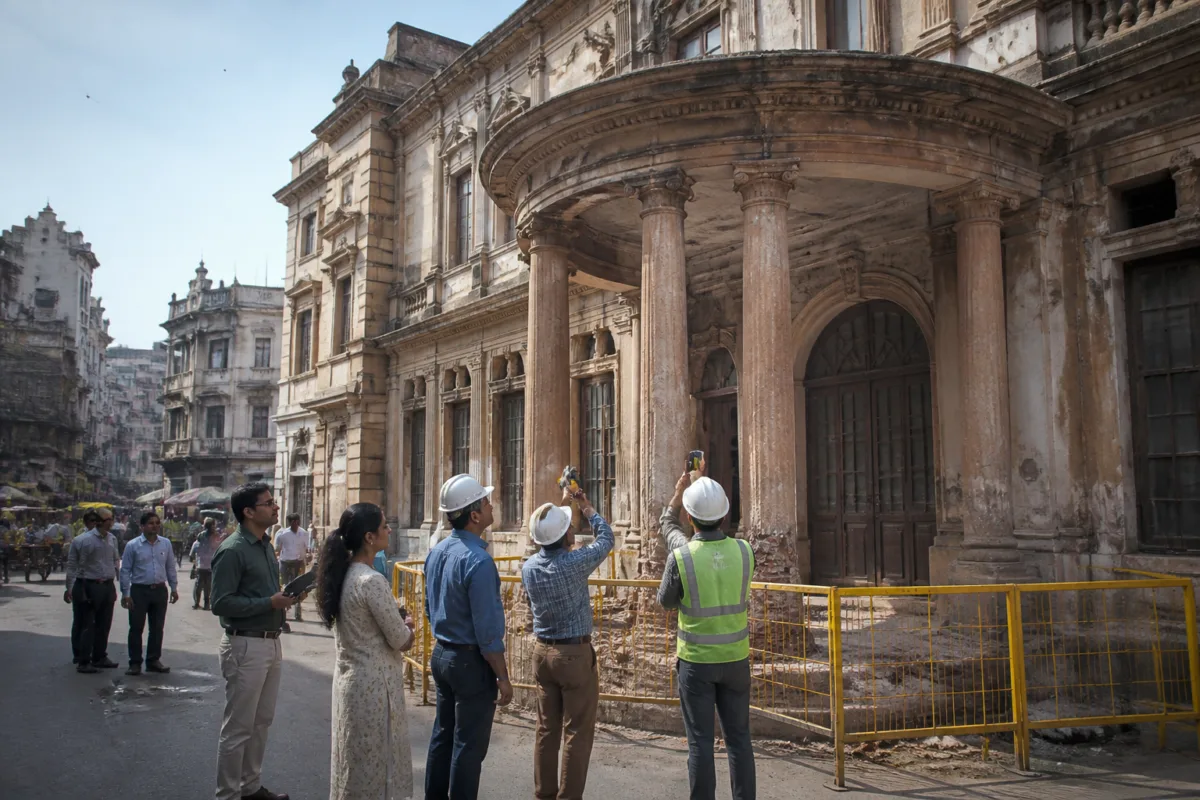
The damaged sections of Delhi’s more than 160-year-old Town Hall in Chandni Chowk are expected to be restored within three months, while the Municipal Corporation of Delhi (MCD) has made annual inspections mandatory for all notified heritage buildings, according to a report by Jagran.
The MCD and Delhi Tourism Department have begun mapping and surveying the Town Hall complex. A team of specialists has started assessing the damage, with the porch above the main entrance identified as the first section to be restored. The repair is expected to use original construction materials, with archival documents being consulted to match the building’s earlier form.
Two entrance sections of the Town Hall had been marked as dangerous and cordoned off because of the risk of an accident, the report said, citing senior MCD officials. The building’s front section, first floor, roof, walls and clock above the main entrance were damaged after rainfall on October 31.
The restoration is being taken up on a priority basis because of the building’s condition. The report said that heritage conservation committee and other relevant approvals are normally required for restoration work on heritage buildings. It did not specify the complete approval status for the Town Hall intervention.
The Town Hall has remained largely unused since the MCD headquarters moved elsewhere in 2011-12. The Delhi government has also proposed developing the complex as a Global Heritage Centre, although the report did not provide a detailed implementation schedule for that plan.
The new MCD standard operating procedure requires every notified heritage building in Delhi to be inspected at least once a year. Under the order issued on November 25, each MCD maintenance and building department must inspect at least two heritage properties every month. The annual inspection system is scheduled for review in December.
The inspections are required to examine cracks, dampness, vegetation, unsafe sections, encroachments, ownership, heritage classification and changes in the use of a building. Inspectors must also take at least three photographs during each inspection, with the date and location recorded. An initial inspection report is to be prepared on that basis.
The MCD’s heritage cell is expected to create a central database of the properties. Zonal deputy commissioners will be responsible for action in cases involving serious violations and for escalating pending matters to senior officials.
The system will cover more than 1,300 notified heritage sites in Delhi, according to the report. It follows concerns over the deteriorating condition of several heritage structures, including Lodi-period tombs in Jamrudpur. Jagran reported that the Supreme Court had reprimanded the MCD over the condition of such buildings and that the civic body had informed the court about preparing the standard operating procedure.
For the Town Hall, the immediate priority is securing and repairing damaged areas while preserving the building’s historic character. For the wider heritage estate, the effectiveness of the new system will depend on whether inspections produce documented maintenance action, whether unsafe conditions are addressed promptly and whether the proposed central database is kept current.

