


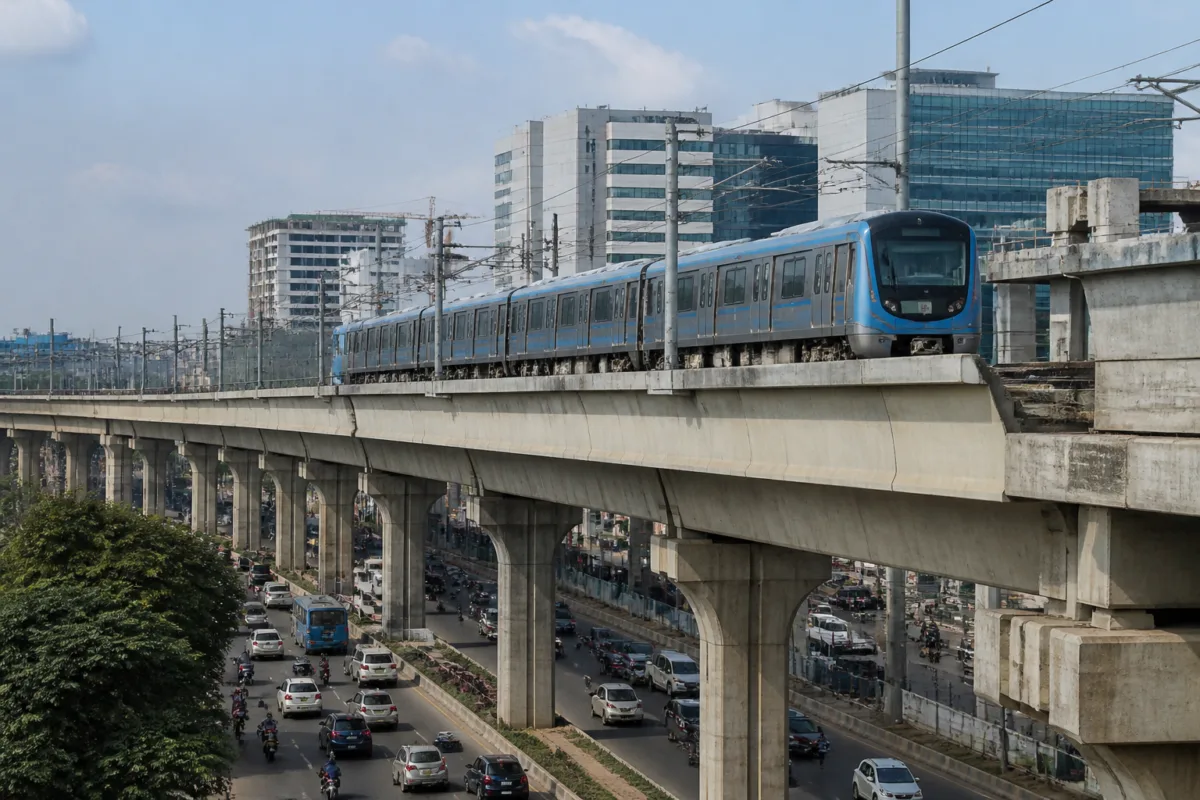
Trial operations have begun on a section of Bengaluru’s Blue Line between KR Puram and Mahadevapura, marking a key testing stage for Phase 2A of the Namma Metro project, Karnataka’s Greater Bengaluru Development Minister Krishna Byre Gowda said on Tuesday.
The trial run is currently being conducted from KR Puram up to four metro stations towards Mahadevapura. Byre Gowda said the testing would be extended to additional stations in stages. He made the remarks after reviewing progress at Doddanekkundi Metro station, according to a report by Prajavani.
The Phase 2A corridor is planned to run for about 19 km between KR Puram and Central Silk Board, with 13 stations. The minister said trial operations would continue through the month and would be extended by another four stations the following month.
The line is not yet ready for public passenger services. Installation of the automatic signalling system is still pending, and the state government’s stated target is to complete it within the next two to three months. Safety certification will then be required before the corridor can open to passengers.
Byre Gowda said the signalling installation was targeted for completion by January, with the safety certification process expected to begin after February. He said the full sequence of testing, signalling work and certification would require about seven to eight months, with the aim of opening the corridor to the public around the middle of the following year.
The Blue Line is being developed in phases from Central Silk Board through KR Puram and Hebbal to Kempegowda International Airport. The combined route is planned to cover 58.2 km, with an estimated project cost of about ₹20,000 crore, the minister said. Work on Phase 2B is also under way, although he called for faster progress on the section between KR Puram and Hebbal.
The corridor follows the Outer Ring Road, which Byre Gowda described as a critical movement route for Bengaluru. He said an estimated 11 lakh to 12 lakh people work in the area and that the metro project would serve large numbers of daily commuters travelling to employment centres along the corridor.
The minister also said the project’s financing burden had increased because the rupee-dollar exchange rate had moved from about ₹70-80 when loans were taken to around ₹100. He attributed additional cost pressures to higher construction-material prices and delays in securing project approvals, and said the state government would bear the extra expenditure.
On the financial position of metro operations, Byre Gowda said ticket revenue currently covered operating expenses sufficiently to produce an operating surplus of about ₹50-60 crore, excluding depreciation. Including depreciation, however, the organisation was incurring an annual loss of about ₹600-700 crore, he said. No decision has been taken on a fare increase, according to the report.
The minister also said the state’s proposal for the Namma Metro Red Line had not yet received final approval from the Centre, despite discussions with central government officials. A separate proposal for a double-decker system between Sarjapur, Iblur Junction and St John’s was also presented to the Centre, he said.

