


Delhi’s mosquito-borne disease landscape appears to be changing after the Covid-19 pandemic, with malaria and chikungunya showing signs of increase while the growth rate of dengue has slowed, according to a January 2026 study by the Indian Council of Medical Research’s Vector Control Research Centre.
The study analysed five mosquito-borne diseases between 2014 and 2024, comparing pre-pandemic and post-pandemic trends while excluding 2020 from the comparison. The report said malaria’s earlier declining trend began rising after the pandemic, while chikungunya and Japanese encephalitis also showed signs of increase.
Dengue has not disappeared from the city’s public-health risk profile. The report said the pace of increase in dengue cases had slowed after the pandemic, but genetic changes in the virus remained a concern. In the National Capital Region, 3,702 of 4,045 samples tested in 2023, or 91.5%, were identified as dengue virus serotype 2, according to the report. A CSIR-Institute of Genomics and Integrative Biology study found changes in some viral genes that could be associated with severe infection, although the report did not establish that these changes directly caused more serious disease.
Delhi Municipal Corporation medical health officer Dr Ashok Rawat attributed the reduction in severe dengue forms, including dengue haemorrhagic fever and dengue shock syndrome, to lower susceptibility and effectiveness of the dengue-carrying mosquito after Covid-19, as well as greater public awareness about prevention. These claims were presented as an official explanation rather than as a conclusion of the ICMR study.
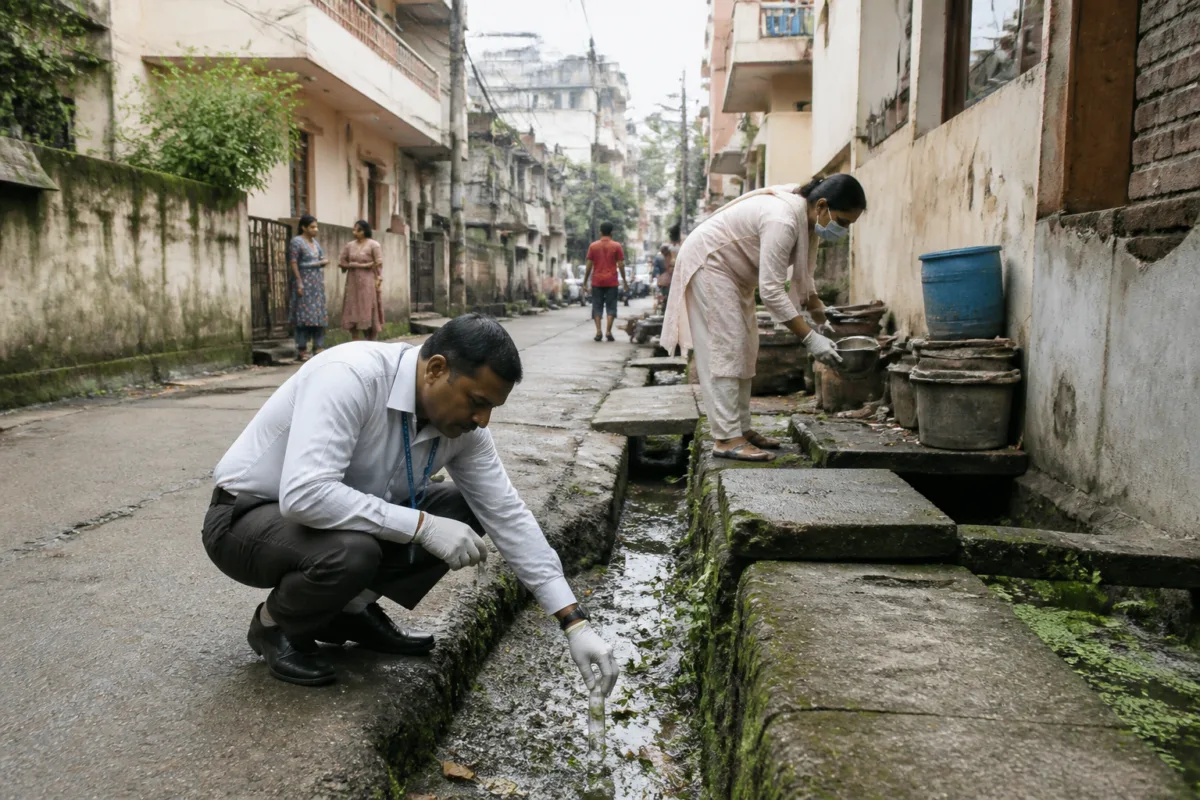
Evidence from local intervention research indicates that household-level awareness and sanitation can influence mosquito breeding. A Maulana Azad Medical College study involving 314 residents of Sanjay Colony recorded an awareness campaign between August 2020 and September 2021. The proportion of homes with mosquitoes subsequently fell from 21.65% to 4.45%, according to the report.
The finding is significant for Delhi’s dense neighbourhoods, where small amounts of stagnant water around homes, construction areas and shared spaces can create breeding sites. A Safdarjung Hospital study cited in the report found a relationship between dengue infection and temperature, rainfall and humidity. Cases generally rise during the monsoon and peak in September and October, when weather conditions and accumulated water can support mosquito breeding.
The report also cited research by AIIMS Delhi and PGI Chandigarh involving 44 children that observed a possible relationship between Covid-19 infection markers and severe dengue effects. The researchers described this as a possible immunity-related association, not a confirmed conclusion.
Taken together, the findings place continuing emphasis on routine urban sanitation, removal of stagnant water and sustained public awareness rather than seasonal responses alone. They also underline the need to interpret disease trends carefully: changes in mosquito behaviour, weather conditions, viral genetics and population immunity may affect the risks differently across diseases. The studies cited in the report provide indications for surveillance and prevention, but several of the reported relationships remain subject to further research.

