


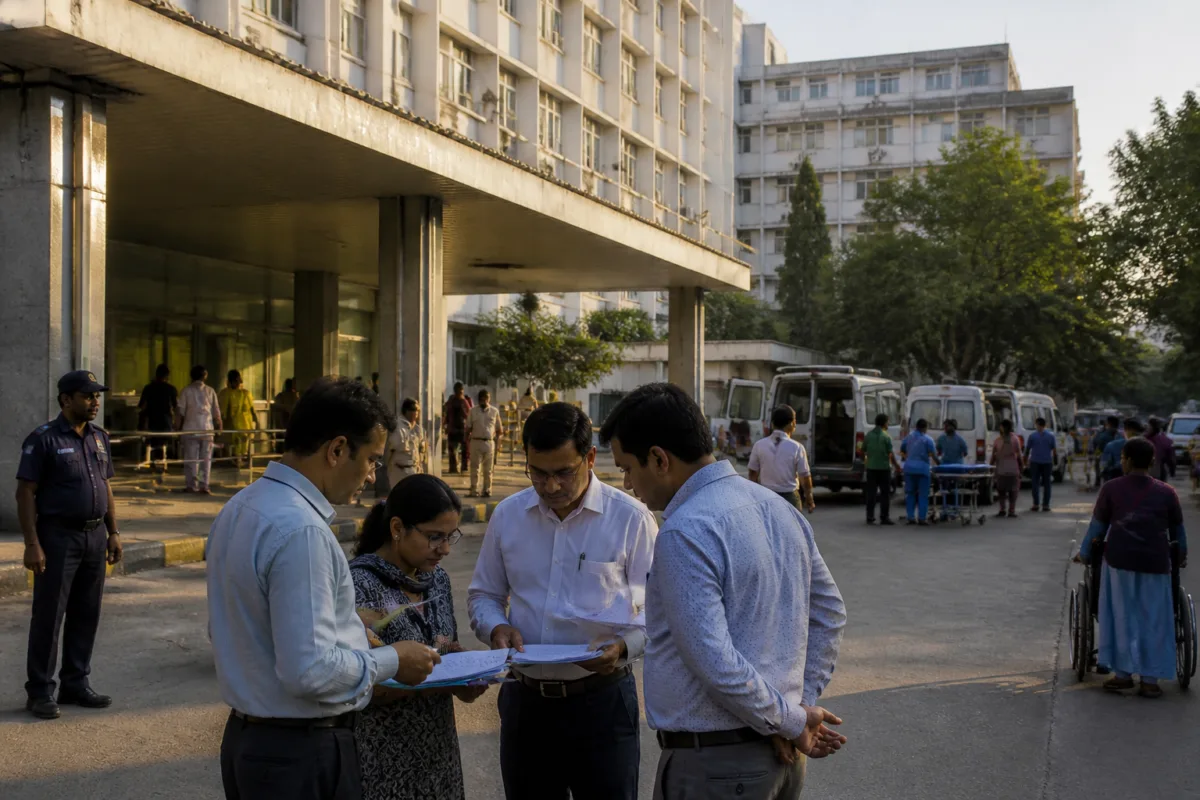
An Anti-Corruption Bureau inspection at Nizam’s Institute of Medical Sciences (NIMS) in Hyderabad has flagged alleged irregularities across patient billing, surgical supplies, manpower services, canteen operations, medical shops and security contracts, according to ACB officials.
The checks were conducted on October 29 and November 2 at the Panjagutta hospital, with teams from the ACB, TG SAFE, the Drug Control department and the Labour department participating. The ACB has seized note files, agreements and other documents for detailed verification and further examination.
Among the findings cited by officials were billing entries worth about Rs 66 lakh that were made after patients had been discharged during July, August and September. In some cases, bills were reportedly processed as much as three months after the death of patients, particularly those covered under the Aarogyasri scheme. The report does not establish whether the entries resulted in financial loss or identify officials responsible; those matters remain subject to examination.
The inspection of five operation theatres also found implants and other consignment items valued at about Rs 5 crore stored in cupboards near the theatres and sub-stores without authorisation, officials said. Doctors and nursing staff allegedly obtained implants directly from vendors without raising indents through the main store. Utility certificates and vendor invoices were later submitted for billing, according to the ACB, creating scope for possible manipulation.
Officials further pointed to unusually high consumption of surgical materials. Hospital records showed the use of 800 gloves for a single patient in one week, they said. Most of the alleged irregularities identified by the teams were related to Aarogyasri patients, according to the report.
The findings extend beyond clinical supplies to the hospital’s administrative and service contracts. The ACB said the tender process for manpower services had not been completed during 2019-2025 and that irregularities were found in the recruitment and categorisation of workers. The inspection also identified repeated extensions of security contracts and the failure to forfeit a Rs 28.13 lakh bank guarantee belonging to a defaulting agency.
Food and service standards were another area of concern. Food Safety officials found the main canteen operating in unhygienic conditions, with expired food items and without registration from the Food Safety and Standards Authority of India. The ACB said the findings pointed to possible collusion among bidders in the canteen tender process, a claim that will require further investigation.
Medical shops on the premises were reportedly not maintaining mandatory sales records and were employing unregistered workers, officials said. Taken together, the allegations span the systems that govern procurement, inventory control, billing, outsourced staffing, food services and contract enforcement at a public hospital.
The inspection therefore raises questions about how hospital stores, vendor access, patient-linked billing and outsourced services are monitored. The reported storage of implants outside authorised channels and the alleged absence of proper indents point to weaknesses in the chain of documentation between clinical demand, inventory issue and payment. Similarly, delayed billing entries and contract extensions highlight the importance of timely audit trails in publicly funded healthcare services.
The ACB has not announced final findings or disciplinary action in the material available. Its seized records are to undergo detailed verification, and the allegations should not be treated as established wrongdoing until the inquiry is completed. NIMS and the contractors or vendors named in the findings were not quoted in the report. Further official action will determine whether the alleged lapses resulted from procedural failures, individual misconduct or broader weaknesses in hospital governance.

