


A documentary presented at the 57th International Film Festival of India in Goa is revisiting the contribution of architect Maciej Nowicki to Chandigarh’s early planning and architectural vision.
Nirmanjali: The Chandigarh of Maciej Nowicki, directed by National Award-winning filmmaker Suraj Kumar, examines Nowicki’s proposals for a city shaped by India’s climate, local requirements and community life. Kumar discussed the film’s research at a press conference organised by the Press Information Bureau in Goa on Sunday.
According to Kumar, Nowicki’s ideas included an artificial water reservoir, which eventually took shape as Sukhna Lake, and self-contained residential units known as “superblocks”. These neighbourhoods were conceived to combine schools, parks, markets and community spaces, reducing the need for residents to travel long distances for everyday services.
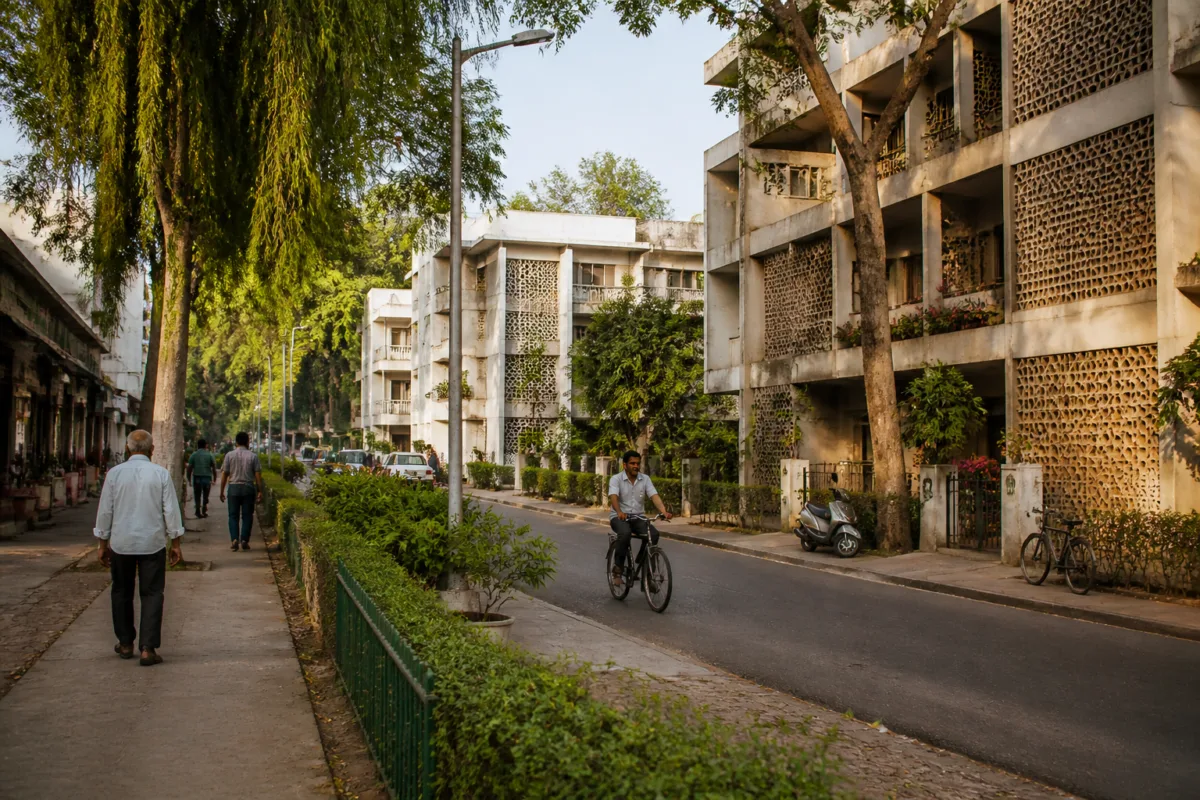
The documentary also links Nowicki’s thinking to Chandigarh’s jaali facades, neighbourhood markets and urban layout. Kumar said the architect’s approach differed from the imposition of monumental structures, instead placing emphasis on climate, daily life and community needs.
Nowicki died in a plane crash in 1950 while preparing to return to India to implement his vision. His drawings continued to influence Chandigarh’s development. Swiss architect Pierre Jeanneret later recognised and incorporated elements of Nowicki’s ideas into the development of Sectors 7 and 8, the filmmaker said.
The film’s research involved archival material from several countries. Kumar said only about 20 to 25 of Nowicki’s works have been preserved at the Chandigarh Architecture Museum, leading the team to consult other sources, including vintage editions of The Tribune and digitised architectural notes held at North Carolina State University in the United States, where Nowicki had headed the Department of Architecture.
The project also received support from the Embassy of Poland and the Polish Institute after a suggestion by the Polish Ambassador.
Kumar argued that Nowicki’s 75-year-old blueprints remain relevant to Indian cities facing heat stress and urban sprawl. His comments point to a continuing planning question: how can new neighbourhoods respond to local climate and residents’ daily needs rather than rely only on large buildings or transport-led expansion?
The documentary does not establish a current government programme or new planning intervention. Its value for contemporary urban discussions lies instead in recovering an overlooked chapter of Chandigarh’s formative design history and placing ideas such as shaded building elements, accessible neighbourhood services, open spaces and local environmental response back into public conversation.
Produced by Johnsons Suraj Films International, the film has a screenplay by Murtaza Ali Khan, cinematography by Rakesh Rana and editing by Amit Roy. Subhendra Rao and Saskia Rao-de Haas composed the music, and veteran actor Victor Banerjee features in the film.

