


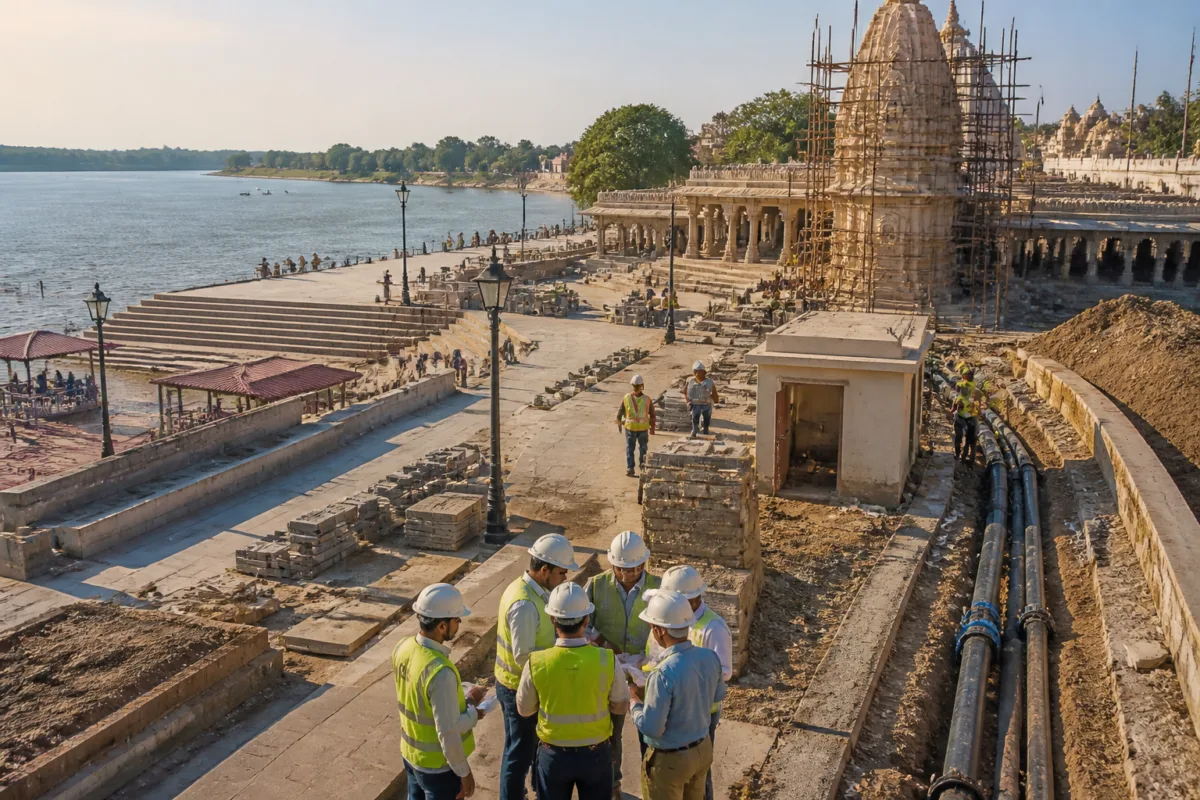
Telangana has announced Rs 1,115 crore in infrastructure and temple-development works for Godavari Pushkaralu 2027, with the state government preparing facilities across 77 locations for an expected turnout of more than eight crore pilgrims.
Irrigation and Civil Supplies Minister N. Uttam Kumar Reddy announced the preparations at Jawaharlal Nehru Architecture and Fine Arts University in Basab Tank on November 23. According to the minister, the works are intended to improve the experience of visitors arriving for the month-long religious event, which is scheduled from June 26 to July 27, 2027.
The programme covers construction and improvement of bathing ghats, temple renovations, roads, drinking-water facilities, sanitation and other amenities. The Godavari runs for approximately 560 km through Telangana, and the government has identified Basara, Dharmapuri, Manthani, Kaleshwaram and Bhadrachalam among the major pilgrimage centres expected to receive large numbers of visitors.
The scale of the announced investment reflects the logistical demands of a festival spread along a long river corridor rather than concentrated at one venue. Facilities will have to serve pilgrims at riverfront locations as well as at temples, while road connectivity and basic services will need to function across several districts during the event period.
The largest identified temple allocations are Rs 324 crore for Basara Temple, Rs 276 crore for Bhadrachalam and Rs 198 crore for Kaleshwaram. The source report does not provide a location-wise breakdown of the remaining allocation or a detailed completion schedule for the road, ghat, water and sanitation works.
The government expects more than eight crore devotees from India and abroad to attend, compared with approximately 5.5 crore people during the 2017 Pushkaralu. These figures were presented as government estimates. The projected increase makes the capacity of bathing areas, drinking-water networks, sanitation systems and access roads central to the preparations.
Reddy said the event would present Telangana’s spiritual and cultural identity to visitors and help place the state on the religious-tourism map. He described the Godavari as the Dakshina Ganga and said the preparations would combine spiritual activities with improved public facilities.
The state has also invited students, artists and members of the public to help create the event’s logo and tagline. Speaking at JNAFAU, Reddy asked architecture and fine-arts students to develop an identity reflecting the river, Telangana’s traditions and the significance of the festival. Transport and BC Welfare Minister Ponnam Prabhakar also urged students to participate.
The competition is open to individuals and teams of up to three people. Entries must include both a logo and a tagline and will be assessed by a state-level committee for originality, creativity, relevance, clarity and adaptability. The first three winners will receive cash prizes of Rs 1 lakh, Rs 50,000 and Rs 25,000, while the first 100 entries will receive certificates. The submission deadline is November 30.
For the built environment, the preparations place the focus on temporary and permanent infrastructure serving a large, dispersed pilgrimage network. The announced works combine upgrades to religious sites with public-service infrastructure, including water, sanitation and connectivity. Their effectiveness will depend on how these projects are coordinated across the 77 locations and completed before the festival begins. The report, however, does not identify the implementing departments, tender status or project-wise timelines.

