


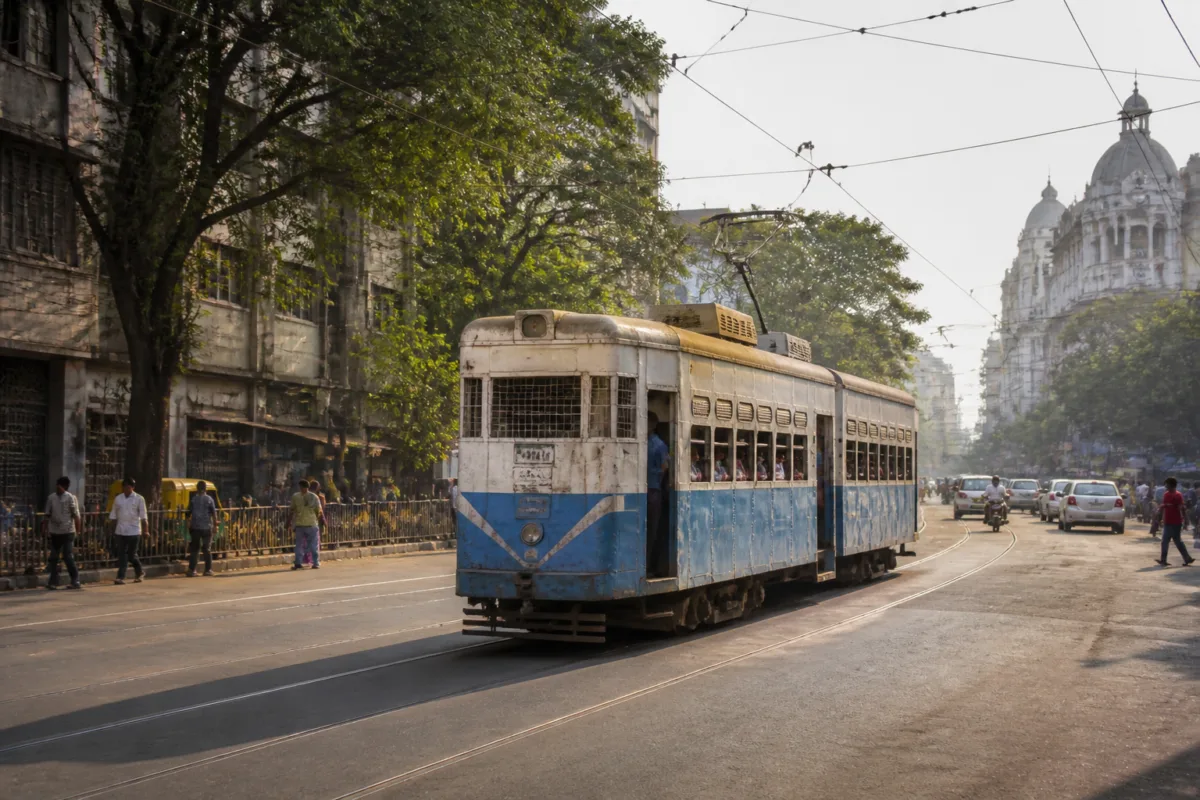
A heritage tram journey from Gariahat to Esplanade has renewed calls to preserve Kolkata’s tram system as both a historic asset and an eco-friendly public transport option.
The ride, held during World Heritage Week on Sunday, carried about 30 passengers from the Gariahat tram depot. It was organised by the Numismatic Society of Calcutta (NSC) and the Institute of Town Planners India (ITPI), and operated on route 25. The tram was rented from the West Bengal Transport Corporation (WBTC), into which the Calcutta Tramways Corporation has been merged.
Route 25 is one of only two surviving tram routes in the city, according to the report. The other is route 5. The tram leaving Gariahat for Esplanade continued towards Shyambazar on route 5 before returning over both routes, a veteran WBTC employee said.
The event combined heritage transport with a mobile exhibition of Bengal coins. The collection included Banga janapad coins from Chandraketugarh dating to the 2nd century BC and Bengal Presidency coins of the East India Company from the late 17th century. A picture postcard featuring an 1896 photograph of Kolkata’s General Post Office and a souvenir ticket inspired by historic conductor-issued tickets were also distributed.
The organisers used the event to make a wider planning argument. Smaran Kumar Das, president of the NSC and chairman of the ITPI regional chapter, said trams were facing extinction and should be preserved as an eco-friendly option. Indrani Dhar, a council member of the regional chapter, appealed for tram services to be considered in plans for new peripheral developments and growing towns.
That proposal positions the tram beyond its heritage value. It calls for the mode to be considered as a sustainable mobility service while new urban areas are planned. The report, however, does not detail any government commitment, route expansion proposal, funding plan or transport strategy adopting the recommendation.
Kolkata’s tram history stretches back to horse-drawn services between Sealdah and Armenian Ghat Street in 1873. Electric trams began operating between Esplanade and Kidderpore in 1902, according to Das. The heritage ride therefore connected a contemporary preservation campaign with more than 150 years of tram operations in the city.
The event also included a public-health message. Dr Dhritiman Maitra, an associate professor and breast and endocrine surgery specialist at Calcutta Medical College and Hospital, spoke to passengers about breast-cancer awareness and monthly self-examination for women aged over 20. A cancer-awareness souvenir was distributed.
The ride demonstrates how tramcars can serve as platforms for heritage interpretation and public engagement. Its planning appeal raises a more consequential question for Kolkata: whether the remaining tram infrastructure will be treated only as a remnant of the city’s past or considered within future sustainable transport and urban-development decisions. The report records the appeal, but does not establish whether the relevant authorities have accepted or acted on it.

