


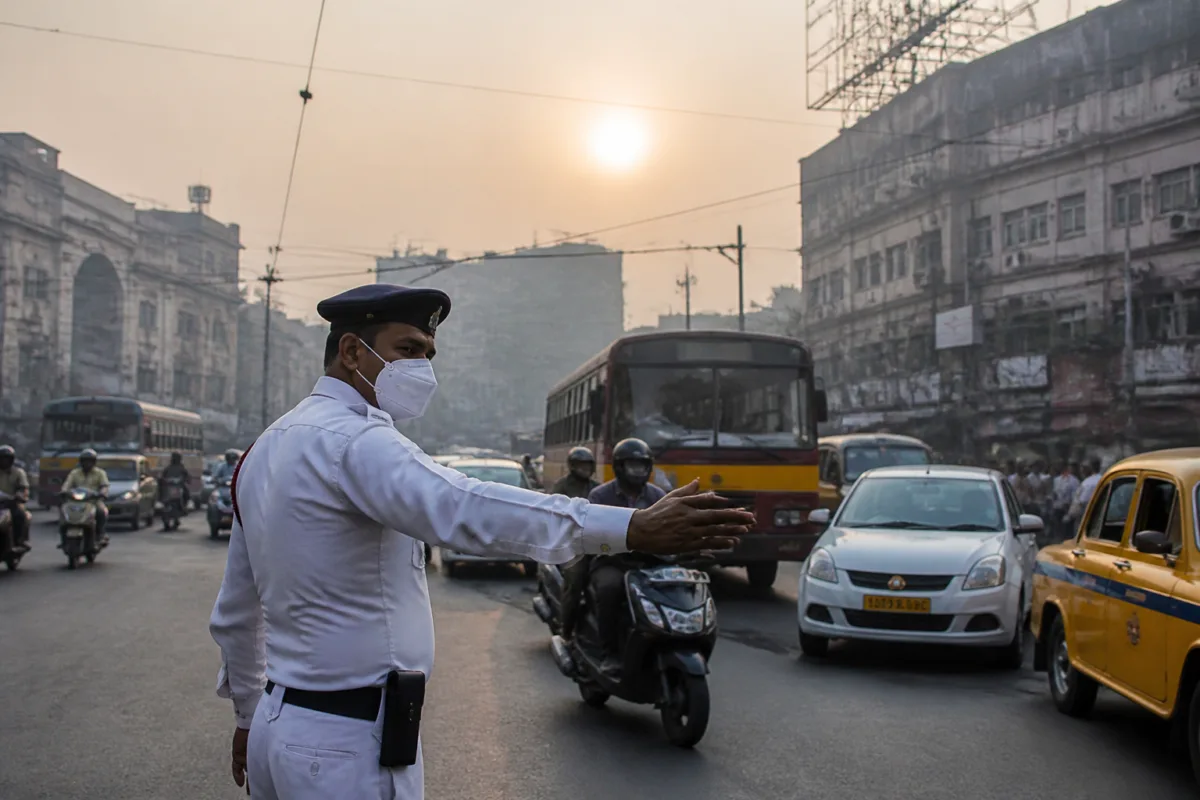
Winter air pollution and prolonged exposure to vehicular emissions could increase respiratory risks for Kolkata’s traffic police and vulnerable residents, doctors and environmentalists have warned.
The warning was issued at a lung-health session organised by Manipal Hospitals in association with the Bidhannagar Police Commissionerate on Saturday. The session focused on chronic obstructive pulmonary disease (COPD), preventive healthcare and occupational exposure among traffic police personnel.
Debraj Jash, head of pulmonology at Manipal Hospital Salt Lake Cluster and EM Bypass, said falling temperatures and pollution could aggravate COPD and trigger respiratory infections among people with low immunity. He also identified smoking and pollution as major causes of COPD, adding that people with long-standing asthma were vulnerable.
Traffic police personnel were advised to wear masks while on duty, undergo regular health check-ups and seek medical advice for persistent respiratory symptoms. Jash said masks could reduce exposure to pollutants and carcinogenic agents, although they could not eliminate it completely.
He recommended annual pulmonary function tests (PFTs), which can help identify COPD that may otherwise remain undiagnosed until hospitalisation. The health camp aimed to raise awareness and encourage early screening among personnel routinely exposed to vehicle emissions, dust and other pollutants.
Debarshi Dutta, joint commissioner of police at the Bidhannagar Commissionerate, said traffic personnel faced prolonged daily exposure that could increase their vulnerability to respiratory conditions. He urged them to avoid smoking, undergo comprehensive check-ups and seek timely medical care.
Doctors also advised elderly residents to take influenza vaccinations and use masks to reduce exposure. Environmentalists cited in the report said lower temperatures and slower wind speeds during winter can limit pollutant dispersion, while smog may be more pronounced during early mornings and late nights.
The report noted that Kolkata recorded an air quality index (AQI) of 33 on Sunday, categorised as “good” under the Central Pollution Control Board’s classification. Rainfall over the previous days was cited by environmentalists as a factor in the improved reading. AQI readings between 101 and 200 are categorised as moderate and can cause breathing discomfort among people with asthma and lung disease, while readings between 201 and 300 are classified as poor.
The session’s focus on traffic police highlights an occupational exposure issue within the city’s transport system. Unlike residents who may be able to reduce time outdoors during pollution episodes, traffic personnel often remain at busy junctions for extended periods as part of their duties. The report, however, does not provide exposure measurements, respiratory screening results or details of any wider government programme for protecting personnel from traffic-related pollution.

