


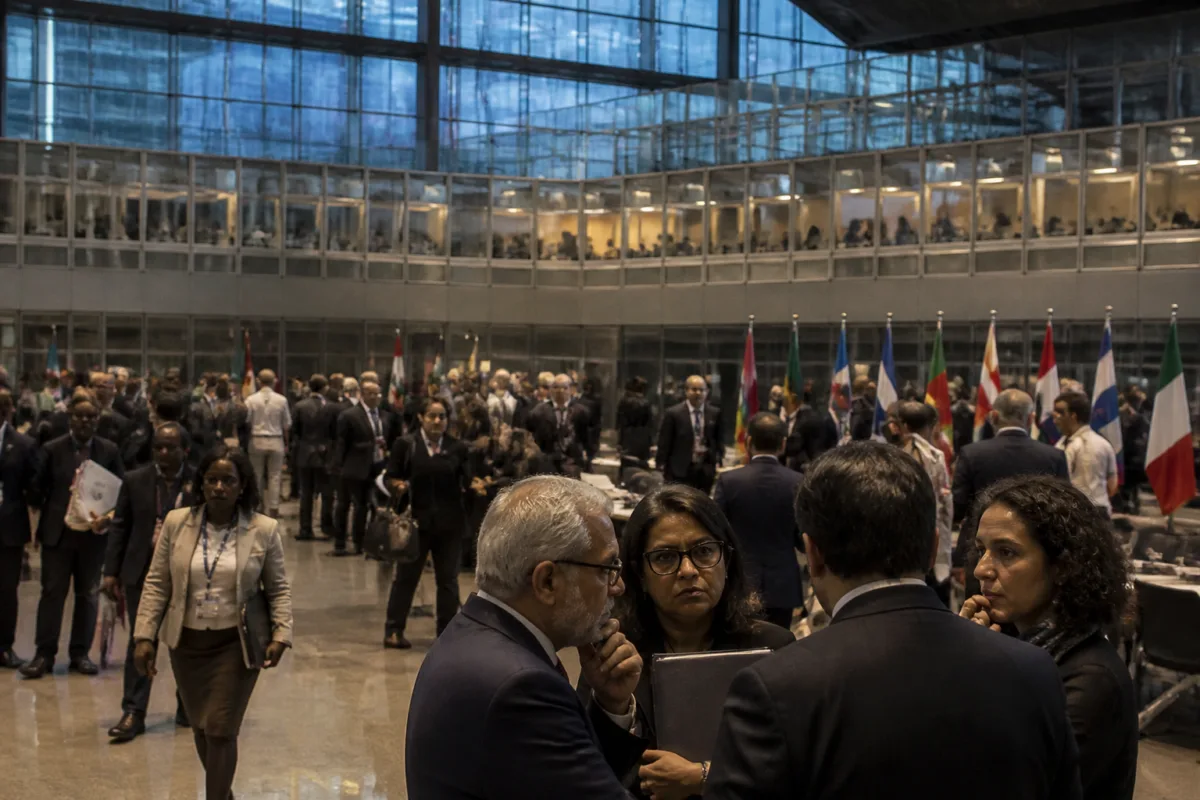
The 31st UN climate change conference ended in Antalya, Türkiye, on November 22 without an overarching political agreement, leaving divisions over fossil fuels, climate finance and implementation unresolved even as negotiators advanced several individual workstreams.
The final draft cover decision, titled the Antalya Pact, reaffirms the 1.5°C temperature goal and calls for deep, rapid and sustained emissions reductions. It also acknowledges that global temperatures are expected to exceed 1.5°C in the coming years, that the remaining carbon budget is shrinking rapidly and that the risks of loss and damage are increasing with every additional increment of warming.
However, the text does not explicitly recognise the need to transition away from fossil fuels. It sets an ambition to increase electricity’s share of global final energy consumption to 35 per cent by 2035 and to scale carbon capture, utilisation and storage to gigatonne levels over the same period. The electricity target is no longer explicitly linked to commitments to triple renewable energy capacity by 2030 and double the annual rate of energy-efficiency improvement by then, as it was in an earlier November 19 draft, according to Down To Earth.
UN Secretary-General António Guterres said he was “deeply disappointed” that the conference had ended without consensus on an overarching outcome. He added that there might be no consensus in the negotiating room, but “there is no ambiguity in the science”.
The outcome has direct implications for cities and infrastructure because it leaves the scale and reliability of adaptation finance unresolved. The draft estimates developing countries’ climate finance requirements at US$5.1 trillion to US$6.8 trillion through 2030, or US$455 billion to US$584 billion annually. Annual adaptation finance needs are estimated at about US$305 billion through 2035.
The text reiterates an ambition to at least triple adaptation finance by 2035, but does not establish a new quantified target or a baseline against which progress can be measured. It launches the Antalya-Addis Ababa Road Map on Adaptation and Resilience Finance, which will examine ways to mobilise more predictable and larger flows, including through innovative sources and improved access. The road map is to be advanced by the COP31 and COP32 presidencies, with conclusions due for consideration at COP32.
For urban authorities, the unresolved finance questions affect the ability to strengthen drainage, heat-response systems, water services, buildings, transport networks and other infrastructure exposed to climate hazards. The draft also includes provisions on early-warning systems, climate-resilient health systems, ocean-based climate action and nature-based solutions. It reiterates a goal of universal coverage of early-warning systems by 2027 and calls for stronger climate-risk monitoring, forecasting, preparedness and anticipatory action.
The European Union and its member states expressed “profound disappointment”, saying the outcome did not adequately respond to the climate emergency and omitted a clear commitment on fossil fuels. The bloc also criticised the emphasis on carbon capture, warning that the technology could be portrayed as a substitute for emissions reductions.
Climate Action Network International said the text failed to deliver climate justice and lacked a clear, publicly financed plan for adaptation. It also said no fresh pledges were made for loss and damage, with the issue effectively absorbed into adaptation discussions.
A separate decision on the Just Transition Work Programme was adopted, but the proposed Belém-Antalya Mechanism remains without a settled institutional structure, mandate, resources or arrangements for participation by workers and affected communities. Decisions on its further development have been deferred to COP32.
Some progress continued under separate tracks, including the Adaptation Fund, carbon markets and transparency. A proposed two-year Work Programme on Mountains and Climate Change would address adaptation, disaster-risk reduction, resilience, data and early-warning systems in 2027 and 2028.
The next formal negotiations are scheduled for the Bonn climate conference in June 2027, ahead of COP32 in Addis Ababa. Fossil-fuel transition, adaptation finance, loss and damage, equity and implementation will remain unresolved agenda items.

