


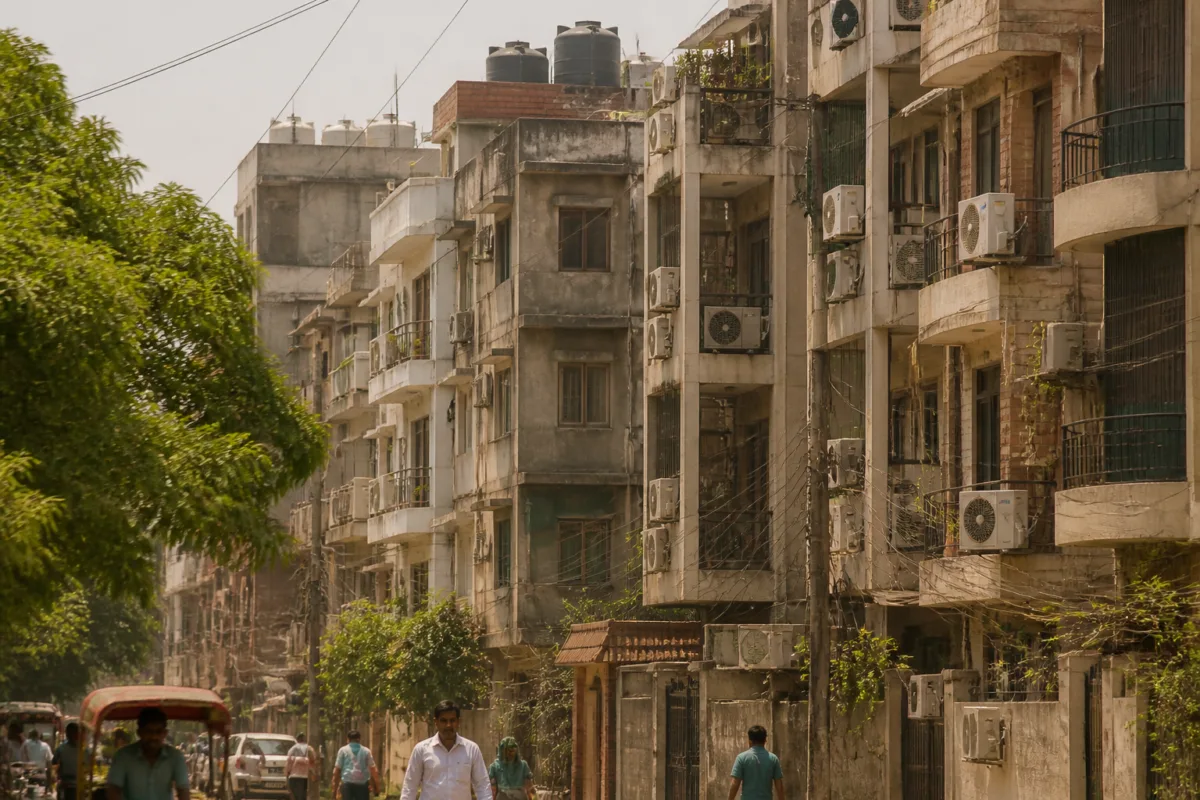
India is set to add 200 million air conditioners in homes by 2035, a shift that will reshape electricity demand, building energy use and the management of peak loads, according to the International Energy Agency’s World Energy Outlook 2026.
The projection comes as cooling becomes a larger part of energy demand in India and other emerging markets. The IEA said India and Southeast Asia’s share of the world’s air-conditioner stock is expected to increase from less than 10 per cent today to 20 per cent by 2035. In India and Indonesia, fewer than one in five households currently own an air conditioner despite high cooling needs, the agency said.
The comparison with wealthier countries highlights the scale of potential growth. Around 90 per cent of households in Australia, Japan and the United States own at least one air conditioner, according to the report. India’s lower current ownership rate means that even moderate increases in household access can produce a substantial addition to electricity demand.
The IEA said cooling demand in buildings is overtaking heating demand globally for the first time in energy history. Under its Stated Policies Scenario, India’s electricity demand is expected to grow by 6 per cent a year over the next decade, the fastest rate among major regions. Total energy demand is projected to rise by 2.5 per cent annually, or three times the global rate.
For urban areas, the issue is not limited to the number of appliances installed. More air conditioners mean that residential buildings and other occupied spaces will draw more power during periods of high heat. This makes the efficiency of cooling equipment and the performance of buildings increasingly important to how much additional electricity is needed and when it is consumed.
The IEA’s modelling indicates that faster adoption of efficient appliances can moderate seasonal variations in India’s electricity demand, even with similar levels of electrification. That finding places appliance efficiency alongside generation capacity as a central part of the country’s cooling response. It also suggests that the growth in air-conditioner ownership will not translate into one fixed demand outcome; the result will depend partly on the efficiency of the equipment entering the market.
The report also examined a heatwave case in which hotter and longer heatwaves increase air-conditioner ownership and use. In that scenario, global cooling-demand growth is 700 terawatt-hours, or 40 per cent, higher than in the main projection, with particularly strong implications for peak demand.
Under the IEA’s Current Policies Scenario, global peak cooling demand is expected to rise by 720 gigawatts by 2035. The agency compared that increase with more than India’s entire generation capacity today. The comparison indicates the scale of infrastructure that could be required if cooling demand grows without equivalent gains in efficiency and system planning.
India’s wider urban expansion will add to the pressure on energy systems. The IEA expects the country to add more than 12,000 cars a day to its roads and expand its built space by 33 per cent. Steel and cement production are also expected to increase. These trends point to rising energy requirements across homes, transport, construction and commercial activity rather than from cooling alone.
Energy investment in India could rise by 85 per cent by 2035 from 2025 levels, making the country the fastest-growing major destination for such spending, the report said. Electricity generation is projected to increase from around 2,114 terawatt-hours in 2025 to 3,585 terawatt-hours in 2035, with non-fossil sources accounting for 51 per cent of generation in that projection.
The expansion of non-fossil generation would not eliminate the role of coal in the near term. The IEA described coal as a mainstay and projected that India’s carbon dioxide emissions would not peak until around 2040. This creates a continuing challenge for cities and the wider power system: meeting rising demand for indoor cooling while managing the emissions and infrastructure consequences of the generation required to supply it.
The IEA’s projections therefore place household cooling at the intersection of housing, electricity planning and climate resilience. India’s ability to expand access to cooling will depend not only on how many air conditioners are installed, but also on the efficiency of appliances, the performance of the expanding building stock and the capacity of the electricity system to meet increasingly concentrated periods of demand.

