


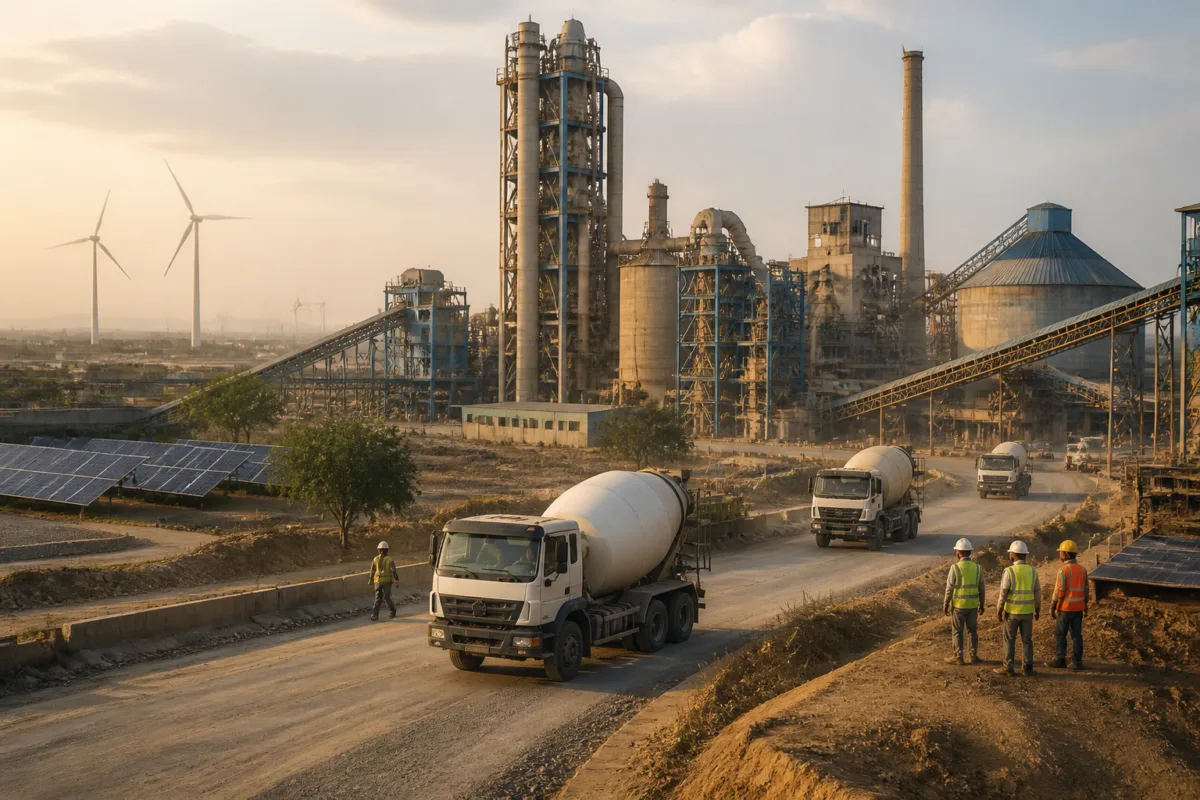
Shree Cement expects to raise its installed production capacity from around 75 million tonnes per annum (MTPA) to 80 MTPA within two years and cross 100 MTPA in the following three to four years, Chairman Hari Mohan Bangur told PTI.
The company is targeting compound annual growth of 9-10 per cent over the next six to seven years, compared with the 7-8 per cent growth Bangur expects for the Indian cement industry. He attributed the expansion outlook to demand from infrastructure and housing.
Earlier this month, Shree Cement announced a proposed investment of Rs 7,000 crore to establish cement plants in Andhra Pradesh. The company is also investing nearly Rs 3,500 crore to Rs 4,000 crore in plants at Kutch in Gujarat and Meghalaya. Bangur said the latter projects are being funded mostly through internal reserves.
The expansion would add to the company’s current India operations and offshore manufacturing facilities in the UAE. Shree Cement is also increasing its presence in ready-mix concrete (RMC), an adjacent business that supplies concrete for construction projects and can bring production closer to urban building sites.
The company currently operates around 40 RMC plants and plans to increase that number to between 60 and 80 over the next 15-18 months, Bangur said. Monthly RMC production capacity is expected to rise from one lakh cubic metres to two lakh cubic metres over the next 18 months.
Shree Cement is not currently planning to diversify into other building-material categories such as wires, cables and paints. Bangur said the company’s focus was on strengthening its position in cement and RMC rather than creating a broader integrated building-solutions portfolio.
On profitability, Bangur said the cement industry could sustain margins of around 15-20 per cent on sales. He said premium cement could achieve better realisations, while large builders generally remain focused on value-for-money products. Individual homebuilders, he added, may be more willing to pay for quality construction.
Bangur said about 60 per cent of Shree Cement’s energy requirement is met through renewable sources and waste-heat recovery, including solar and wind power. The company’s stated expansion plans will therefore increase the importance of how additional capacity is financed, supplied and operated, particularly as cement manufacturing remains closely linked to construction demand and energy use.
He also said India’s annual cement consumption had grown from around 40 million tonnes to approximately 450-500 million tonnes. In his assessment, continued infrastructure and housing development would support further industry growth. The capacity and investment timelines cited by the company remain forward-looking targets and will depend on project execution and market demand.

