


A draft cover decision at COP31 retains an ambition to raise electricity’s share of global final energy consumption to 35 per cent by 2035, but leaves unresolved the finance and fossil-fuel decisions that would determine how cities and infrastructure systems can deliver that transition.
The 10-page text, dated November 22, 2026, proposes a collective ambition to deploy carbon capture at gigatonne scale by 2035. It also refers to clean energy, energy efficiency, storage, grid flexibility and energy access. However, it does not explicitly commit countries to transitioning away from fossil fuels and sets no quantified target for adaptation finance.
The draft was prepared after consultations under the COP31 Presidency and remained subject to adoption when Down To Earth reported on it. Parties continued to disagree over the level of ambition, financial provisions and the negotiating process.
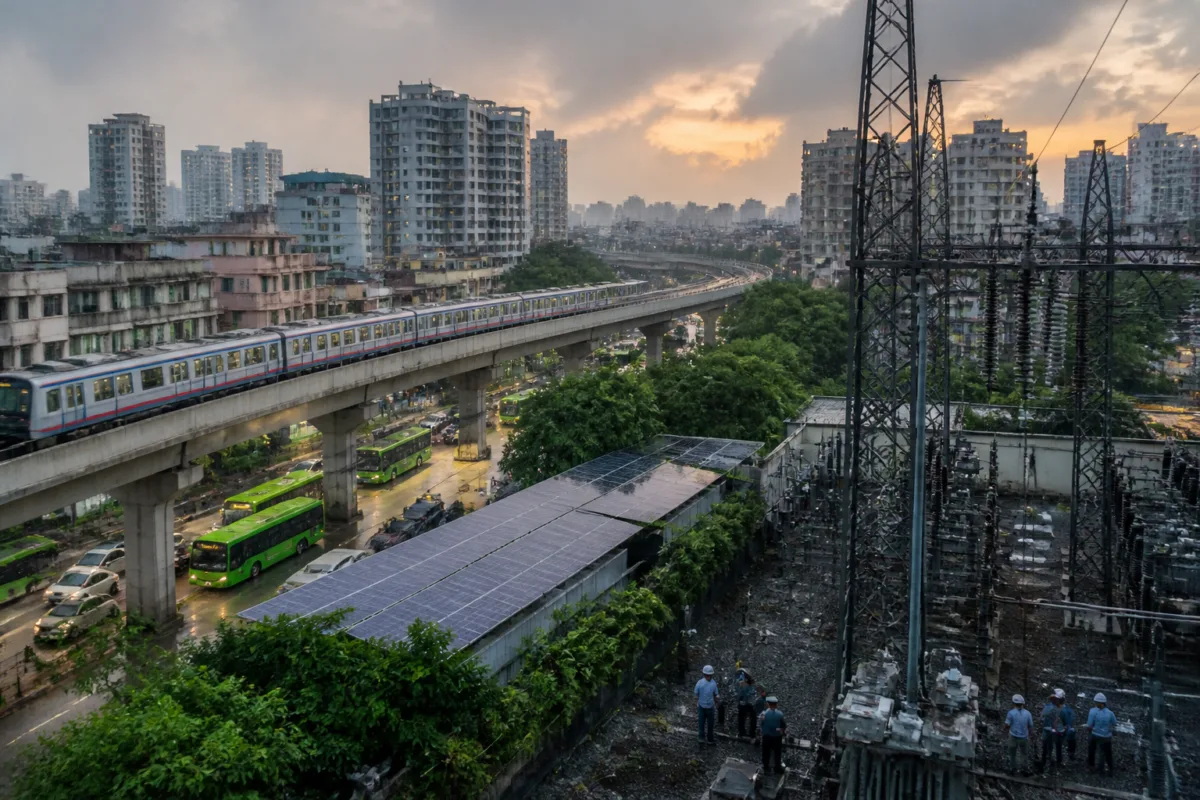
For urban areas, the wording on electrification and grid systems is potentially important. Paragraph 40(d) calls for electricity to account for 35 per cent of global final energy consumption by 2035, alongside efforts to expand clean energy, improve efficiency, deploy low-emission technologies, strengthen storage and grid flexibility, and improve energy access. These areas affect the reliability and affordability of electricity used by buildings, public transport, water systems, industry and other urban services.
But the latest wording is weaker than the November 19 draft in one important respect. The 35 per cent electrification ambition is no longer directly linked to proposals to triple renewable-energy capacity by 2030 and double the global average annual rate of energy-efficiency improvement by 2030. The draft therefore retains a broad electrification goal while leaving the supporting investment and implementation framework less clearly defined.
It also promotes carbon capture, utilisation and storage, or CCUS, as a collective aspiration to reach gigatonne scale globally by 2035, particularly in hard-to-abate sectors. This replaces earlier quantified deployment options of 500 million tonnes and 1.3-2.5 gigatonnes.
The emphasis on CCUS without comparable language on moving away from fossil fuels has become one of the most contested elements of the text. The first COP31 draft, released on November 16, included competing proposals to reaffirm the COP28 commitment to transition away from fossil fuels in energy systems, as well as a stronger option calling for an immediate transition. Both were removed from the November 19 version and remain absent from the latest draft.
The omission reflects divisions between countries seeking stronger fossil-fuel language and those resisting new sector-specific commitments. The European Union and several other countries pushed for stronger wording, while opposing countries argued that the cover decision should not prescribe national energy choices, according to the report.
The finance provisions create a second major uncertainty for urban climate action. The draft reiterates efforts to at least triple adaptation finance by 2035 and calls for predictable, scaled-up funding, including public, grant-based and highly concessional finance. It recognises barriers faced by developing countries, including high borrowing costs, limited fiscal space, debt constraints and complex access procedures.
However, the text sets no monetary target for adaptation finance. A November 16 draft had proposed at least US$120 billion annually by 2035, but that figure was removed from later versions. The amount and baseline for the proposed tripling of adaptation finance consequently remain unresolved.
The draft proposes an Antalya-to-Addis Ababa Roadmap on Adaptation and Resilience Finance, to be developed under the guidance of the COP31 and COP32 presidencies. It links the tripling commitment to the New Collective Quantified Goal on climate finance and calls for further work on the baseline and implementation pathway.
At COP29 in 2024, countries agreed to a climate-finance target of at least US$300 billion annually by 2035 for developing countries, with developed countries taking the lead. They also called on all actors to scale up finance from public and private sources to at least US$1.3 trillion annually by 2035. The COP31 draft’s lack of a specific adaptation-finance figure leaves unclear how much of this wider financing effort would be available for protecting urban infrastructure and communities from climate impacts.
The report identifies possible consequences for homes, infrastructure, livelihoods and public services through its discussion of loss and damage. The draft retains calls for stronger coordination among funding arrangements and adequate, predictable resources for the Fund for responding to Loss and Damage. It also proposes that the finance roadmap consider predictable and scaled-up sources for both adaptation and loss and damage.
But the latest text removes some specific figures and references to funding gaps that appeared in the November 19 version. Establishing a fund, the report notes, does not by itself guarantee resources at the scale required to meet climate-related losses.
The draft also introduces a standalone reference to just-transition pathways. These are intended to support a shift to low-emission economies while addressing the needs of workers, communities and countries dependent on carbon-intensive industries. The text refers to finance, technology, skills and social protection, but does not establish dedicated funding or a specific work programme.
Trade provisions may also affect construction and industrial supply chains. The draft retains language calling for cooperation so that climate-related trade measures do not become arbitrary discrimination or disguised restrictions on international trade. The debate has intensified around the European Union’s Carbon Border Adjustment Mechanism, whose definitive regime began on January 1, 2026, and covers imports including iron and steel, aluminium, cement, fertilisers, electricity and hydrogen.
The EU says the mechanism is intended to prevent carbon leakage and encourage cleaner production. Developing countries have raised concerns about compliance costs, export competitiveness and whether such measures adequately account for differences in national capacity and development needs. For cities and construction markets, the dispute is relevant because cement, steel, electricity and other carbon-intensive inputs are central to buildings and infrastructure.
The draft further recognises grid modernisation, system flexibility and transmission and distribution networks, but does not pair those references with clear financial or implementation commitments. Avantika Goswami, programme manager of the climate change and green economy unit at the Centre for Science and Environment in Delhi, described the text as a “messy, fragmented but emerging direction of travel”. She said the electrification targets remained broad aspirations without concrete links to the Global Stocktake or specific means-of-implementation commitments.
The text also weakens some earlier language on national climate action. Paragraph 17 encourages countries to accelerate implementation of their nationally determined contributions while striving to do better collectively and taking national circumstances into account. This is weaker than the earlier wording, which urged countries to strive to overachieve their targets. A reference to Article 2.1(c) of the Paris Agreement, concerning the alignment of finance flows with low-emission and climate-resilient development, has also been removed, while the reference to Article 9.1 on developed countries’ finance obligations remains.
The draft was not yet final when the closing process continued. COP31 President Murat Kurum gave parties until 6 am to submit comments, with the closing plenary scheduled to resume at 9 am. The absence of fossil-fuel transition language, the lack of a quantified adaptation-finance commitment and objections to the negotiating process left adoption uncertain.
For urban governments, the significance of the draft lies less in the 35 per cent ambition alone than in the unresolved conditions around it. Electrification requires reliable grids, storage, transmission, distribution networks, clean generation and measures to improve access. Adaptation requires finance that can reach vulnerable communities and infrastructure projects despite debt, borrowing-cost and administrative barriers. Until those provisions are made more specific, the draft offers direction on climate action but limited certainty on how cities and developing countries will implement it.

