


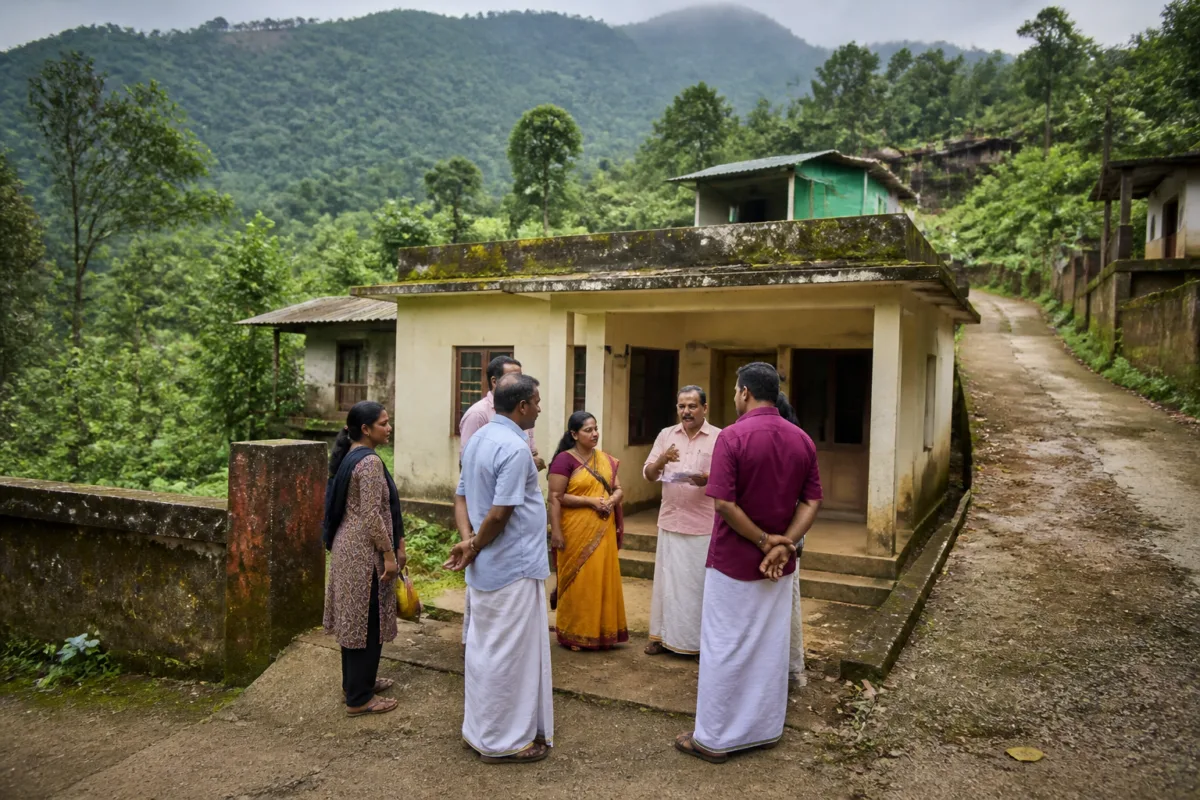
Edamalakudy, Kerala’s first tribal village panchayat, is facing an alleged financial crisis that has disrupted its administration and stalled development work, according to Leader of Opposition Pinarayi Vijayan.
In a Facebook post cited by PTI, Vijayan said salaries of panchayat employees and honorariums for elected representatives had remained unpaid for six months. He also alleged that infrastructure development and welfare activities in the panchayat had stopped.
Edamalakudy comprises 26 tribal settlements and has no independent source of revenue, making it dependent on government grants for routine functioning, Vijayan said. He claimed that the panchayat requires at least Rs 1.22 crore a year for regular expenses, while its General Purpose Fund had fallen to Rs 87,700.
Vijayan attributed the funding difficulty to what he described as neglect by the government and the Local Self Government Department. He said the department had not acted on demands for a special grant or restoration of the General Purpose Fund. He also called for the immediate release of funds, payment of pending salaries and honorariums, and restoration of the panchayat office’s functioning.
The report did not include a response from the state government, the Local Self Government Department or Edamalakudy panchayat authorities. It also did not independently confirm whether the panchayat has formally ceased operations or is at risk of closure, as described in the headline and in Vijayan’s allegations.
The episode highlights the vulnerability of local bodies that lack a local revenue base and depend almost entirely on higher-level grants. When routine funding is delayed or reduced, the impact can extend beyond administrative salaries to basic planning, welfare delivery, maintenance and implementation of infrastructure projects.
For Edamalakudy’s 26 settlements, the reported funding gap has implications for the continuity of elected local governance in a geographically and administratively distinctive tribal area. The immediate questions are whether the pending payments will be cleared, whether additional financial support will be approved and how the state will ensure that the panchayat can meet recurring expenses in the absence of independent revenue.
Those questions remain unresolved in the available report. Any assessment of the panchayat’s operational status and the government’s responsibility will require responses from the relevant state department and local authorities.

