


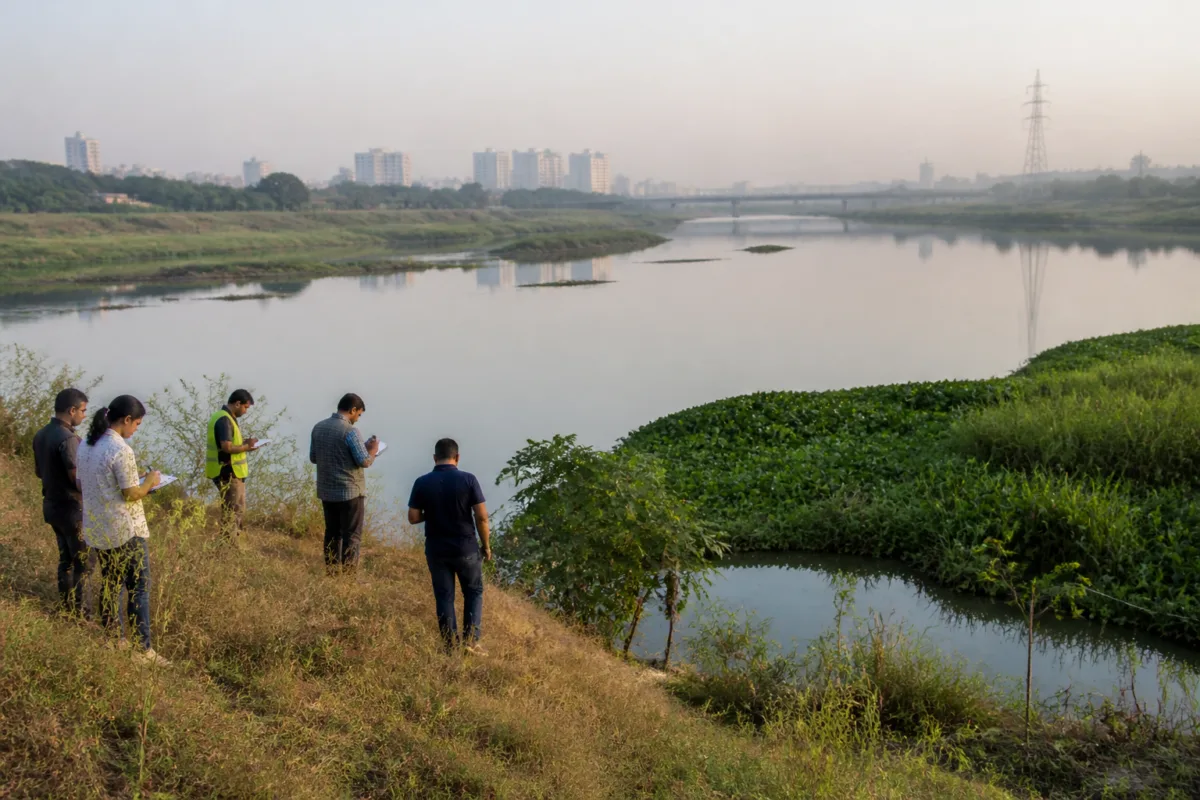
Delhi’s Yamuna revival plan is being framed around two linked priorities: restoring the river’s natural and environmental flow, and preventing untreated waste from entering it. These issues were central to discussions at the Yamuna Samvad programme held at Bansera and organised by the Delhi Development Authority (DDA).
The programme brought together government institutions, technical experts, researchers, academics, international partners and other stakeholders to discuss the river’s restoration. Delhi’s Lieutenant Governor, Taranjit Singh Sandhu, who inaugurated the event, described the Yamuna as closely connected to the capital’s ecology, heritage and daily life. He said its revival was linked to Delhi’s future and would require public participation.
According to the report, the discussions focused on creating a scientific and data-based approach while involving citizens in the restoration process. Participants examined governance, floodplain planning, ecological measures, urban water and drainage management, public access to the river, ghat development, technology, research, innovation and sustainable financing.
The emphasis on flow is significant for a river system that is also shaped by urban drainage, floodplain use and the discharge of wastewater. Experts called for attention to the floodplain, wetlands, drains, groundwater and biodiversity areas as connected parts of the river environment rather than as separate projects. They also stressed the need for long-term accountability, clear responsibility and data sharing to support implementation.
Sewage management was identified as a major operational priority. Delhi Jal Board Chief Executive Officer Vivek Pandey said measures being pursued include expanding the capacity of older sewage treatment plants, constructing new treatment plants, building biogas plants and extending sewer lines. He also referred to cooperation with neighbouring states to prevent waste from reaching the Yamuna.
The proposed approach, as described at the event, links sewage treatment with drainage, pollution control, water reuse and the maintenance of environmental flows. Participants supported an integrated, catchment-based system instead of treating individual drains or treatment plants as isolated interventions. The report does not specify a new project schedule, funding commitment or legally notified implementation framework arising from the dialogue.
The Union Ministry of Housing and Urban Affairs Secretary D. Thara said collective action, dialogue and concrete steps were required to restore the river to a clean condition. DDA Vice-Chairperson N. Saravanan Kumar described the programme as an initiative reflecting a shared commitment to the Yamuna’s revival.
National Mission for Clean Ganga Director Dr Praveen Kumar said cleaning the Yamuna and other rivers that join the Ganga was necessary for the broader clean-Ganga effort. IIT Kanpur professor Vinod Tare said government agencies, academic institutions and local communities all had roles in river cleaning and management.
For Delhi residents, the key question is whether the broad priorities discussed at Yamuna Samvad will translate into measurable improvements in sewage interception, treatment capacity, drainage management and floodplain protection. The event’s focus on public participation also points to the need for citizens to be connected with the river through planning that respects its ecological, cultural and historical importance.
The discussions indicate a shift towards viewing the Yamuna as an interconnected urban river system. However, their public value will depend on sustained institutional accountability, reliable data exchange and coordinated execution across agencies and jurisdictions.

