


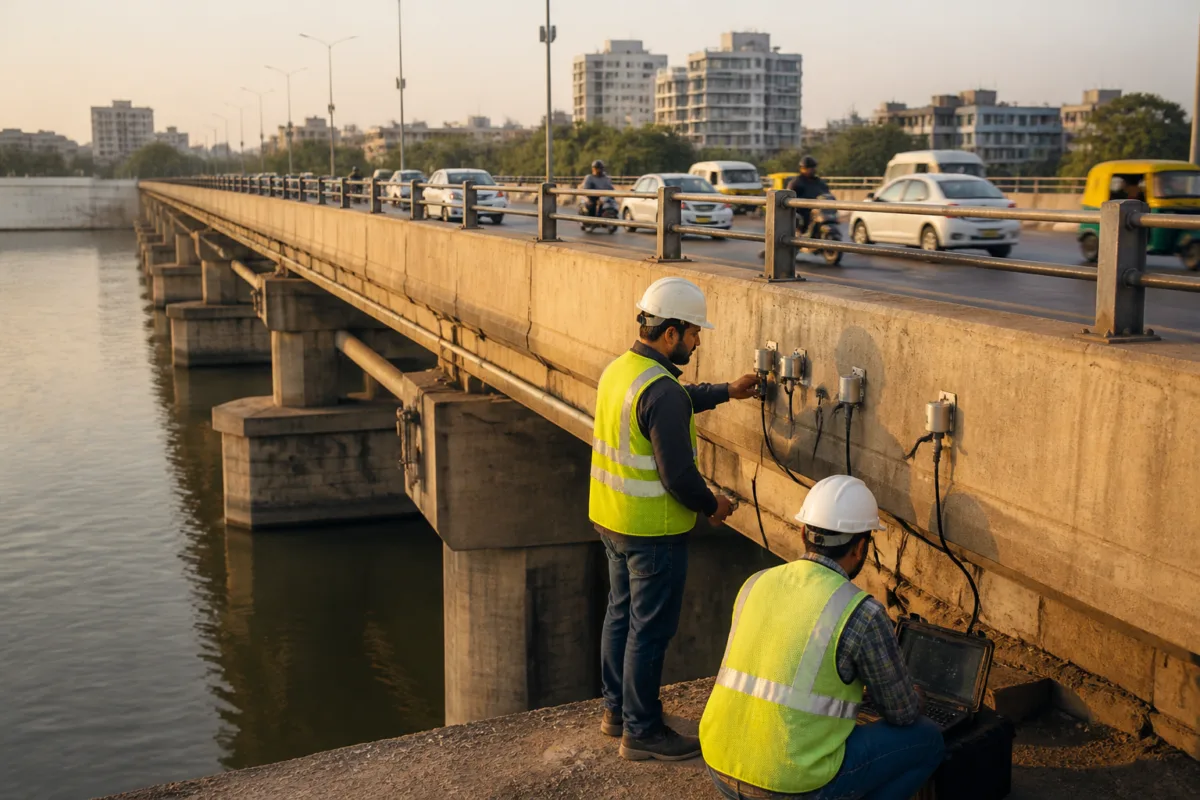
Ahmedabad’s proposed bridge health monitoring system will use 13 types of sensors to assess about 14 older bridges, according to a report by Gujarat Samachar. The Ahmedabad Municipal Corporation (AMC) is reported to be planning an investment of Rs 50 crore for the system after concerns over the condition and inspection of ageing bridges.
The proposed sensors would measure factors including air, water, moisture, earthquake shocks and vibration. Data collected from bridge spans over three months would be examined in a detailed report, which would then inform whether individual bridges should be repaired, strengthened or demolished, the report said.
The plan follows concerns raised after cracks were found in Ahmedabad’s Subhash Bridge. Gujarat Samachar reported that the episode intensified questions about the city’s inspection of old and deteriorating bridges and prompted the civic body to consider sensor-based monitoring alongside, or in place of, conventional manual inspections.
The first phase is expected to focus on older bridges over the Sabarmati River. If the system is considered successful, a subsequent phase could extend sensor monitoring to flyovers, according to the report. The article did not specify the full list of 14 bridges.
Implementation has not yet begun. The report said the tendering process had been under way for about three months but had not been completed. It also said that a precise schedule of rates for the sensors had not been finalised, leaving the estimated cost per bridge unclear despite the overall reported project estimate of Rs 50 crore.
The delay means that the timing for the system becoming operational remains uncertain. Until the tender and technical specifications are settled, it is also unclear how the sensor data will be integrated with routine inspections, engineering assessments and decisions on traffic restrictions or structural intervention. The reported three-month data period would begin only after the monitoring system is installed and functioning.

