


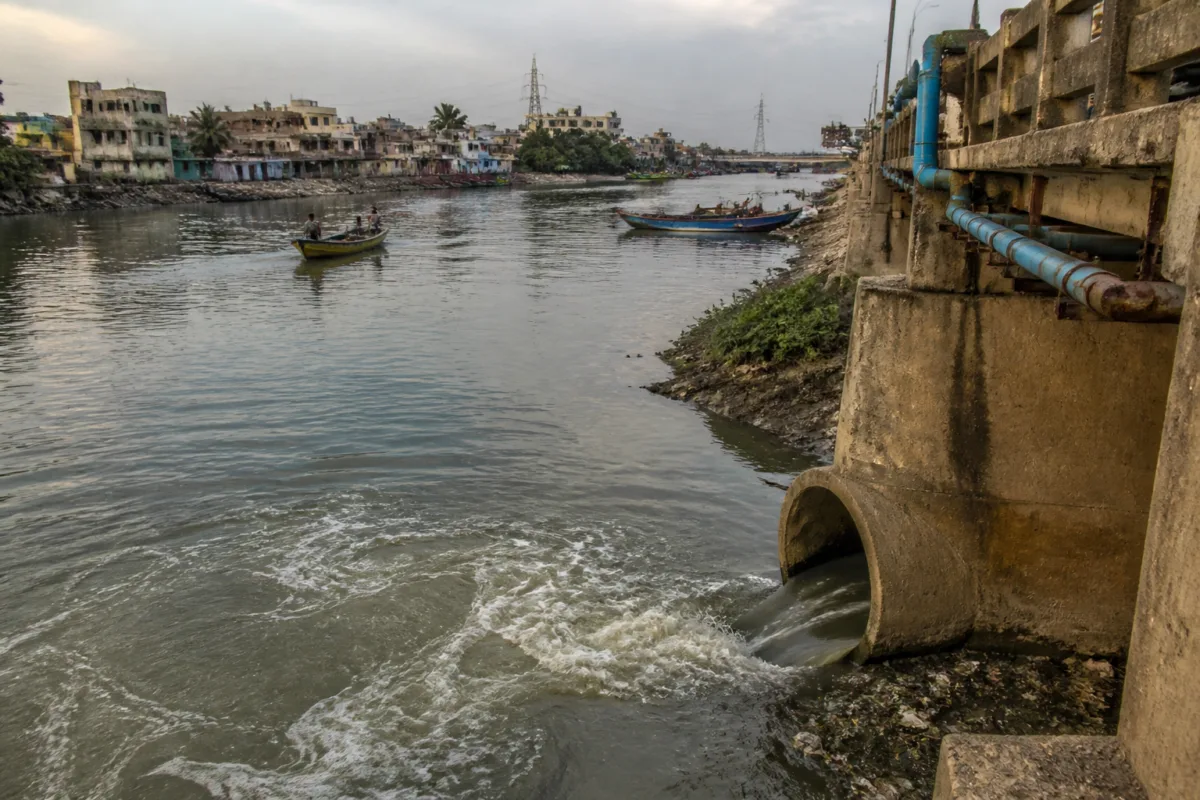
The Tamil Nadu Pollution Control Board has attributed the deaths of thousands of fish in Chennai’s Ennore waterways to untreated domestic sewage, after ruling out chemical contamination and industrial effluent discharge in its report to the southern bench of the National Green Tribunal.
The board said water samples collected from eight locations in the Kosasthalaiyar river, Ennore creek and the Buckingham Canal showed elevated total suspended solids, chemical oxygen demand and biological oxygen demand at several points. Dissolved oxygen levels fell to between 1.5mg/l and 1.7mg/l at the Buckingham Canal and some other locations, against a prescribed limit of 4mg/l.
Higher biological and chemical oxygen demand indicates a greater concentration of organic matter consuming oxygen in the water. The TNPCB said the recorded parameters were associated with a sewage-driven organic load and may have contributed to the fish deaths. High total suspended solids can also reduce water clarity and affect aquatic conditions.
The findings follow an incident in August in which around two tonnes of fish were found floating dead in the Kosasthalaiyar river and Ennore creek. The episode affected an area used by fishing communities and prompted demands for compensation, as well as calls for an investigation into a possible industrial-effluent leak.
To assess the industrial-contamination claim, the TNPCB examined cyanide, phenolic compounds and heavy metals. The concentrations were reported to be within prescribed limits. Sulphate levels exceeded 1,000mg/l at five sampled locations, but the board said this reflected high salinity rather than evidence of chemical contamination.
The report also identified 44 sewage outfalls entering the Buckingham Canal between Ezhil Nagar bridge in Tondiarpet and Ennore creek. According to the TNPCB, underground sewerage connections have not been provided in the Manali-Ennore area. Untreated domestic sewage is consequently entering the canal through stormwater drains.
This places the fish deaths within a wider urban service-delivery problem: the absence of a connected sewerage network is allowing wastewater to reach waterways intended to carry stormwater. The reported oxygen depletion shows how the failure is affecting ecological conditions beyond individual discharge points.
The TNPCB report was submitted in response to proceedings before the National Green Tribunal. The tribunal has posted the matter for further hearing on February 2, 2027, and sought the pollution-control board’s findings. The supplied report does not specify a completed schedule for sewerage connections, remedial works at the identified outfalls or compensation for affected fishermen.
The immediate governance challenge is therefore twofold: preventing untreated sewage from entering the canal and establishing whether the identified outfalls have been closed, intercepted or connected to a functioning treatment system. The TNPCB’s sampling addresses the reported cause of the fish deaths, but continued monitoring and documented corrective action will be necessary to determine whether water quality improves across the affected waterways.

