


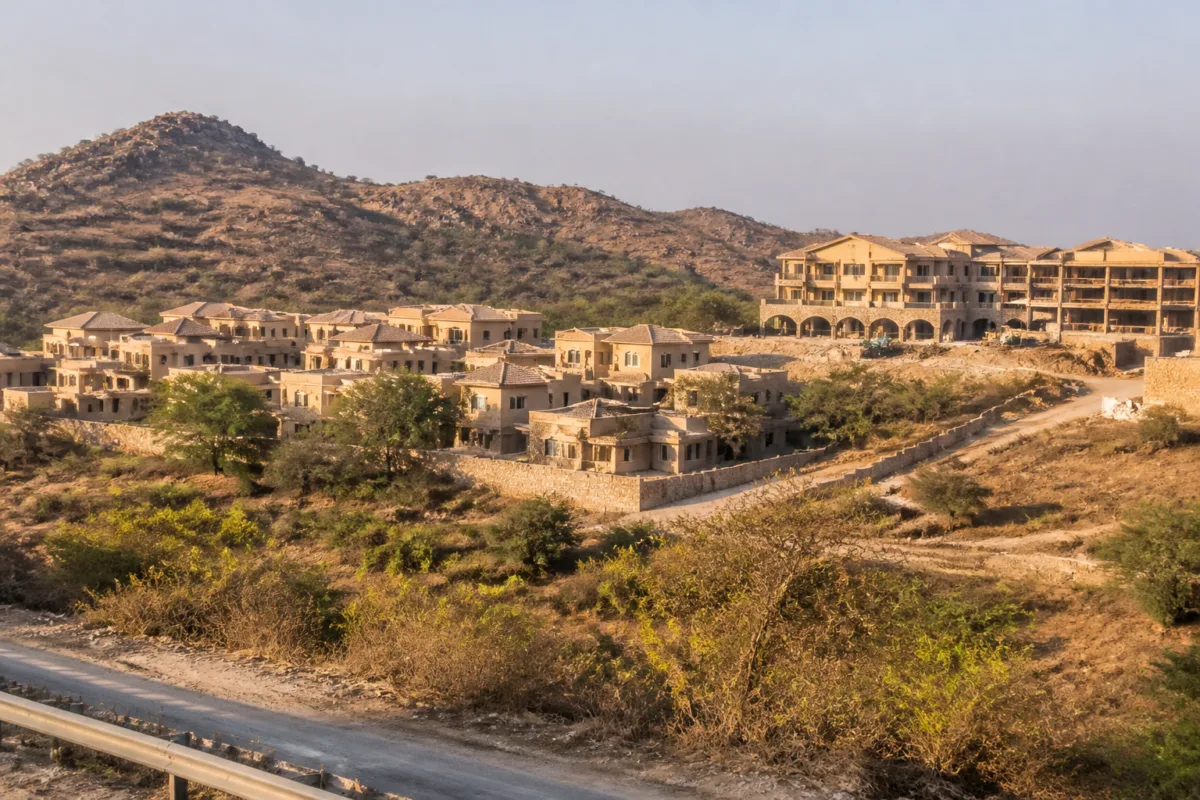
The Rajasthan High Court has declined to halt an Anti-Corruption Bureau (ACB) investigation involving the purchase of 64 villas and alleged regulatory favours linked to the Ananta resort at Ajabgarh, according to a report by Dainik Bhaskar. The court has issued notice to the state government and sought its response within three weeks.
The case concerns senior IAS officer Shikhar Agrawal. During the hearing, his counsel argued that the case had been wrongly registered and sought protection for him. The court said that if he feared arrest, he could file a separate anticipatory bail application. It also indicated that any consideration of interim relief would follow the state government’s response. The next hearing is scheduled for December 18, the report said.
The ACB case has brought the resort’s planning and environmental approvals under scrutiny. Dainik Bhaskar reported that the resort has 135 rooms and that 20 villas are registered in the names of Agrawal, Prashakha Mathur and their relatives. These details form part of allegations under investigation and have not been adjudicated by the court.
According to the report, a building plan approved by a district-level committee on July 16, 2020, recorded a gross area of 26,369.75 square metres. For an application to the Rajasthan State Pollution Control Board, however, the company submitted a private architect’s plan showing a built-up area of 19,377.91 square metres. The report said the board treated the latter figure as the gross area and issued consent to establish on December 14, 2023.
The distinction is significant because, as reported, resorts exceeding 20,000 square metres require environmental clearance from the State Environment Impact Assessment Authority. Dainik Bhaskar alleged that the lower area shown in the pollution-control application allowed the company to avoid that clearance. The report further said that Agrawal held additional charge as chairman of the pollution control board when the consent was approved. It identified the then joint secretary, Vinita Singh, as the signatory on the consent document.
The ACB investigation has also raised questions about the conversion of the resort land. The report said a forest department communication was represented as a no-objection certificate and that the roles of several officials—including the then Alwar collector, a regional forest officer, the Alwar town planner and officials of the Jaipur Bureau of Investment Promotion—were being examined. These are investigative allegations, not findings of guilt.
The report said part of the land was converted for small-industry use on June 4, while another conversion in April 2023 covered 500 square metres for a landholder’s residence. Existing facilities on the parcels reportedly included a banquet hall and staff quarters.
The court’s decision leaves the ACB investigation open while requiring the state to respond before any interim relief is considered. The case highlights the importance of consistent area definitions across planning, construction and environmental approval records, particularly where regulatory thresholds determine whether a large resort requires additional environmental scrutiny.

