


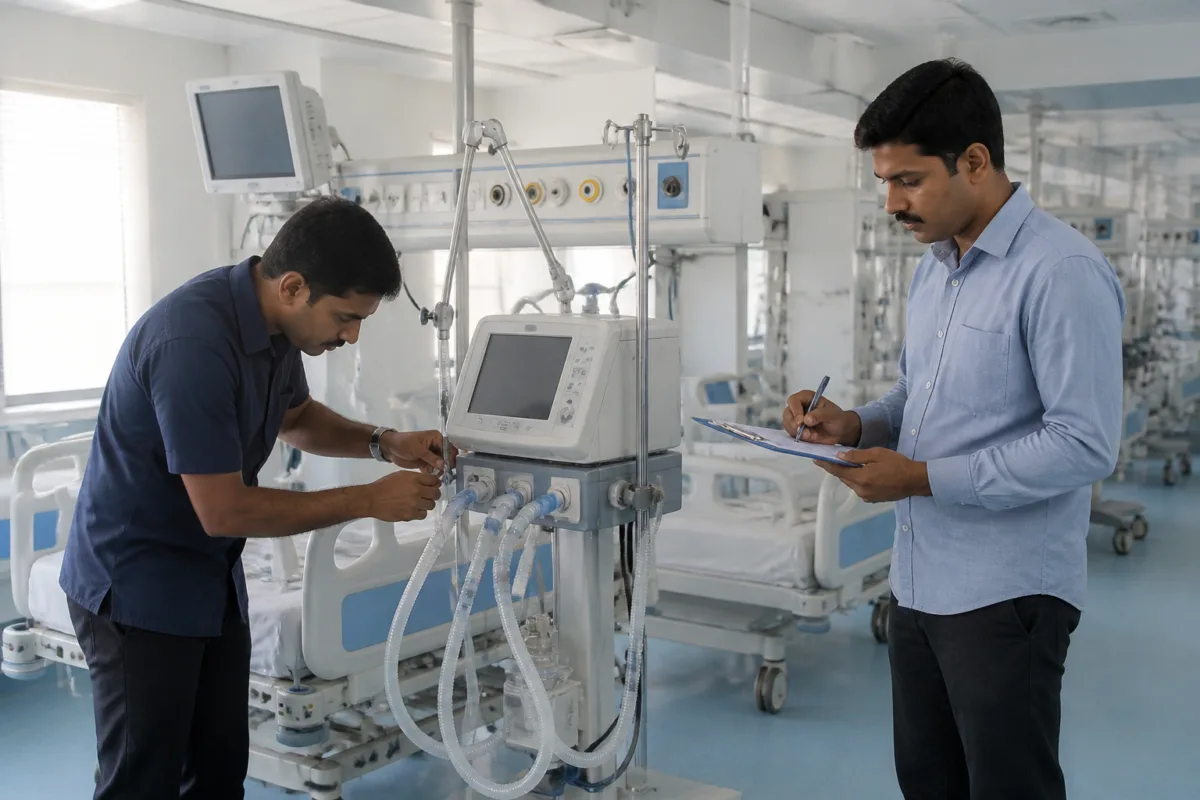
Maharashtra has decided to make annual third-party audits of ventilators mandatory in government and private hospitals, following a series of fires in critical-care facilities where medical equipment or electrical installations were suspected to be involved, The Times of India reported.
Public health minister Prakash Abitkar said the state had also introduced a standard operating procedure for the use and maintenance of ventilators. Officials responsible for healthcare facilities will be expected to ensure compliance with the guidelines, according to the report.
The decision follows the fire at Amravati District Women’s Hospital on August 24, where three newborns died in the sick newborn care unit and 36 others were rescued. Preliminary findings pointed to a ventilator explosion, although the precise sequence and cause remained under investigation, the report said.
The minister said the company held responsible for the Amravati incident had been blacklisted and that action had been taken against those found accountable. The report did not specify the name of the company, the proposed audit protocol, the agencies that would accredit third-party auditors or the penalties for hospitals that fail to comply.
The policy comes amid other reported incidents involving critical-care facilities. In June 2025, a fire in the intensive care unit of a private hospital in Thane was suspected to have originated in a ventilator unit. An elderly patient was moved to safety and no casualties were reported. In September 2026, three newborns died in a fire at the sick newborn care unit of RIMS, Adilabad, in neighbouring Telangana. A short circuit in an air-conditioning unit was suspected in that case.
Annual independent audits could give hospitals a formal process for checking ventilator condition, maintenance practices and operating procedures. However, the effectiveness of the measure will depend on how frequently faults are addressed, whether audit findings are documented and whether hospitals face consequences for unresolved risks. The state’s announcement, as reported, does not yet provide these implementation details.
Abitkar also announced an upgrade to Maharashtra’s 108 emergency ambulance service under a ‘hospital on wheels’ concept. The first phase is scheduled to begin in Mumbai on December 2 with 300 advanced ambulances, according to the report. The new vehicles are expected to include intensive-care-style facilities, beds, doctors and critical-care equipment so that treatment can begin during transport.
The ambulance service, introduced in 2013-14, is being upgraded after a fresh tender process. The minister said the government planned to inaugurate the revamped service during the upcoming winter session of the state legislature.
The announcement followed questions about the death of an infant in an ambulance in Alibaug. The report did not provide further details about that case. It also did not specify the number of advanced ambulances planned beyond the first phase or the expected coverage outside Mumbai.
Together, the ventilator-audit mandate and ambulance upgrade address two separate points of risk in emergency healthcare infrastructure: the reliability of critical-care equipment inside hospitals and the capacity to provide care while patients are being transported. The immediate public-interest test will be whether the state publishes clear audit requirements, assigns responsibility for follow-up repairs and reports compliance across government and private hospitals.

