


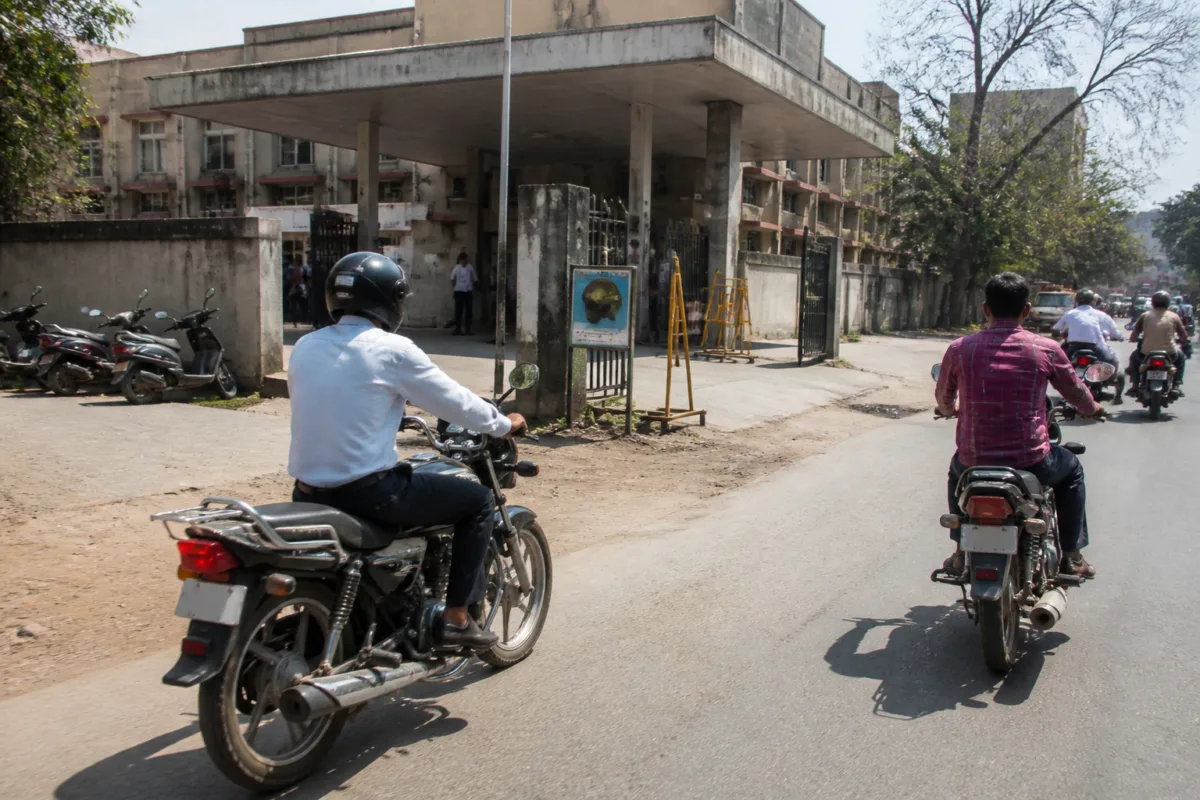
Nagpur’s road-safety measures are facing an implementation gap, with helmetless riders continuing to receive fuel and enter government premises despite directives issued by Justice Abhay Sapre, chairperson of the Supreme Court Committee on Road Safety, according to a Times of India ground check.
At several petrol pumps visited by the newspaper, staff reportedly had not received instructions on the proposed ‘No Helmet, No Petrol’ and ‘No Insurance, No Petrol’ measures. Fuel continued to be dispensed to motorists riding without helmets.
A similar situation was reported at government establishments. Helmetless two-wheeler riders were seen entering the Regional Transport Office, Nagpur Municipal Corporation headquarters and other government offices without checks. At the RTO’s city office, a signboard warns that motorists without helmets will not be allowed entry, but the report said riders passed through despite the warning.
A senior traffic police officer told the newspaper that Justice Sapre had allowed time for implementation and had emphasised public awareness before strict enforcement. The officer said outreach programmes were being planned and that directions would be issued to petrol pump owners before enforcement began.
The enforcement question is significant because Nagpur continues to record a substantial number of road deaths. Between January and October, 224 people died in road accidents, compared with 253 during the corresponding period a year earlier, an 11% decline. However, fatalities increased in the jurisdictions of 14 police stations and on seven of the city’s 10 most accident-prone roads, the report said.
Overspeeding was identified as a major cause of fatal crashes, while the period between 9 pm and midnight was reported to be the city’s most dangerous time for road accidents. These figures suggest that an overall decline in deaths has not removed concentrated risks in particular police jurisdictions, roads or time periods.
Justice Sapre’s proposed measures extend beyond petrol-pump checks. They include mandatory helmet use for both riders and pillion passengers, examining helmet-linked attendance restrictions at educational institutions, and developing a road-safety compliance application for government employees under a proposed ‘No Compliance, No Attendance’ concept.
The Nagpur experience highlights the difference between issuing a road-safety directive and creating a system capable of enforcing it. Signboards, proposed restrictions and compliance applications can have limited effect if frontline staff are not briefed, participating institutions do not receive formal instructions and enforcement responsibilities are not clearly communicated.
The traffic police officer’s statement indicates that the authorities view public awareness as a preliminary step before strict enforcement. Until those instructions are issued and consistently applied, however, the reported presence of helmetless riders at petrol pumps and government offices will continue to expose the distance between policy intent and everyday road-safety practice.

