


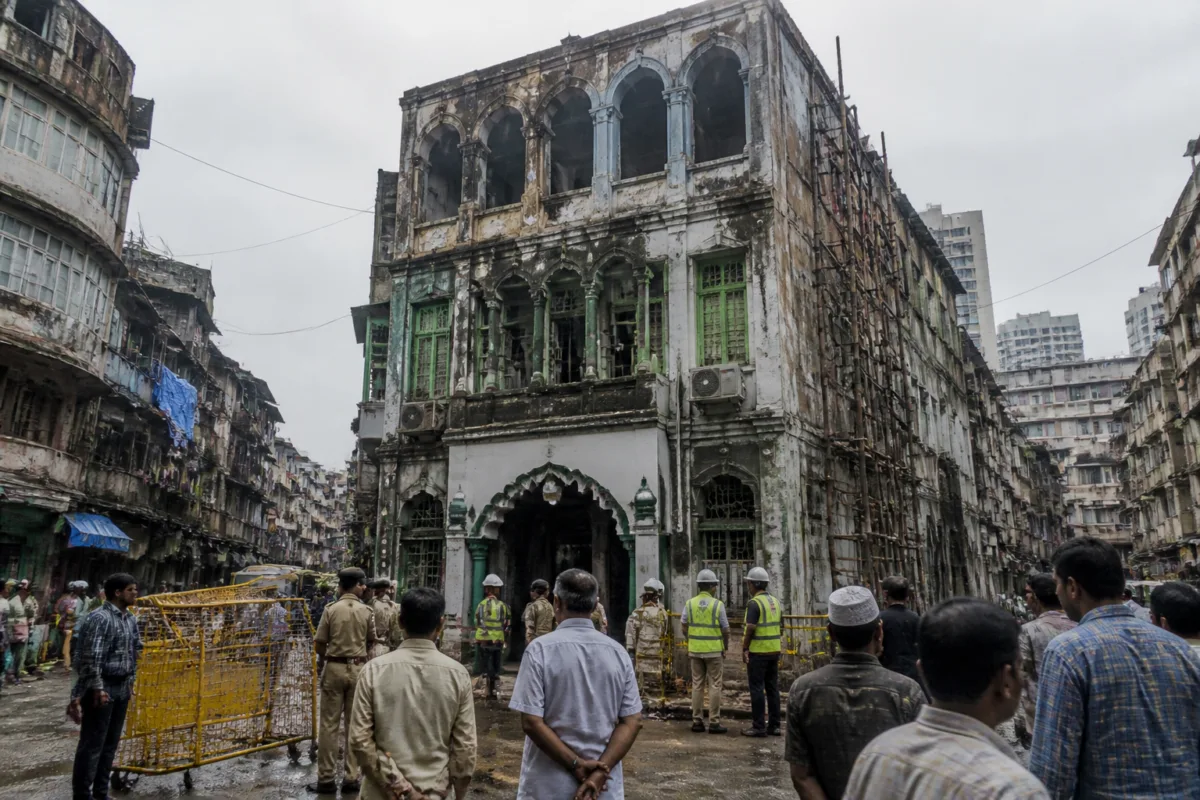
The proposed demolition of Haji Ismail Haji Habib Musafirkhana in Mumbai’s Bhendi Bazaar remained uncertain after local MLA Amin Patel claimed that a Supreme Court stay was in place, contradicting a Brihanmumbai Municipal Corporation plan cited in a report by the Free Press Journal. The building has been classified as dangerously dilapidated under the C1 category, but the BMC had not publicly confirmed whether demolition action would proceed.
The structure stands on Pakmodia Street and is widely identified as the ancestral residence of fugitive underworld figure Dawood Ibrahim. According to the report, the building was where Ibrahim and his family lived before he left India in 1986. It has also been described as a location linked to his residence and office, although claims about activities allegedly associated with the 1993 Mumbai serial bomb blasts remain allegations reported in connection with the property.
The immediate civic issue is the building’s physical condition and its location within the Bhendi Bazaar cluster redevelopment scheme being implemented by the Saifi Burhani Upliftment Trust. Parts of the property also fall within a proposed road alignment, adding a planning and right-of-way dimension to the demolition dispute.
Most of the building has reportedly been vacated, but a prayer hall continues to operate on the ground floor. The BMC notice pasted on the property on November 17 said occupants of the prayer hall had been offered either transit accommodation provided by SBUT or rental accommodation, with the rent to be paid by the trust. The report said the occupants were seeking a permanent religious facility at the same location after redevelopment rather than temporary accommodation.
According to the report, the civic body had planned demolition action on November 18 and 19 with police protection. Sources from the BMC were cited as saying that action had been planned, but they declined to provide further details. An official from the JJ Marg police station was also cited as saying that police personnel had been asked to provide bandobast, while civic officials had not confirmed whether the action would take place on the day.
The uncertainty intensified after people began gathering in the locality following reports of possible demolition. Patel, who visited the site, told the Free Press Journal that a Supreme Court stay prevented the BMC from taking action and that meetings were underway. The report did not provide the text or case details of the alleged stay, and the BMC’s position on the claim was not independently established in the supplied material.
The property’s status reflects the competing responsibilities involved in Mumbai’s redevelopment areas: civic authorities must address buildings deemed unsafe, redevelopment agencies must manage relocation and construction commitments, and occupants of active religious premises seek continuity and permanent arrangements. In this case, the proposed road alignment adds another institutional requirement to the process.
The next confirmed step depends on clarification from the BMC or a court document establishing whether a Supreme Court order applies to the proposed demolition. Until that clarification is available, it cannot be established from the supplied report whether demolition action took place or was legally halted.

