


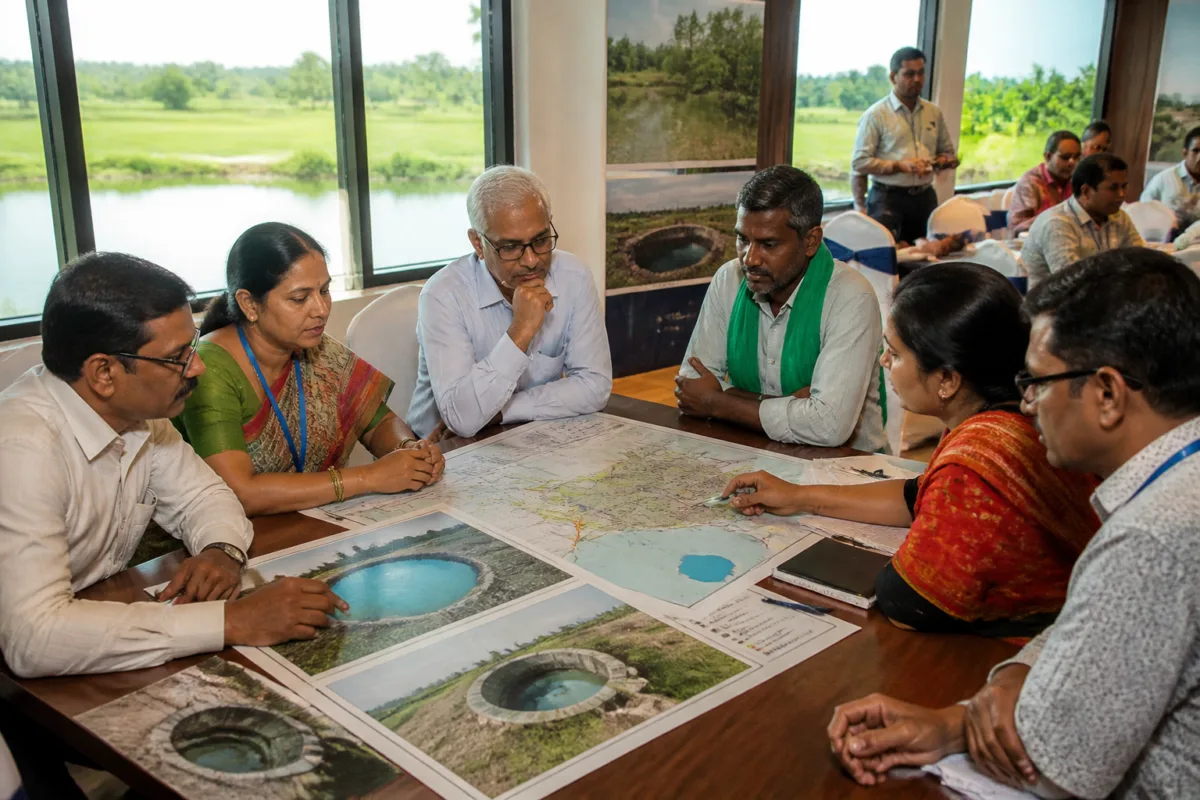
Odisha’s latest water security discussions have placed community stewardship, groundwater governance and climate resilience at the centre of efforts to protect rural water resources and livelihoods. The issues were raised at the 15th edition of IDEATE 2026, an annual thought-leadership conclave organised in Bhubaneswar by the Bansidhar & Ila Panda Foundation in partnership with the Federation of Indian Chambers of Commerce and Industry.
The conclave, themed ‘Rethinking Water Security for Rural Transformation’, brought together policymakers, industry leaders, development practitioners, technical experts and community representatives. Discussions focused on moving beyond the delivery of water access to the longer-term sustainability of water sources and the capacity of communities to manage them.
The event examined the links between water, agriculture and rural livelihoods, while also addressing groundwater governance, source sustainability and the need to build resilience against climate-related pressures. The discussions highlighted the role of local participation in ensuring that water infrastructure and conservation measures remain effective over time.
Inaugurating the event, Odisha Rural Development, Panchayati Raj and Drinking Water Minister Rabi Narayan Naik said water security was a shared responsibility. Naik observed that, despite the state’s abundant water resources, deforestation, drying waterfalls and inadequate long-term conservation efforts were contributing to growing scarcity.
The minister stressed that collective responsibility and foresight would be essential to preserve water resources for future generations. His remarks placed conservation alongside access as a central concern for water management in the state.
A panel titled ‘Water-Climate-Livelihood Nexus: A Cross-Sectoral Dialogue’ brought together UNICEF Field Office Chief Prasanta Kumar Dash, Hindustan Unilever Foundation CEO Shraman Jha, Mobius Foundation CEO Ram Boojh and M S Swaminathan Research Foundation National Programme Director Venu Margam. The session examined water management through the combined lens of climate conditions, livelihoods and rural development.
The conclave also featured a conversation titled ‘Every Drop Counts – Community Leadership & Local Solutions’. TEREE Policy Centre Founder Director Vinitaa H. Apte and Kholan Sarpanch Naresh Kumar Agrawal of Balangir discussed community-led approaches, with the session moderated by BIPF Founder and CEO Shaifalika Panda.
Panda said the focus needed to shift from merely delivering water solutions to empowering communities to manage and conserve their own water resources. The emphasis on local leadership reflects a governance challenge that extends beyond the construction of water assets: ensuring that communities have a continuing role in protecting sources and managing demand.
The discussions concluded with a focus on community participation, sustainable resource management and cross-sector coordination as key elements of rural water security. The event’s stated priorities included strengthening local stewardship, improving groundwater governance and linking water management with climate resilience and rural livelihoods.

