


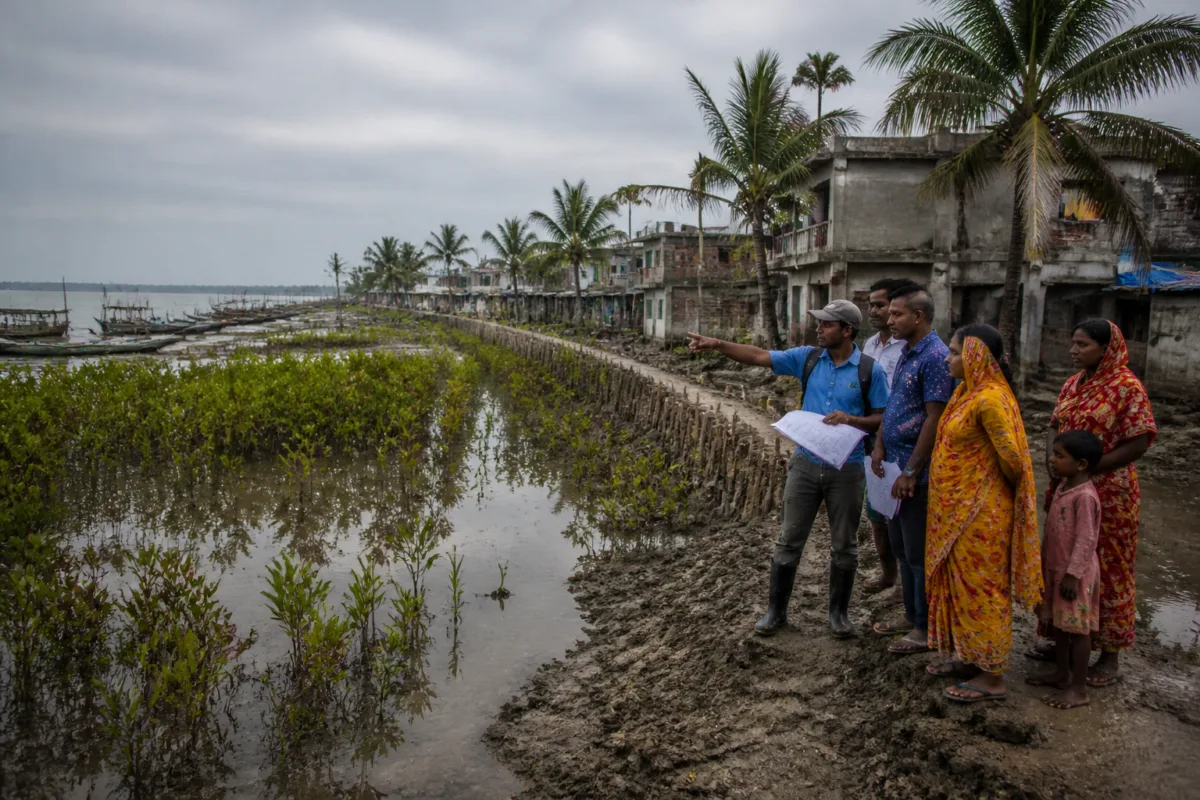
Climate relocation is increasingly moving from an emergency response to a long-term urban and planning challenge. At COP31 in Antalya, Türkiye, discussions on climate displacement highlighted that moving people away from rising seas, coastal erosion and extreme weather cannot be reduced to constructing replacement houses. It also requires protecting livelihoods, customary land rights, public services and access to the ecosystems on which communities depend.
The scale of the problem is reflected in recent displacement data. According to the Internal Displacement Monitoring Centre’s 2026 Global Report on Internal Displacement, disasters triggered 29.9 million internal displacement movements worldwide in 2025. That was 13 per cent above the annual average of the previous decade. By the end of the year, 13.6 million people remained displaced by disasters.
The figures describe movements rather than necessarily distinct individuals, since one person can be displaced more than once. But they show how repeated floods, cyclones, storms and other hazards are creating a continuing demand for shelter, public services and livelihood support. Displacement is therefore not only a humanitarian issue. It is also a question of where settlements are located, how land is allocated and whether public infrastructure can support people who are forced to move.
South Asia illustrates the difficulty of treating climate displacement as a temporary emergency. Disaster-related displacement movements in the region fell to 4.6 million during a relatively milder monsoon season, according to the material presented at COP31. Yet floods, cyclones and riverbank erosion continued to uproot vulnerable communities. A reduction in displacement during one season does not remove the underlying exposure of settlements located along coasts, rivers and fragile deltas.
The climate risk is also intersecting with existing displacement. A report released by the UN Refugee Agency ahead of COP31 found that nearly 90 million forcibly displaced people—roughly three-quarters of the global total—live in countries facing high to extreme exposure to climate hazards. Communities displaced by conflict or violence may therefore face a second layer of vulnerability when floods, heat, storms or water stress affect the places where they have sought safety.
This overlap changes the meaning of relocation. A settlement built away from immediate physical danger may still fail if it is disconnected from employment, markets, schools, health services, transport or natural resources. For coastal fishers, forest-dependent communities and delta farmers, the relationship with land is not limited to the plot on which a house stands. Income, food systems, cultural identity and social networks may all depend on access to a wider landscape.
The central policy distinction is between adaptation that enables people to remain safely in place and relocation that becomes necessary when continued habitation is no longer viable. The discussion at COP31, as reported by Down To Earth, called for greater investment in adaptation before relocation becomes inevitable. That approach recognises that moving communities is disruptive, expensive and socially consequential, even when the destination offers stronger physical protection.
Adaptation in this context includes more than disaster shelters or evacuation plans. The source material points to resilient infrastructure, ecosystem restoration, resilient housing and early warning systems. It also raises concerns about relying exclusively on concrete seawalls, which can be costly and inflexible and may worsen erosion elsewhere along a coastline.
Hybrid coastal defences that combine engineered structures with restored mangrove forests were presented as one alternative. The reported research cited assessments that mangroves can reduce flood depths by up to 70 per cent in some settings and avoid damages worth several times the cost of restoration. These figures are not a universal guarantee for every coastline, but they indicate why adaptation policy increasingly considers ecological systems as part of infrastructure rather than as separate environmental assets.
Mangroves can also support fisheries and biodiversity while helping protect coastal settlements. That creates a direct link between climate resilience and livelihoods. If a protective ecosystem is restored without preserving community access or local economic activity, the intervention may address one risk while creating another. Conversely, adaptation that combines flood protection with livelihood security can reduce the pressure for repeated emergency evacuation and eventual relocation.
Where relocation is unavoidable, the basic unit of planning cannot be the house alone. Physical safety is necessary, but a resettlement project also needs secure tenure, dependable public services and a realistic route to economic independence. The source material describes how families placed in concrete shelters far from traditional workplaces may gain protection from hazards while losing income and autonomy.
This is a familiar planning problem in a different form: the separation of housing from the systems that make daily life possible. A settlement without affordable transport, nearby employment, schools, healthcare and markets may be formally complete but functionally inadequate. For displaced communities, that gap can deepen poverty and prompt further migration.
The relocation process must also account for employment transitions. Some households may not be able to continue their existing occupations after moving. The measures discussed at COP31 include skills training, employment support and legal protections for workers who migrate in search of income. These protections are particularly important in informal sectors, where displaced workers may face wage theft, unsafe conditions or exploitation.
Land rights add another institutional layer. Relocation policies that recognise only formal property titles may overlook customary and historical rights held by communities that have used and managed land or ecosystems for generations. For artisanal fishers, forest dwellers and delta farmers, access to a river, forest, wetland or coastline may be central to survival even when ownership is not recorded through conventional individual titles.
The source material argues that communities should have a meaningful role in decisions about whether relocation occurs, where people move, how livelihoods are restored and whether access to traditional resources is retained. This is more demanding than consultation after a site has already been selected. It places participation, consent and continuing access at the centre of relocation planning.
The governance challenge is substantial because responsibility is distributed across multiple institutions. Disaster management agencies may oversee immediate evacuation, housing departments may manage resettlement, environment authorities may regulate coastal or forest access, and labour or social welfare departments may address income security. Without coordination, a relocation project can meet one administrative target while failing as a settlement.
Finance is another constraint. The material presented at COP31 states that even tripling adaptation funding for developing countries would meet less than 30 per cent of estimated adaptation needs. The figure underscores the distance between the scale of climate exposure and the resources available to build resilient infrastructure, restore ecosystems and plan dignified movement.
Insufficient adaptation finance also changes the timing of public spending. Governments may be forced to spend repeatedly on emergency relief, temporary shelters and post-disaster reconstruction instead of investing in measures that reduce exposure before disasters occur. Emergency relief remains essential after a cyclone or flood, but it cannot substitute for long-term decisions about land, infrastructure and settlement patterns.
International law presents a further gap. People who cross national borders because of climate impacts do not automatically qualify for refugee protection under existing legal frameworks. The source therefore calls for lawful migration options and the integration of human mobility into national adaptation plans. This approach treats migration not only as a failure or a last resort, but also as a possible adaptation strategy when it is safe, voluntary and supported by rights.
The evidence available from the COP31 discussion confirms three connected realities. Climate disasters are producing displacement at a large scale; people already displaced by conflict face additional climate exposure; and relocation without livelihoods, land rights and services can create new vulnerability. What remains less clear is how governments will translate these principles into enforceable national rules, funded programmes and settlement plans.
For cities and regions receiving displaced communities, the issue will increasingly involve land availability, infrastructure capacity, employment and social integration. For communities at risk, the immediate question may be whether adaptation can make staying safe or whether relocation is becoming unavoidable. The policy test is not simply whether people are moved out of danger. It is whether they can rebuild secure lives without losing the rights, resources and relationships that made their original communities viable.

