


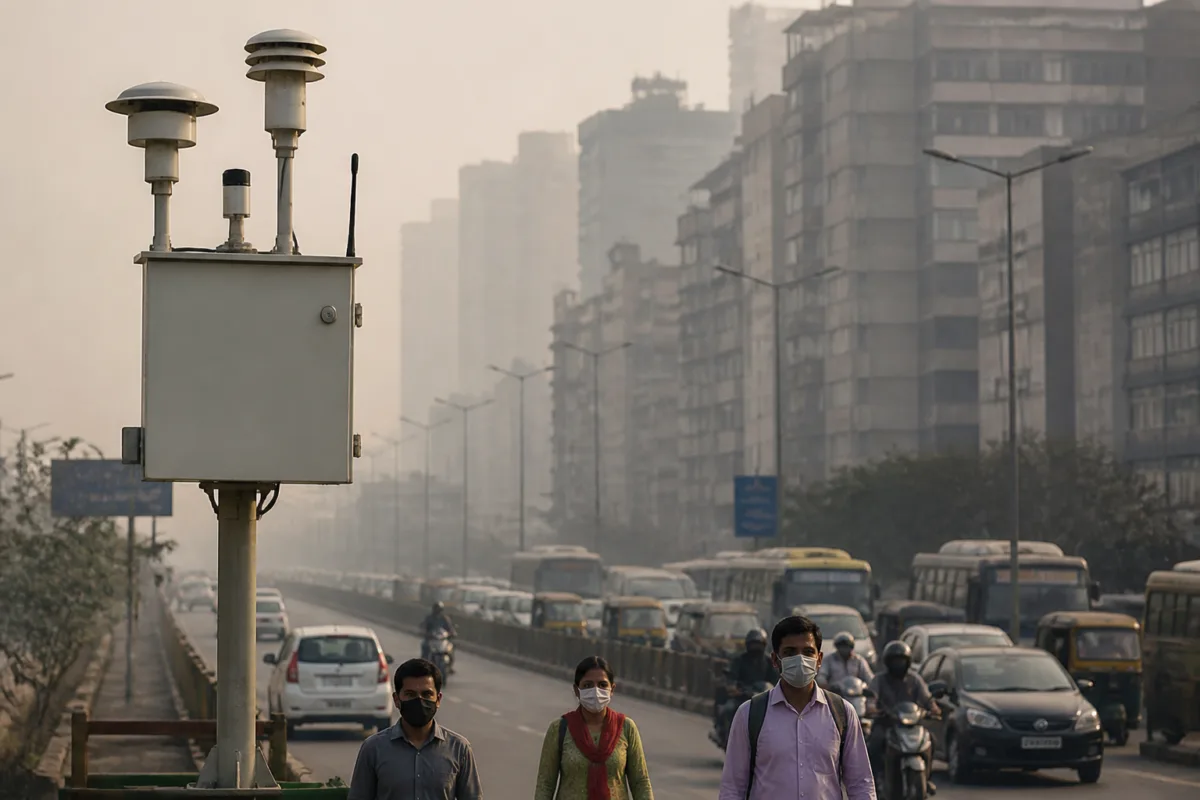
Delhi’s average AQI fell to 204 on November 17, the lowest level recorded in the capital so far this month, but the air remained in the Poor category and several monitoring stations reported Very Poor conditions, according to data released by the Central Pollution Control Board (CPCB).
The CPCB publishes AQI readings for major cities at 4 pm each day, based on the average conditions recorded over the previous 24 hours. Delhi’s November low of 204 indicates an improvement from the higher pollution levels recorded earlier in the month, but it does not represent clean air. The Poor category can cause breathing discomfort for people exposed to it for prolonged periods, with people suffering from asthma, lung disease or heart conditions considered particularly vulnerable.
The city’s average AQI was recorded at 246 at 7.05 am on Tuesday, also remaining in the Poor category. The gap between the daily average and the morning reading shows how pollution levels varied across the reporting period, while station-level readings indicated that several parts of Delhi were experiencing substantially worse conditions than the citywide average.
Sirifort recorded the highest AQI among the listed monitoring locations at 341, placing it in the Very Poor category. The Commonwealth Sports Complex recorded 338, followed by NSUT Jaffarpur at 336 and ITO at 335. Talakatora Garden recorded 326 and Pusa recorded 322.
Other locations reporting Very Poor air included Burari Crossing at 318, Chandni Chowk at 316, NIH Narela at 313, North Campus at 310 and DUT at 303. These readings show that the citywide average did not reflect the severity of conditions in several localised areas.
Delhi Cantonment recorded the lowest AQI among the locations listed, at 151, which falls in the Moderate category. The IMD Lodhi Road station recorded 182, followed by Major Dhyan Chand National Stadium at 185, Badarpur at 188 and Okhla Phase 2 at 192. The readings at these locations remained within the Moderate range, although they were not uniform across the city.
The CPCB’s classification indicates that Delhi’s air quality had improved compared with earlier November readings, but the continued presence of Poor and Very Poor conditions meant that pollution remained a health concern. The next citywide AQI update is expected through the CPCB’s regular monitoring system.

