


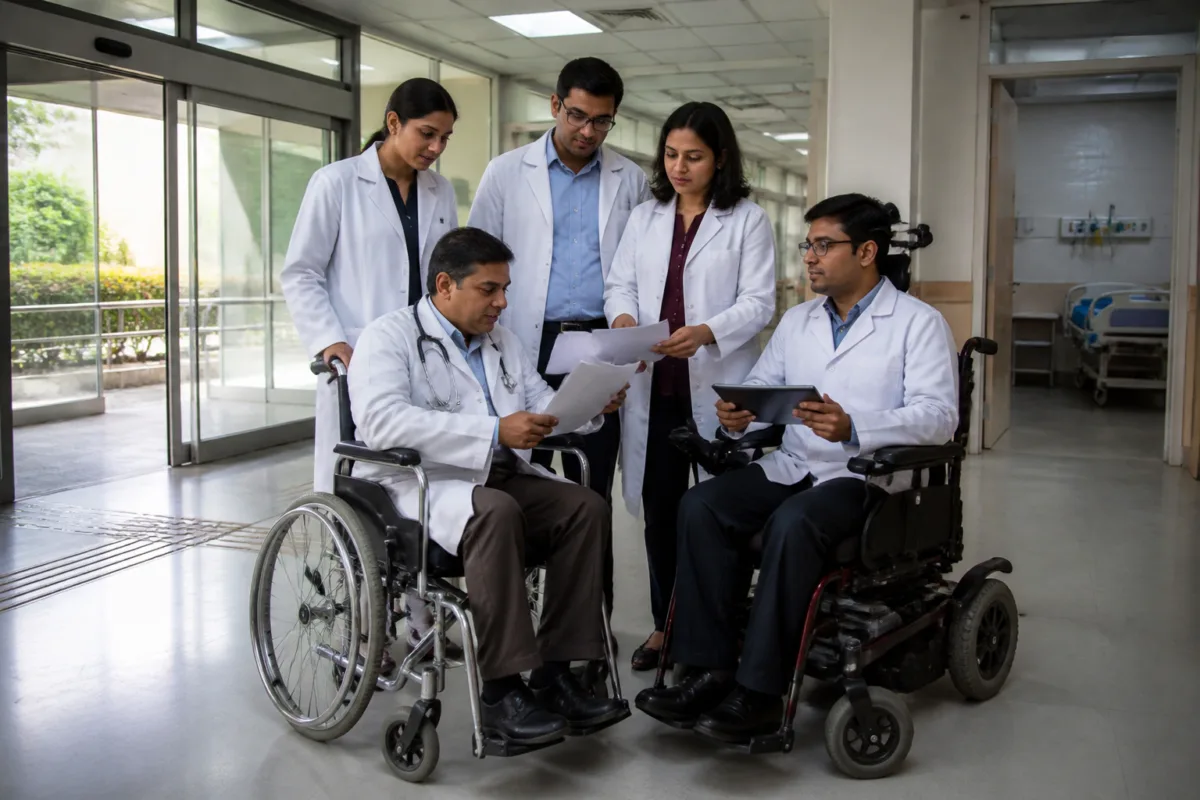
A Union health ministry review of medical eligibility norms across 54 specialities has faced objections from doctors with disabilities, who want practising disabled doctors included in the panels assessing clinical duties and accommodation requirements.
The review was initiated after an expert committee meeting on October 22 and is being undertaken by four Delhi institutions: Maulana Azad Medical College, ABVIMS and Dr Ram Manohar Lohia Hospital, Lady Hardinge Medical College, and VMMC and Safdarjung Hospital. The exercise is examining the functional classifications and physical requirements associated with medical specialities for doctors with benchmark disabilities.
Of the 54 specialities, 43 have been assigned for identification of functional classifications and physical requirements. These include anaesthesia, surgery, gastroenterology, ophthalmology, dermatology, pathology, obstetrics and gynaecology, paediatrics, cardiology, neurology, nephrology, oncology, orthopaedics, pulmonary medicine, rehabilitation, public health and sports medicine.
The remaining 11 specialities will undergo a review of their existing classifications and requirements. They include anatomy, ENT, biochemistry, general medicine, microbiology, pharmacology, radiodiagnosis, psychiatry, radiotherapy, tuberculosis and chest diseases, and urology.
Institutional subcommittees will assess the clinical, academic, surgical, emergency and diagnostic duties involved in each speciality. The exercise will also consider whether assistive equipment, ergonomic aids, digital diagnostic tools and other technological advances can enable doctors with disabilities to perform those duties.
In a representation sent on November 16, Dr Satendra Singh, writing on behalf of Doctors with Disabilities: Agents of Change, said the ministry-level committee did not include a practising doctor with a disability. The group argued that representation from disability organisations could not replace the direct participation of medical professionals with disabilities who understand the specific clinical and academic demands of individual specialities.
The doctors also questioned the use of physical activities such as walking, bending and climbing as indicators of professional suitability. They have urged the authorities to assess clinical competence, reasonable accommodation and the use of assistive technology instead. The representation cited a spinal cord-injured urologist and blind psychiatrists as examples of doctors practising in their specialities.
The group has sought the inclusion of practising doctors with disabilities on the committee and wider consultations beyond Delhi. According to government meeting minutes cited in the report, institutional subcommittees will include a doctor with benchmark disability from the relevant speciality wherever one is available.
The institutional subcommittees have been asked to prepare speciality-wise recommendations, preferably within four weeks. Their recommendations will then be placed before the ministry-level committee, followed by consideration by the Department of Empowerment of Persons with Disabilities and the Union Public Service Commission.

