


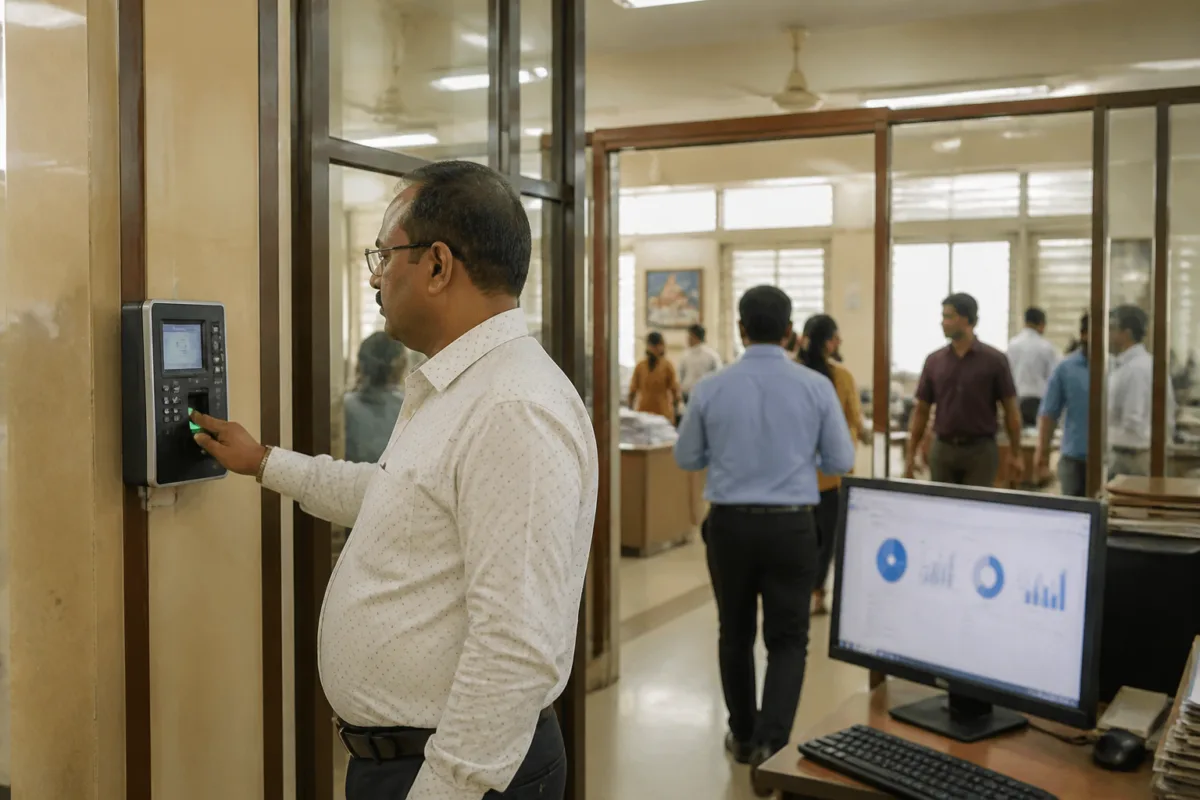
The Ahmedabad Municipal Corporation is introducing an AI-enabled attendance system for its workforce of about 50,000 employees, with the platform designed to detect proxy logins, identify duplicate facial profiles and trigger payroll deductions for unapproved absences.
The system will combine biometric devices with the AMC 311 mobile application to record staff check-ins, late arrivals and early departures in real time. An AI-based anomaly detection engine will examine attendance records for irregular patterns and flag cases requiring supervisory attention.
According to the report, the platform is also intended to identify so-called ghost employees by checking for duplicate facial profiles. It will further flag instances where salaries are processed without corresponding attendance records. The civic body has positioned these functions as measures to strengthen attendance enforcement across its departments.
The system will automatically compare attendance logs with leave records. This is intended to help identify unauthorised absences and alert supervisory officers when attendance data does not match approved leave information. Managers will receive real-time visibility into attendance-related activity across civic departments.
The proposed payroll link is a significant operational feature of the system. Unapproved absences will directly trigger automated deductions, reducing the need for each case to be processed manually. The report does not specify the deduction rules, the process for employees to challenge an incorrect attendance record, or the date on which the full system will become operational.
The deployment places biometric attendance, mobile reporting and automated data checks within a single employee-management framework. The AMC 311 integration means attendance information will be connected to an application already used by the civic body, although the supplied report does not detail how employees will access, review or correct their individual records.
For a municipal organisation with a workforce of this size, the system is intended to give supervisors a central view of attendance across departments rather than relying only on individual registers or manually compiled records. Its effectiveness will depend on the quality of biometric data, the accuracy of anomaly flags and the administrative process used to review disputed cases.
The report also does not provide details about the system’s vendor, implementation cost, data-retention policy or safeguards governing facial information. Those details will be important to understanding how the attendance platform is administered and how employee data is protected.
The immediate administrative objective is to curb proxy attendance, detect irregular employee records and automate the consequences of unauthorised absence. The AMC’s next steps will determine when the system is activated across its workforce and how attendance exceptions and payroll deductions are handled.

