


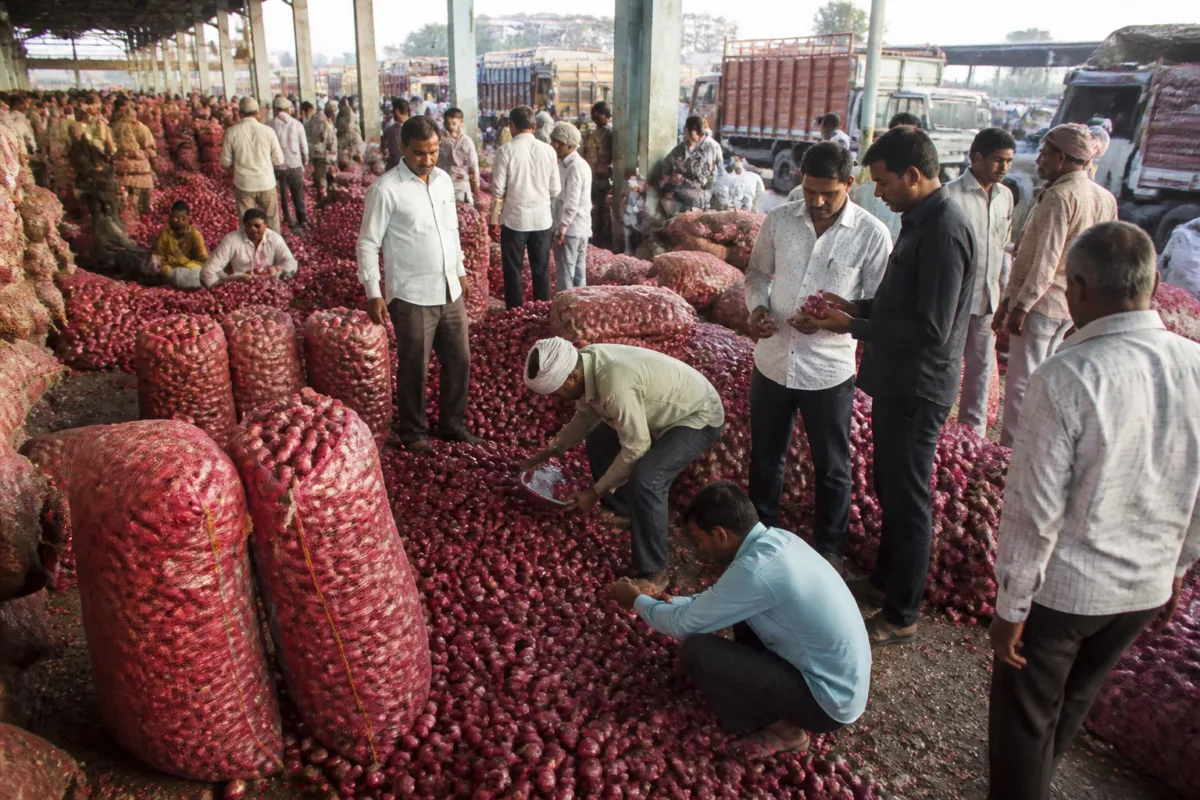
Nashik onion prices remained elevated after wholesale markets reopened following the Diwali break, with limited arrivals of new red onions and market officials indicating that supplies may take another month to increase substantially.
At the Lasalgaon Agricultural Produce Market Committee, recognised as one of Asia’s largest onion markets, 1,002 quintals of new red onion arrived on the first day of trading after the holiday closure. The crop received a maximum price of Rs 5,421 per quintal, a minimum of Rs 2,001 and an average of Rs 4,700 per quintal.
Summer onions recorded arrivals of 1,116 quintals at Lasalgaon. They fetched a maximum price of Rs 4,353 per quintal, a minimum of Rs 2,001 and an average price of Rs 3,800 per quintal. The figures indicate that both the new-season red onion and the remaining summer crop are being traded at relatively high wholesale rates.
Trading at market committees across Nashik district had remained suspended for eight to 10 days for Diwali. After reopening, the arrival of red onions was described as limited. The shortage has been linked to crop damage caused by inadequate rainfall during the final stage of the season.
The new red onion crop is important to the supply chain because summer onion stocks are nearing exhaustion. Until arrivals increase, the new crop is expected to meet market demand only partially. This creates a transition period in which traders and consumers remain dependent on restricted supplies from both crops.
The Pimpalgaon Baswant Agricultural Produce Market Committee has also begun receiving new red onions after the festival break. The new crop received an average price of Rs 4,400 per quintal there, while summer onions recorded an average of Rs 4,000 per quintal.
The supply position matters beyond the auction yards. Wholesale prices influence procurement costs for retailers, food businesses and households in cities that depend on Nashik’s onion markets. However, the wholesale figures do not translate directly into a fixed retail price because transport, sorting, storage, commissions and local market conditions affect the final price paid by consumers.
Lasalgaon market committee secretary Narendra Wadhwane said the arrival of new onions in substantial quantities could take about a month. He indicated that prices are likely to remain at current elevated levels until supply improves. The assessment was made in the context of the present arrival pattern and crop losses caused by insufficient rainfall.
The next significant change in the market will depend on the pace at which the new red onion crop reaches wholesale markets. Until then, Lasalgaon and Pimpalgaon Baswant will continue to provide key indicators of supply availability and price movement for the wider onion trade.

