


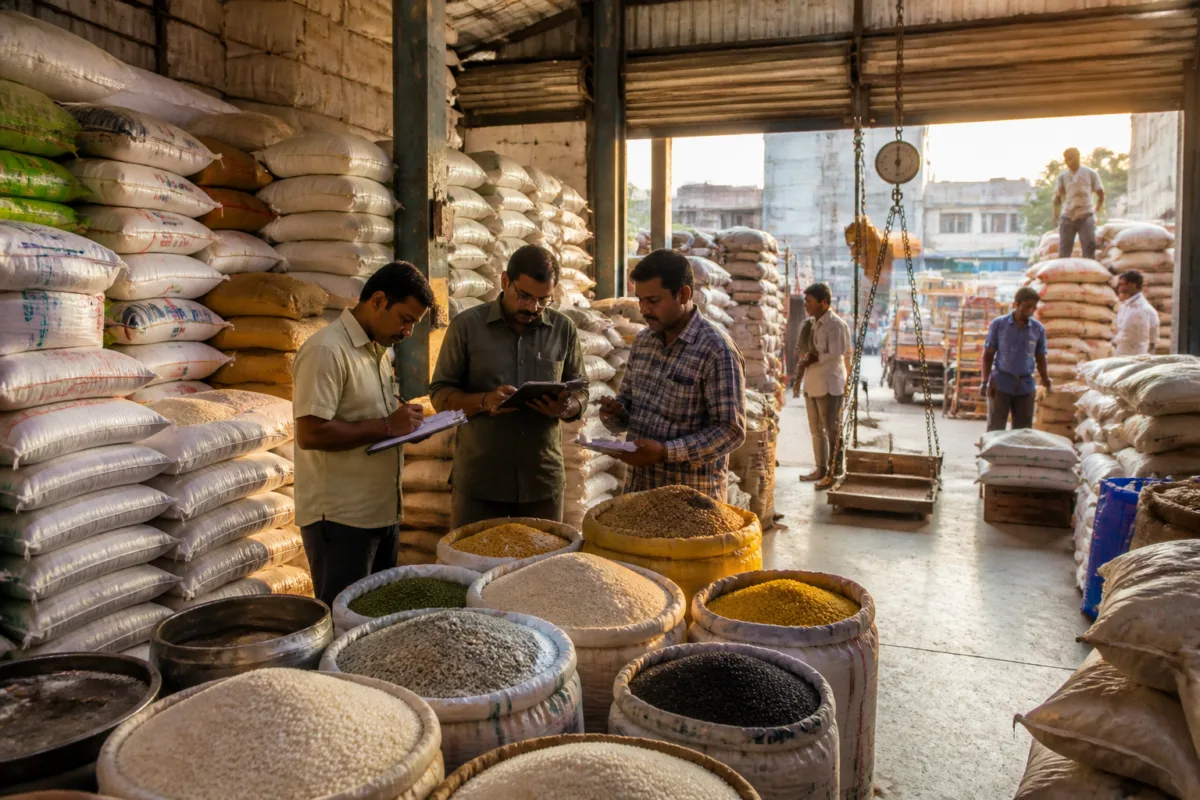
The Tamil Nadu government has imposed immediate stock limits on paddy, rice, tur and urad pulses across the state, requiring businesses holding supplies above the prescribed ceilings to reduce their inventories and declare stock positions on the Department of Consumer Affairs portal.
The restrictions are intended to ensure the availability and equitable distribution of essential food commodities at fair prices, according to the orders reported by the Times of India. The controls cover wholesalers, retailers, large retail chains, millers, processors and importers, creating a state-wide compliance framework for key staples.
Under the Tamil Nadu Paddy/Rice (Stock Limit) Control Order, 2026, wholesalers can hold up to 2,000 metric tonnes of paddy or rice. Retailers are permitted to stock up to eight metric tonnes per outlet. Big-chain retailers can also hold eight metric tonnes at each outlet, subject to an overall ceiling equal to eight times their total number of outlets.
Rice millers have been restricted to stocks equivalent to no more than one month of production capacity. For processors, the ceiling is set at 60% of monthly installed capacity multiplied by the number of months remaining until January 2027. Importers cannot retain imported paddy or rice stocks for more than 45 days from the date of customs clearance.
The paddy and rice restrictions will remain in force until January 31, 2027. Entities that already hold stocks above the prescribed limits have been directed to bring their inventories within the ceilings by November 16. They must also declare their stock positions and update the information regularly on the Department of Consumer Affairs portal.
A separate Tamil Nadu Tur and Urad Pulses (Storage Control) Order, 2026, imposes controls for three months from November 13. Wholesalers can hold up to 200 metric tonnes of each variety of pulse, while retailers are limited to five metric tonnes. Big-chain retailers can store five metric tonnes at each outlet and 200 metric tonnes at each depot.
For pulse millers, the permitted stock is capped at the last three months’ production or 25% of annual installed capacity, whichever is higher. Importers of tur and urad cannot retain imported stocks beyond 45 days from customs clearance. The separate time limit for pulses makes the order more immediate than the longer paddy and rice control period.
Both orders were issued by the cooperation, food and consumer protection department under the Essential Commodities Act, 1955, and came into force immediately. The measures place the state’s consumer-affairs portal at the centre of enforcement by requiring regular stock declarations from entities across the supply chain.
The orders introduce different ceilings for each stage of the food distribution system rather than applying one uniform limit. That structure distinguishes between storage at wholesale and retail levels, processing capacity, milling output, imports and depot operations. Businesses covered by the notifications must meet the November 16 compliance deadline for excess stock and continue updating their declarations during the applicable control periods.

