


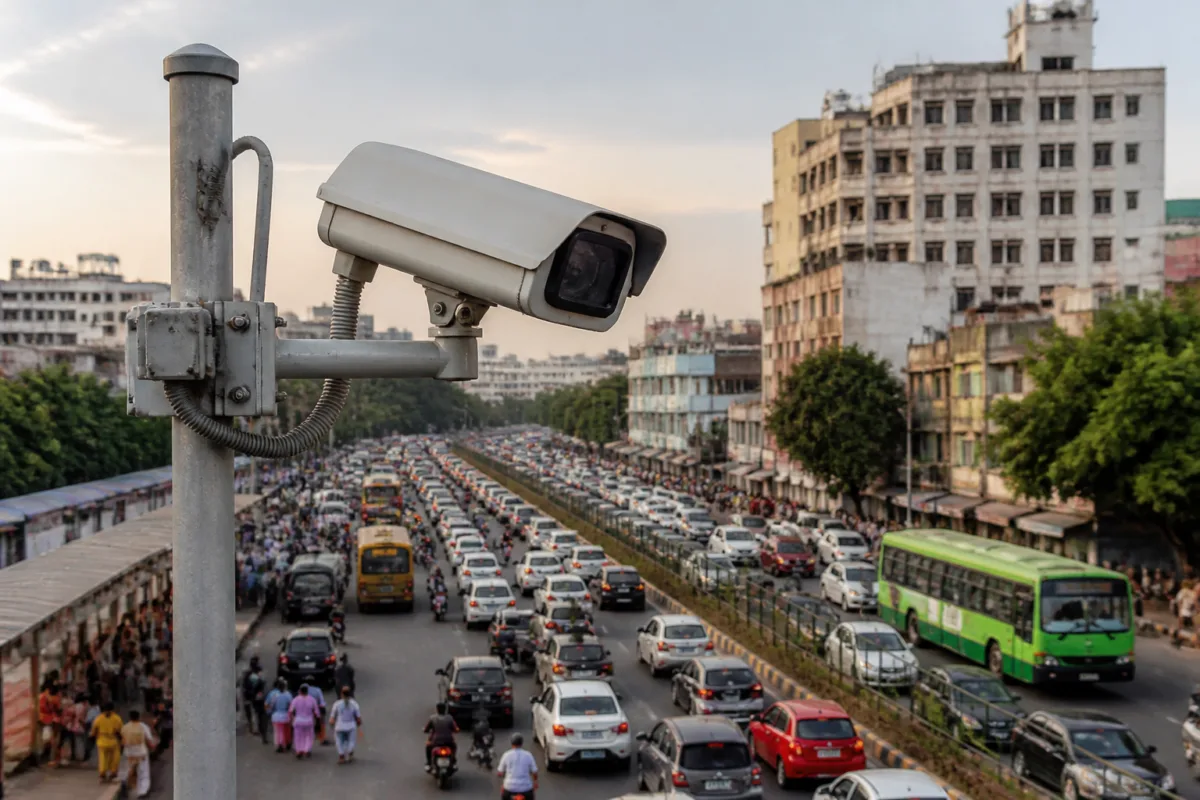
Tamil Nadu’s police technology wing plans to install 2,545 CCTV cameras across Chennai, Avadi, Tambaram, Madurai, Tiruchirappalli and Coimbatore, with the system designed to use artificial intelligence for public safety and crime monitoring. The camera network will also include automatic vehicle number-plate capture and facial-recognition capabilities, according to a report by Dinamalar.
The planned installations cover six urban areas with different policing and mobility patterns, including the Chennai metropolitan region and major cities in central and western Tamil Nadu. The report does not specify the exact locations of the cameras, the implementation schedule, the project cost or the agency responsible for operating the proposed network.
According to the report, footage captured by the cameras will be stored for 30 days. The system is being designed to identify and monitor the movement of suspected individuals, people who remain in one place for extended periods, unidentified objects left on roads and individuals involved in disputes.
The proposed use of artificial intelligence would allow the surveillance network to process camera feeds for specific patterns rather than relying only on manual review. The reported functions include identifying activity that may require police attention and assisting investigators in locating or recognising individuals connected with criminal cases.
Automatic number-plate recognition is another planned feature. Cameras would capture vehicle registration numbers automatically, creating a digital record that police could use while investigating incidents or tracking vehicles associated with cases. The report does not state whether the system will be integrated with existing police databases, traffic-management systems or city surveillance centres.
The facial-recognition facility is intended to help identify people involved in criminal cases, the report said. It did not provide details on the database that would be used, the conditions under which alerts would be generated, the process for reviewing matches or the safeguards governing access to the system.
The announcement places the police technology wing at the centre of a wider urban surveillance infrastructure spanning public roads and city spaces. For residents, the immediate operational change described in the report is the expansion of camera coverage and the planned retention of recordings for 30 days. The effectiveness of the system will depend on the number and placement of cameras, the quality of monitoring, the handling of alerts and the procedures used to retain and access footage.
The six-city plan is intended to improve public safety, according to the report. Further details on installation locations, deployment timelines, technical specifications, operating protocols and public access or oversight arrangements have not been provided in the supplied announcement.

