


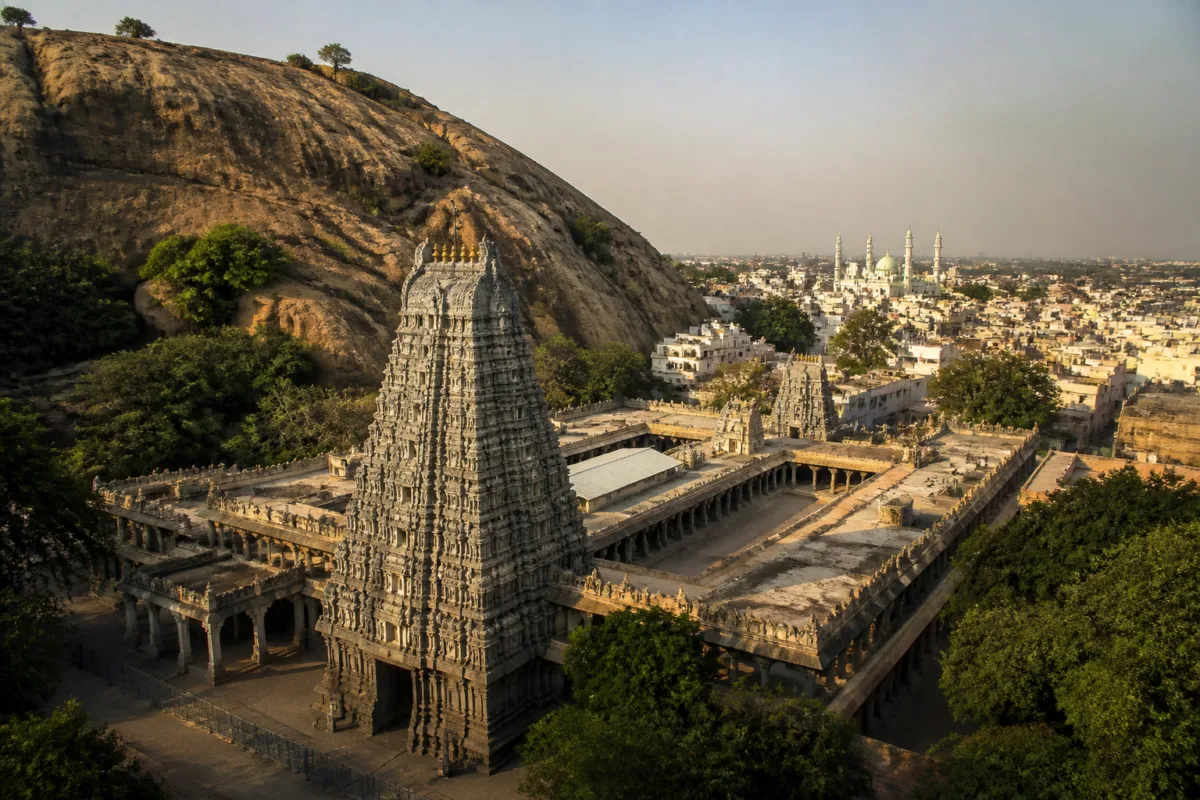
The Tamil Nadu government has opposed a plea seeking Archaeological Survey of India (ASI) control over the Arulmigu Subramaniaswamy temple and Thirupparankundram hill in Madurai, arguing that ownership, religious practices and administrative authority have already been settled through decades of legal proceedings.
The state filed its affidavit ahead of a November 17 Supreme Court hearing on a petition by Hindu Dharma Parishad. The petition seeks the transfer of control over the temple and hill to the ASI, along with permission to keep a lamp burning continuously at Deepathoon and illuminate the entire hill during the Karthigai Deepam festival.
The immediate dispute concerns the location of the festival lamp. The Tamil Nadu Hindu Religious and Charitable Endowments (HR&CE) Department said the lamp has traditionally been lit at the Deepa Mandapam near the Uchipillaiyar temple on the lower slopes of Thirupparankundram hill. Hindu groups have sought permission to light it instead at Deepathoon, an ancient stone lamp pillar higher up the hill and approximately 50 metres from the Hazrat Sultan Sikandar Badusha Auliya dargah.
In the affidavit filed before a bench of Justice Aravind Kumar and Justice Vipul M. Pancholi, HR&CE commissioner T.G. Vinay said the temple’s ownership of the hill, to the extent recognised by a 1923 civil court decree, had been upheld by the Privy Council in 1931. The department argued that this established title could not be displaced through the petition and that administration of the religious endowment remained legally entrusted to the HR&CE system.
The government also cited the long history of the existing practice. It said the Karthigai Deepam lamp had been lit at the traditional Deepa Mandapam for more than 150 years in accordance with the Agamas and the views of the temple’s traditional functionaries. The affidavit referred to attempts in 1862 and 1912 to light lamps near the hill summit, close to the dargah, which were reportedly opposed because the practice was not an established custom and could threaten public peace.
The state rejected the claim that the lower-slope location was only a wartime substitute for an earlier hilltop tradition, describing the claim as unsupported by documentary evidence. It also referred to a 1996 Madras High Court order, which it said authorised the Devasthanam alone to light the lamp, ordinarily at the traditional Deepa Mandapam. Any change in location, according to the affidavit, would require approval from the competent HR&CE authorities and compliance with specified distance restrictions.
The dispute also places two different forms of institutional control in focus. The state said ASI protection applied only to specific archaeological features, including the rock-cut cave and inscriptions, and did not extend to the entire hill or the functioning temple. The government further challenged the maintainability of the petition under Article 32 of the Constitution, arguing that the petitioner had not established a violation of fundamental rights.
The HR&CE Department warned that permitting lamps at multiple locations, particularly near the dargah, could create law-and-order complications. The Supreme Court is scheduled to consider the petition and the state’s objections at its November 17 hearing.

