


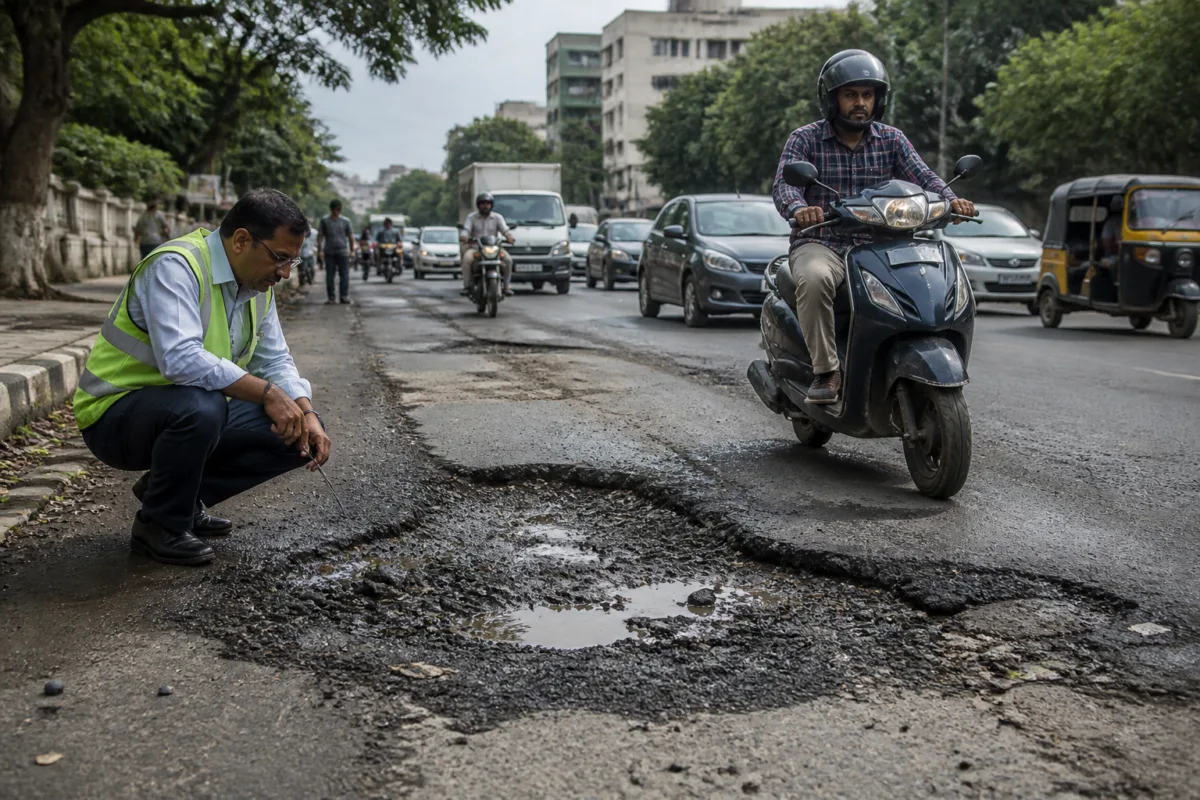
Pune’s road potholes and other surface obstructions triggered 9.3 million jolts among riders of more than 24,000 connected electric two-wheelers in a single week, prompting the Pune Municipal Corporation (PMC) to begin a detailed verification exercise across the city.
The data was collected through electric scooters operated by Ather Energy under a memorandum of understanding with the civic body. The information includes GPS-linked details of road disturbances detected by the scooters. PMC has now begun examining whether the recorded jolts were caused by potholes or by other features and defects on the road network.
The seven-day data covers the last week of October and includes roads across different parts of Pune. However, PMC officials have clarified that the 9.3 million jolts cannot all be treated as evidence of potholes. The readings may also include impacts caused by speed breakers, sunken chambers, road repairs carried out after utility digging, joints between girders on flyovers, rumble strips, uneven road edges and sudden braking in response to an obstruction.
The distinction is important because the technology records a physical disturbance experienced by a two-wheeler, rather than independently classifying its cause. PMC’s next step is therefore to compare the data with conditions at the identified locations before ordering repairs or other interventions.
The civic body has assigned 78 junior engineers from its road department to inspect the locations highlighted by the system. They will visit the sites, determine whether the disturbance was caused by a pothole or another obstruction, and upload photographs to the system. The same process is expected to help PMC check whether repaired stretches have improved after remedial work.
Potholes and uneven surfaces have remained a recurring problem for Pune residents. Two-wheeler riders frequently have to brake suddenly or manoeuvre around damaged stretches, while impacts from potholes and poorly levelled roads add to the difficulty of daily travel. Citizens have also raised complaints through the PMC app, although repairs are not always completed quickly, according to the report.
The road department and regional offices spend hundreds of crores of rupees each year on filling potholes and maintaining roads. Yet repeated deterioration has continued to generate complaints and public questioning of the city administration. The new data-led exercise is intended to provide the civic body with a wider map of road disturbances than complaint-based reporting alone.
“The information from the first week has been received under the agreement with Ather Energy. It records 9.3 million jolts, and we will find out why these jolts occurred. Road repairs and other measures will be undertaken accordingly,” PMC Additional Commissioner Prajit Nair said.
PMC’s engineers will now verify the mapped locations, upload site photographs and identify the corrective action required at each point. The civic body’s subsequent road repairs and related measures will depend on the findings of this inspection.

