


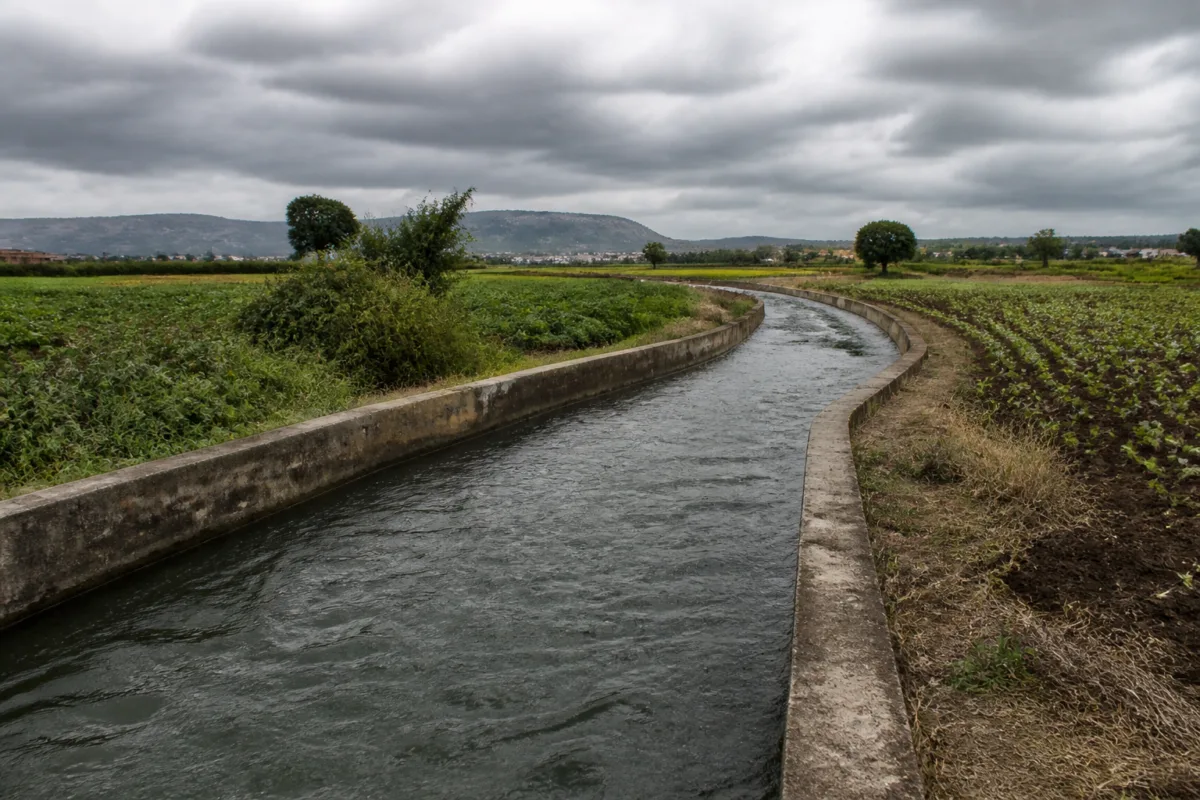
The Mutha right-bank canal’s water release for the rabi season is scheduled to end on 15 November, raising fresh uncertainty over irrigation supplies for farmers in Pune district ahead of the summer season. The release was started after a break in rainfall and concerns over crop losses in parts of Haveli, Daund and Indapur talukas.
According to a report by Loksatta, the Water Resources Department began the rabi rotation from the Khadakwasla dam system on 25 September, earlier than the usual mid-October start. The decision was taken with the consent of Water Resources Minister Radhakrishna Vikhe-Patil, after the district faced what the report described as drought-like conditions linked to inadequate rainfall.
The rotation has continued for around 51 days, compared with the usual duration of about 45 days. The report says a total of 4.5 thousand million cubic feet, or TMC, is planned to be released for the rabi season through the canal. The water is intended for agricultural areas in Haveli, Daund and Indapur.
However, the supplied report contains two different figures for the quantity released so far. Its opening account says approximately 3.5 TMC has already been released, while a later passage states that 3.25 TMC has been supplied. This discrepancy requires confirmation from the Water Resources Department before the figure can be treated as established.
The department is also expected to regulate irrigation use because of the water available in the Khadakwasla reservoir system. The report says farmers will need to use irrigation water carefully and that water conservation measures will be necessary while the current rotation continues.
The immediate impact of the closure will be felt in the canal command areas dependent on the rabi rotation. The supplied material does not provide a crop-wise assessment, details of the affected villages or the exact reservoir storage position. It also does not state whether the department has issued a separate public notice specifying the final release schedule or distribution arrangements after 15 November.
The prospects of a summer rotation remain uncertain. A decision on whether to operate or cancel the summer release is expected at the canal committee meeting scheduled for January. Until that decision is taken, the canal’s summer availability cannot be treated as confirmed.
The timing of the decision places the canal system at the centre of a wider water-management challenge: the same reservoir network must support irrigation while authorities account for limited storage and changing rainfall conditions. For farmers, the key unanswered questions are the verified volume already delivered, the remaining storage available for irrigation and whether a summer rotation will be approved.
The Water Resources Department’s next formal milestones are the closure of the rabi rotation on 15 November and the canal committee’s review in January. Confirmation of the released volume and the summer water schedule remains pending in the supplied material.

