


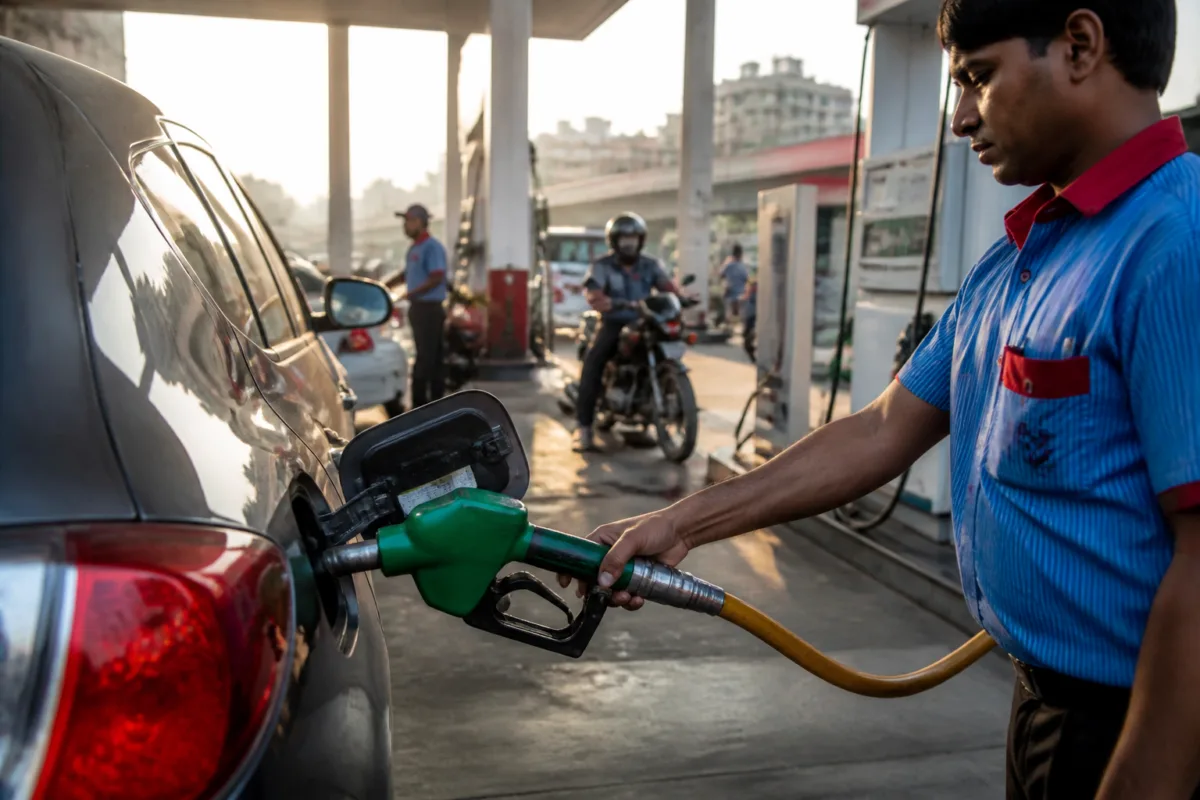
India’s shift to E20 petrol is raising practical questions for vehicle owners, particularly those using older cars and two-wheelers. The supplied report by NDTV Business says concerns centre on vehicle compatibility, mileage, possible engine damage, repair costs and whether motor insurance policies will cover related claims.
E20 petrol contains 20 per cent ethanol and 80 per cent conventional petrol. The fuel has become increasingly common at petrol stations as India expands the use of ethanol-blended petrol. For consumers, the transition has created uncertainty over how different vehicles will perform and whether older models were designed to use the blend.
The report identifies mileage as one of the key concerns for vehicle owners. It also points to the possibility of higher repair costs if a vehicle is not compatible with the fuel, although the supplied content does not provide model-specific compatibility information, measured mileage differences or repair estimates.
On insurance, NDTV Business reports that insurers have clarified that a claim cannot be rejected merely because a vehicle has been filled with ethanol-blended petrol. That clarification addresses one part of the concern, but the supplied material does not set out the full policy conditions, exclusions or documentation requirements that may apply when an owner files a claim.
The issue reflects a wider challenge in India’s fuel transition: a national blending target can affect consumers differently depending on vehicle age, manufacturer specifications and access to clear information at the point of refuelling. Fuel compatibility therefore becomes not only a technical question but also a consumer-information and risk-management issue.
The available report does not establish which specific vehicle models are compatible with E20 petrol, whether all manufacturers provide the same guidance, or how insurers assess mechanical damage linked to fuel use. Those details require confirmation from vehicle manufacturers, insurers and relevant government or industry authorities.
Until that information is established from the complete report and primary documentation, vehicle owners should treat general claims about mileage, damage and insurance coverage cautiously. The immediate confirmed point in the supplied material is that insurance claims cannot be rejected solely because a vehicle was filled with ethanol-blended petrol; the wider conditions remain to be verified.

