


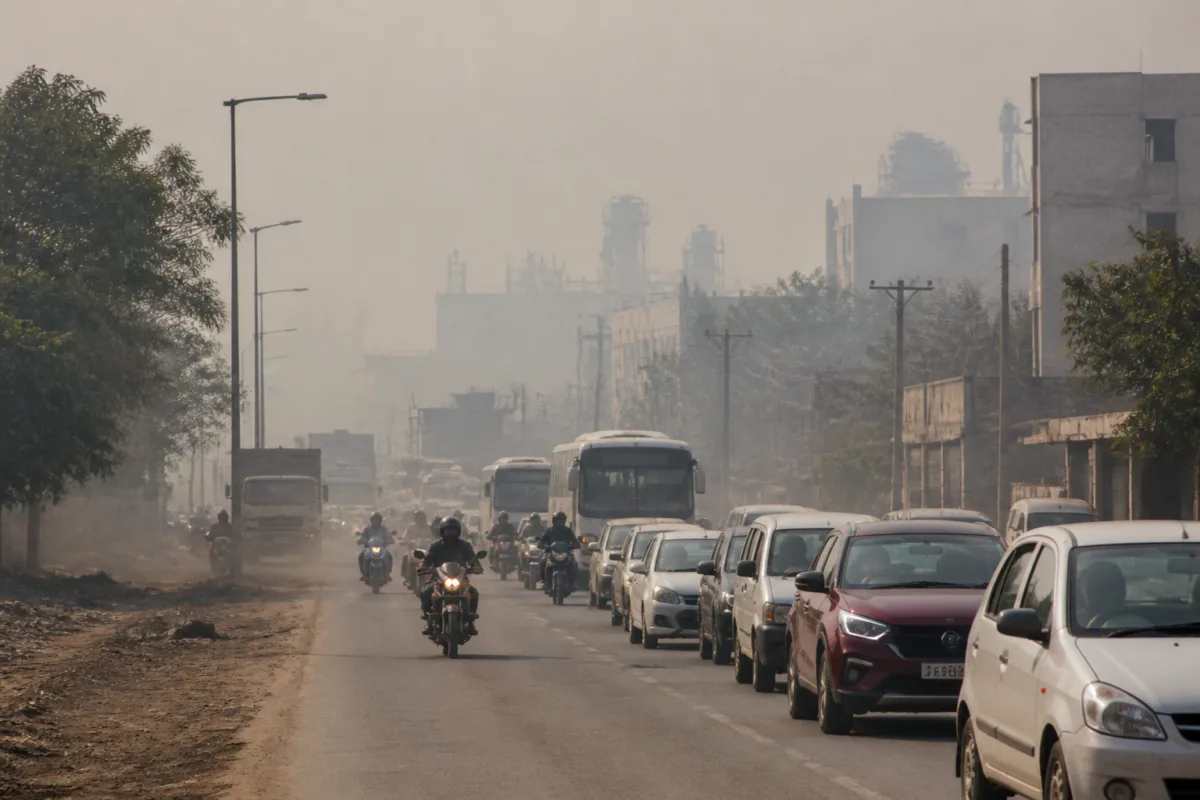
Pune air pollution worsened sharply after Diwali, with Bhosari recording a reported air-quality reading of 427 and Shivajinagar registering 250, according to figures attributed to the Indian Institute of Tropical Meteorology’s air-quality portal. The Bhosari reading was higher than Delhi’s reported figure of 320 for the same Thursday, while Nigdi recorded 214.
The figures were reported by Pudhari – Pune, which said pollution from Diwali firecrackers was still present in the air as vehicle movement increased across the city. The report attributed the latest rise to emissions produced by fuel combustion from road traffic.
IITM measures air quality in Delhi, Mumbai, Pune, Ahmedabad and Kolkata, according to the report. Its portal recorded the highest reported pollution level among the cited Pune locations in Bhosari, an industrial and residential area in the Pimpri-Chinchwad region. Shivajinagar, a major central Pune location, recorded a lower but still elevated reading of 250.
The report said Pune’s pollution levels had increased after Diwali rather than declining once the festival ended. It linked the continuing deterioration to the combined presence of lingering firecracker emissions and rising traffic-related pollution. The report did not provide a separate breakdown quantifying the contribution of each source.
Particulate pollution was also reported to have increased across the city. The report specifically referred to higher levels of PM10, or coarse particulate matter, and PM2.5, or fine particulate matter. It also said carbon monoxide levels had risen along with dust particles.
The Bhosari reading was reported in micrograms per cubic metre in the source article, which also referred to it as an air-quality index reading. The figures for Delhi, Shivajinagar and Nigdi were presented in the same context. The supplied report did not include the monitoring station details, averaging period or a separate official advisory linked to the readings.
The pattern places traffic emissions at the centre of the latest air-quality concern. Pune’s road network carries increased vehicle volumes after the festival period, and the source report connected that movement with additional fuel-combustion pollution. However, it did not identify specific roads, traffic restrictions, enforcement measures or municipal actions in response to the readings.
The reported readings highlight how pollution can remain concentrated in particular urban locations even when citywide comparisons are made. Bhosari’s figure was substantially higher than the readings cited for Shivajinagar and Nigdi, indicating differences between monitoring locations within the wider Pune urban area.
The source report did not state how long the elevated readings continued, whether the levels represented a citywide average, or what immediate steps authorities planned to take. Further updates from the monitoring system and any response from civic or pollution-control authorities will determine whether the reported deterioration was sustained.

