


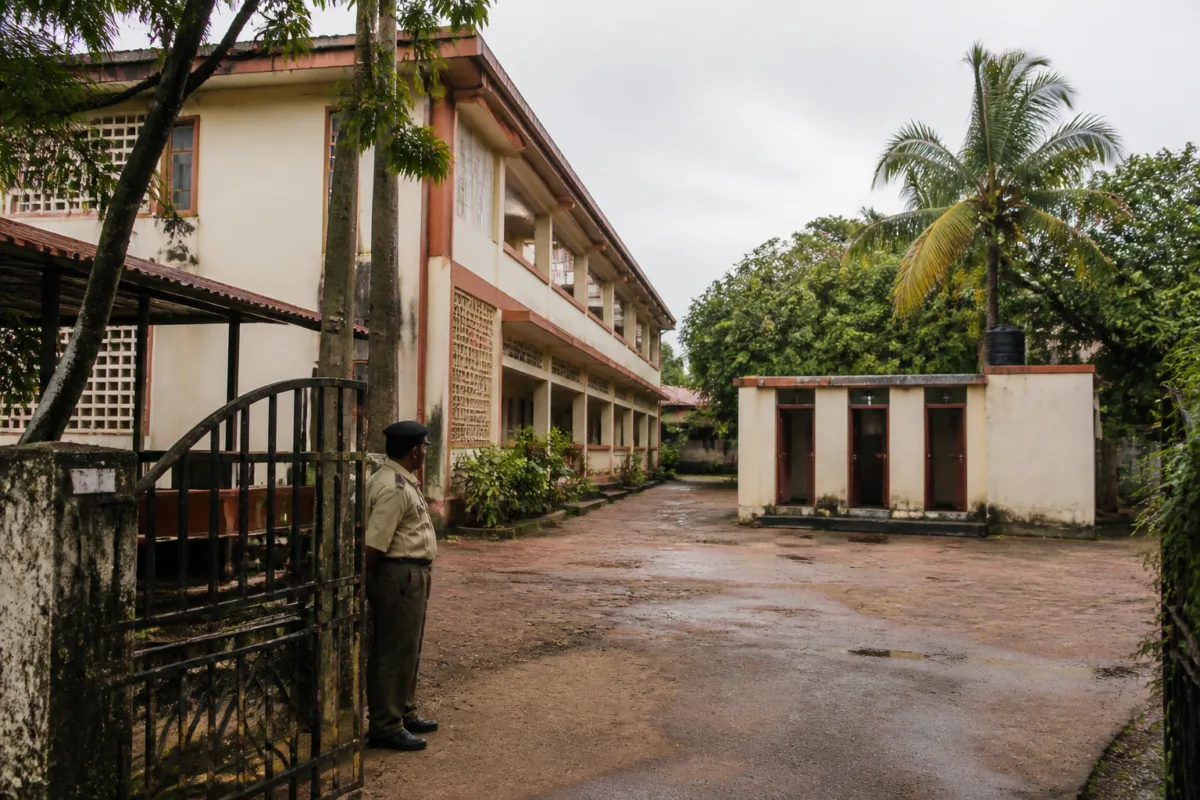
The alleged sexual assault of an eight-year-old boy inside a government-aided school in Goa’s Tiswadi taluka has raised a question more serious than the conduct of the two children involved: whether school authorities treated a possible offence against a child as an internal disciplinary matter instead of reporting it to the competent authorities. The Goa government’s Victim Assistance Unit (VAU) has asked police to register a First Information Report and examine the actions of the school management and senior staff.
According to a report by the Times of India, the incident allegedly took place on October 30, when the primary school student went to use a toilet and was allegedly intercepted by a 13-year-old secondary school student. The younger child reportedly informed his teacher immediately. After the child’s mother complained, the school convened a meeting involving representatives of its primary and secondary sections.
The central institutional issue arises from what allegedly happened after that meeting. The VAU said the school authorities attempted to address the matter through informal discussions and a proposed settlement between the families. The mother, according to the report, rejected any verbal settlement or compromise. The account places the alleged conduct within the school’s administrative response, rather than limiting the issue to the alleged act itself.
The meeting minutes cited in the VAU’s communication reportedly record that the management directed the older child to undergo a psychological evaluation. They also mention a proposal to station a guard outside the toilet and an undertaking obtained from the student describing the act he had allegedly committed. These steps indicate that the school discussed supervision, assessment and a written undertaking, but the VAU’s complaint questions whether those internal measures could substitute for immediate statutory reporting.
The distinction matters because schools are not only educational institutions. They are also controlled environments responsible for children who are placed in their care for much of the day. Toilets, corridors, classrooms and playgrounds are all part of that safety system. When an allegation of sexual abuse arises on school premises, the response involves more than discipline, counselling or changes to physical supervision. It also requires the institution to recognise whether the facts trigger obligations under child-protection law.
The VAU in-charge, Emidio Pinho, told police that the alleged incident appeared to have been treated as an internal disciplinary issue rather than being immediately reported as required under law. The VAU has sought action under the Protection of Children from Sexual Offences Act, 2012, and the Goa Children’s Act, 2003. It has also asked that the conduct of the primary and secondary school headmistresses or principals be examined, given their alleged knowledge of the incident and the subsequent attempt to resolve it internally.
The report does not establish that the alleged offences by the children or the alleged reporting lapses have been proved in court. The VAU’s communication is a request for police action and investigation. That distinction is particularly important in a case involving a child below the age of 18 who is described in the report as a child in conflict with the law. Any investigation must protect the younger child, follow the legal safeguards applicable to the older child and establish the facts through the competent authorities.
The case also exposes the difficult institutional boundary between school discipline and criminal-law obligations. Schools routinely handle misconduct through meetings with parents, written undertakings, counselling and supervision. Those tools may have a role in ordinary disciplinary matters. They become legally and ethically inadequate, however, if they are used to contain an allegation that may fall under the POCSO framework. The question for investigators is therefore not merely whether a meeting took place, but whether the school’s response delayed or obstructed the reporting process required by law.
The alleged proposal to place a guard outside the toilet points to a familiar physical-safety response: increasing surveillance at the location where an incident is reported to have occurred. But the VAU’s complaint suggests that the institutional response cannot end with a guard, a psychological evaluation or an undertaking. Those measures address supervision and behaviour management. They do not, by themselves, answer whether the child received timely protection, whether evidence was preserved, whether the police and child-protection authorities were informed, or whether the family was guided through the statutory process.
The timing has added public concern. The report described the case as the third child sexual assault incident reported in Goa within four days. It referred to separate incidents involving a toddler in an abandoned building in Mapusa and a four-year-old in Canacona. Those cases are distinct and the report does not establish a common cause linking them. Their proximity, however, has heightened attention on child safety across different urban and semi-urban settings, including schools, abandoned structures and public spaces.
For Goa’s education and child-protection systems, the Tiswadi case raises a governance question: how consistently do institutions understand and implement mandatory reporting requirements? A rule is effective only when the frontline institution recognises the trigger, knows whom to contact and acts without first attempting an informal settlement. The VAU’s request for police action indicates that the alleged gap was not simply a question of infrastructure or staffing. It was also a question of institutional procedure and accountability.
The school’s physical environment remains relevant. Toilet access, adult supervision, movement between primary and secondary sections and the separation of age groups all form part of a school’s safety design. Yet the facts supplied in the report do not establish whether the school had failed any specific infrastructure standard or whether a guard was eventually posted. Those matters will require investigation rather than assumption. What is established from the report is that the management discussed additional supervision after the allegation and that the VAU considered the alleged response insufficient.
The case also demonstrates why internal records matter in child-protection investigations. The reported existence of meeting minutes and an undertaking provides investigators with documentary material about what the school knew, when it knew it and how it responded. Such records may help establish the sequence of events, the people involved in decision-making and whether the institution understood the allegation as a possible offence. They also make it harder for responsibility to remain vague within a large school administration.
The immediate official step described in the report is the VAU’s request to Goa police to register an FIR and investigate alleged offences under the POCSO Act and the Goa Children’s Act. The police response, the treatment of the children under the applicable legal framework and the examination of the school authorities will determine what has been established. Until those steps are completed, the allegations against the student and the school officials must remain allegations.
What the case already confirms is the need to examine the first institutional response whenever a child reports sexual harm on school premises. The key questions are whether the child was protected, whether the law was followed, whether the family was denied or offered an informal compromise, and whether the school’s records accurately capture its actions. Those answers will show whether this was an isolated failure of judgment or evidence of a broader weakness in how schools understand their child-protection responsibilities.

