


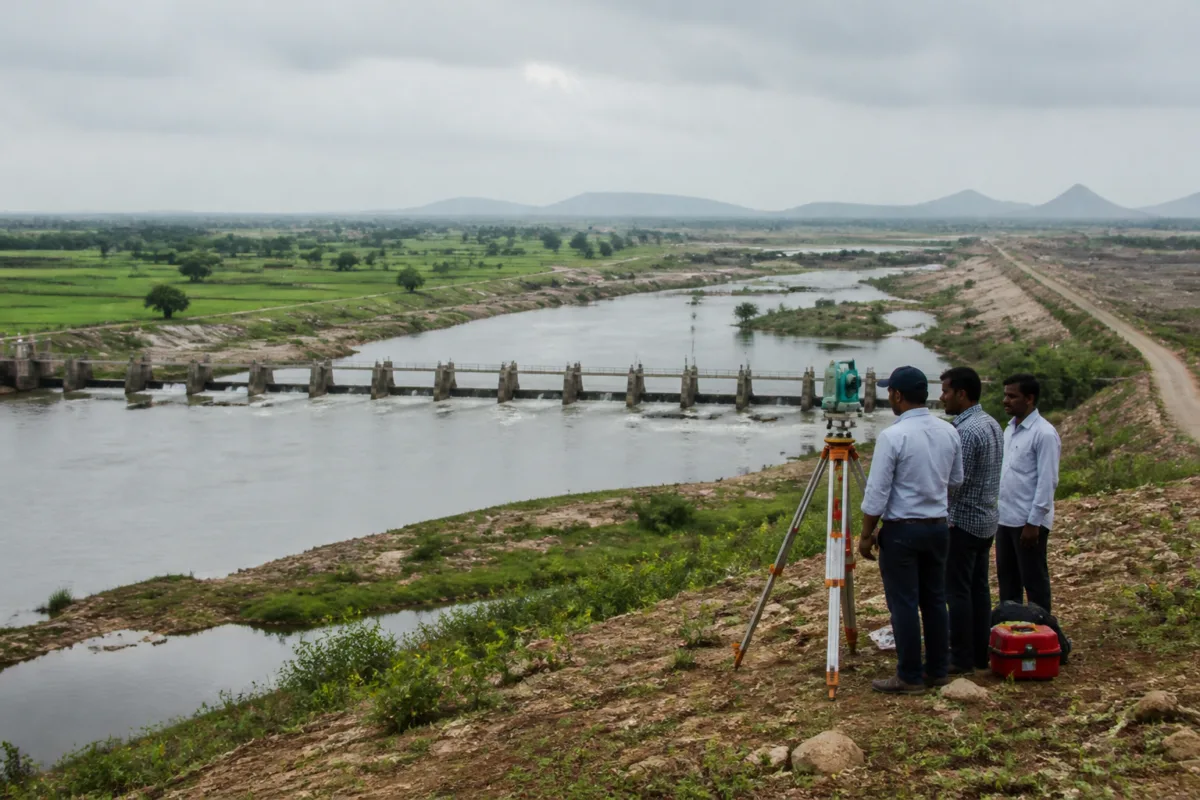
The Sammakka Sagar project has encountered another clearance obstacle after the Centre returned Telangana’s detailed project report, seeking more information on the land proposed to be brought under cultivation. The decision places the project’s approval process back on the state’s administrative drawing board and highlights how irrigation infrastructure is assessed not only through water-diversion targets, but also through the land, villages and beneficiaries that a scheme is expected to affect.
According to the Times of India report, the Union ministry of Jal Shakti sought additional details on the proposed ayacut under Sammakka Sagar. Telangana plans to revise the DPR and resubmit it after compiling the information requested by the Centre. Irrigation minister N Uttam Kumar Reddy has directed officials to prepare the details and is expected to review the proposal before its resubmission.
The immediate issue is therefore documentary, but it is connected to the project’s larger purpose. Sammakka Sagar, earlier known as the Tupakulagudem barrage, is designed to divert 46.96 thousand million cubic feet of Godavari water. Its stated objectives are to stabilise 4.40 lakh acres under the second stage of the Sri Ram Sagar Project and create a new ayacut of 30,000 acres through the Ramappa-Pakhal link canal.
These figures describe two different forms of irrigation benefit. Stabilisation means improving the reliability of water supplies to land that is already associated with an irrigation system. The proposed new ayacut, by contrast, refers to land that the project intends to bring under irrigation. The Centre’s request for more information on the proposed ayacut suggests that the distinction must be clearly documented before the project can proceed through the approval process.
The supplied report does not specify the exact deficiencies in the state’s earlier submission or state whether the requested details concern command-area mapping, beneficiary estimates, land classification, water availability or implementation sequencing. It does, however, establish that the project report was returned because crucial information about the cultivation area was not considered sufficiently detailed. The revised DPR will therefore have to provide a more complete account of the land that the project is expected to serve.
The development follows the return of the DPR for the Palamuru-Rangareddy lift irrigation scheme, another major Telangana project. The Centre had sought a comprehensive explanation of how that scheme would achieve its intended benefits. The report also says the Union government has clarified that no irrigation project from Telangana is currently under consideration for national project status.
That clarification is significant for the administrative context, although it does not itself decide the fate of Sammakka Sagar. National project status and project-specific clearance are separate questions in the account supplied. The immediate requirement for Sammakka Sagar is a revised proposal with the additional information requested by the ministry of Jal Shakti. The state’s pursuit of approvals will continue through that resubmission process.
The project also involves a cross-border and inter-state dimension. Telangana had sought a no-objection certificate from Chhattisgarh, and engineers from the two states conducted a joint survey of the likely submergence area. Chhattisgarh subsequently sought a more detailed assessment, including demarcation of the full reservoir level and backwater levels, to determine more accurately the land and villages that could be affected.
This part of the process shows why a large water project cannot be evaluated only through its intended command area. The project may be designed to deliver irrigation benefits in one region, but the infrastructure that enables that delivery can alter land and settlement conditions elsewhere. The reservoir level, backwater effects and submergence footprint are therefore part of the project’s administrative record, not peripheral technical details.
The Telangana government has assured Chhattisgarh that compensation for land affected by submergence or backwater effects will be paid according to applicable laws and procedures. The supplied report does not give the estimated number of affected villages, the area requiring compensation, the likely cost of rehabilitation or the status of any land acquisition. Those details remain important gaps in understanding the project’s full social and financial footprint, but they are not established in the available material.
The history of Sammakka Sagar adds another layer to the present delay. The project traces its origins to 2009, when it was conceived in undivided Andhra Pradesh under the PV Narasimha Rao Kanthanapally Sujala Sravanthi Scheme. The original concept involved a barrage across the Godavari near Kanthanapally in what is now the Mulugu region, with the aim of diverting water to stabilise the ayacut under the second stage of the Sri Ram Sagar Project.
The project’s long history means that the current DPR is not simply a new construction proposal. It is the latest administrative version of an idea that began before the formation of Telangana and has since had to be pursued through a different state structure, new inter-state relationships and updated clearance requirements. The supplied report does not detail every change made to the scheme since 2009, but its history indicates why the present proposal must reconcile an older project objective with current technical and institutional scrutiny.
The numbers attached to the project also explain why the quality of the DPR matters. A diversion of 46.96 TMC and a stabilisation target of 4.40 lakh acres represent a substantial intervention in the management of the Godavari and the operation of the linked irrigation system. The proposed 30,000-acre new ayacut adds a separate expansion objective. Each number requires a corresponding explanation of location, water demand, delivery arrangements and expected beneficiaries, particularly when the Centre is examining whether the claimed benefits are adequately demonstrated.
At the same time, the report does not establish whether the project has failed on technical grounds or whether the latest action is a routine request for supplementary information. It describes the return of the DPR as a setback for the state’s clearance efforts, but it also records the government’s intention to revise and resubmit the document. The available evidence therefore supports a conclusion about delay in the approval process, not a conclusion that the project has been rejected or cancelled.
The next stage will depend on how Telangana officials assemble the requested information and address the related inter-state concerns. The irrigation minister is expected to review the proposed ayacut details with officials before the DPR is sent back to the Centre. The Chhattisgarh-related assessment of reservoir and backwater levels will also remain relevant to determining the project’s potential land and village impacts.
Sammakka Sagar’s latest clearance problem reveals the administrative test facing large irrigation projects: a stated water benefit must be matched by a precise account of the land to be served, the areas that may be affected, the institutions whose consent is required and the legal process for compensation. The Centre’s response has not ended the project, but it has made the completeness of that account the immediate condition for moving forward.

