


Bengal recorded 14,634 cumulative dengue cases after the 44th week of 2026, down from 17,032 during the corresponding period last year, state health and family welfare minister Sharadwat Mukherjee said on Wednesday. The decline has placed the state’s vector-control measures under focus after the Centre reviewed dengue preparedness in high-burden states.
Officials from the National Centre for Vector Borne Diseases, under the Union health ministry, met representatives of Bengal’s health department last Friday to assess the state’s dengue situation. The review covered situational analysis, mortality statistics, training, reporting figures, diagnostic kit supplies and vector-borne disease practices adopted by the state.
Mukherjee said the Centre acknowledged the state’s “hard, disciplined, dedicated systemic activities, supervision and monitoring” after Bengal officials responded to the questions raised during the review. The minister’s statement attributed the recognition to the state’s answers and reported vector-control work.
The reduction has also been reported at the Kolkata ward level. In September, chief minister Suvendu Adhikari said 61 of the Kolkata Municipal Corporation’s 144 wards had reported no dengue cases during the year. Only a small number of infections had been detected in 12 other wards, according to the statement cited in the report.
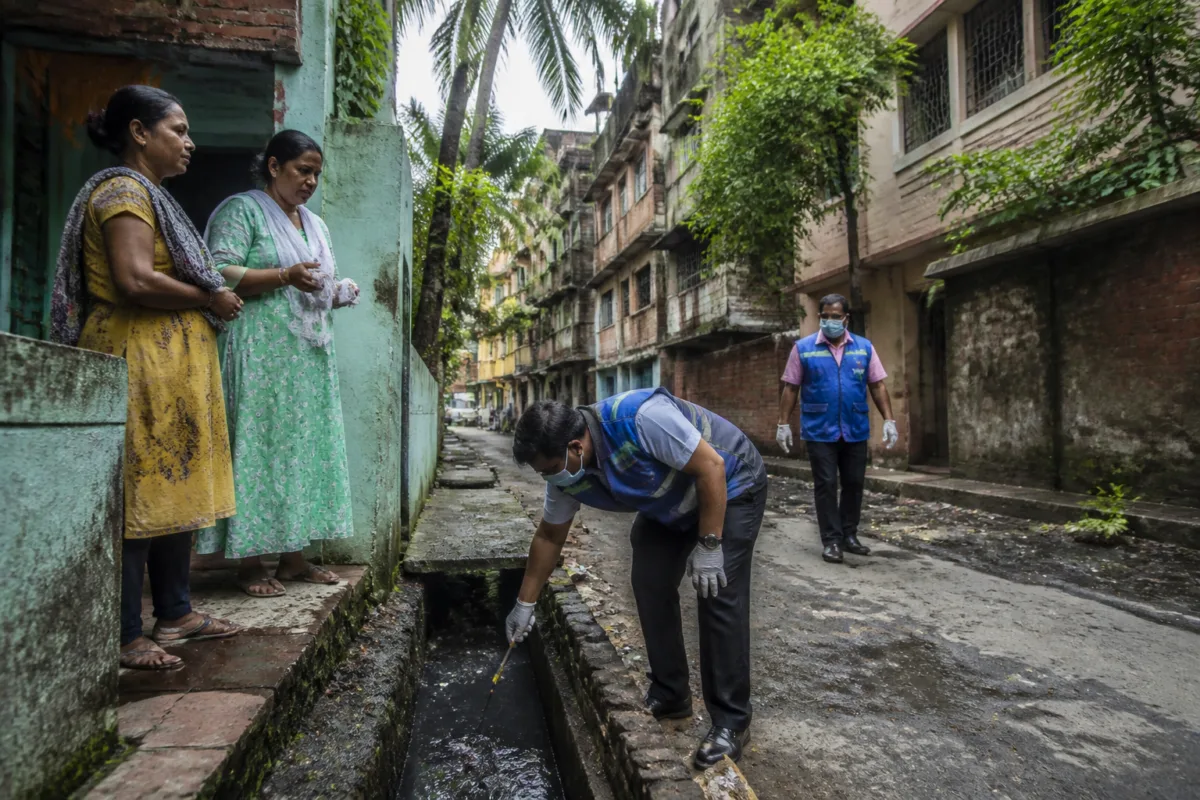
KMC officials attributed the decline to interventions in wards where cases had begun increasing from July. An awareness campaign on cleanliness and preventing water accumulation in open areas began in Ward 6, where the urban development minister Agnimitra Paul joined KMC commissioner Smita Pandey during a neighbourhood walk through parts of Cossipore and Chitpore in north Kolkata.
Ward 6 recorded 54 dengue cases in 2026, the highest among KMC wards, a civic body official said. During the awareness drive, residents were urged to prevent stagnant water and maintain cleanliness around their homes and neighbourhoods. The campaign was presented as a targeted response to the ward’s case concentration.
By the end of September, KMC wards had recorded 539 dengue cases, 46 fewer than during the same period last year, according to a senior civic official. The official described the reduction as nearly 8 per cent and said ward health centres were instructed to remain functional during the Puja period. Adequate testing kits were also provided to support early detection.
The state-level cumulative figure and the Kolkata-specific numbers cover different reporting periods and administrative scales. The latest state figure follows the 44th week, while the KMC comparison cited in the report relates to the end of September. State health officials and the civic administration are continuing to monitor cases through ward-level surveillance, testing and vector-control activity.

