


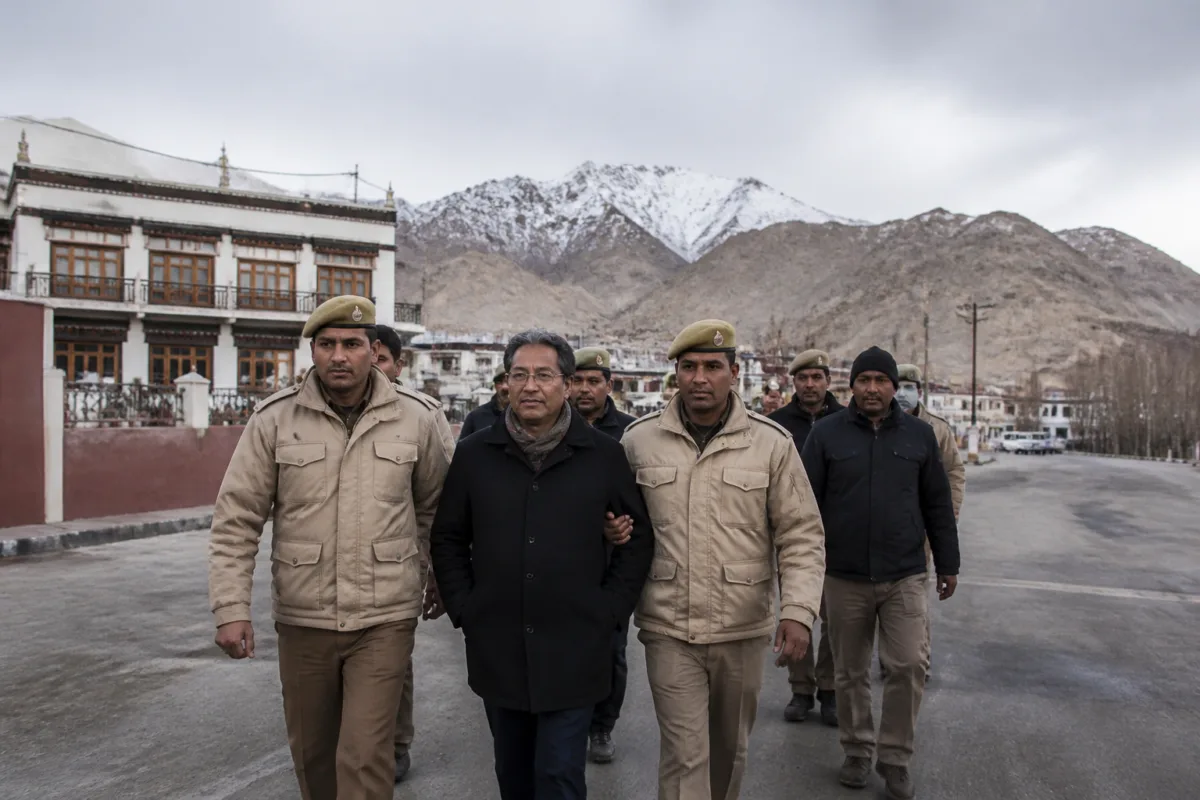
Ladakh Police removed climate activist and Leh Apex Body member Sonam Wangchuk from a protest site in Leh and escorted him to his residence, hours after Ladakhi leaders objected to holding hill council elections in December amid severe winter conditions and seasonal migration.
The police said the action was taken under prohibitory orders issued by the Chief Electoral Officer of the Union Territory of Ladakh and the District Magistrate of Leh. The orders regulate rallies, protests and public gatherings within Leh Municipality during the election period.
“In compliance with the prohibitory orders issued by the Chief Electoral Officer, UT Ladakh, and the District Magistrate, Leh, regulating public rallies, protests and other public gatherings within the limits of Leh Municipality in view of the ongoing election exercise, Ladakh Police has today taken preventive action by removing Sonam Wangchuk from the protest site and escorting him to his residence,” the police said in a statement issued early Thursday.
The police said Wangchuk had been advised to remain at home, adding that the action was intended to prevent a possible breach of public order and maintain peace. Officials also advised residents to follow the restrictions and avoid activities that could disturb public peace and law and order during the Panchayat, Municipal and LAHDC elections.
The Ladakh administration imposed a complete ban on protests and demonstrations within the municipal limits of Leh and Kargil on Wednesday. The administration cited the elections to municipal bodies and the Ladakh Autonomous Hill Development Councils. Municipal and Panchayat polling is scheduled for November 21, while elections to the eight autonomous hill development councils are scheduled for December 4.
The restrictions followed the enforcement of the model code of conduct by the office of the Chief Electoral Officer. The order said political dharnas, protests, demonstrations, sit-ins, rallies and similar collective activities could intimidate voters, disturb public order and affect the atmosphere required for free and fair elections.
Wangchuk, along with leaders of the Leh Apex Body and the Kargil Democratic Alliance, had criticised the December schedule. They said around 25% of Ladakh’s population had migrated to other parts of the country and that many residents, including students, would be outside the region during the winter. Wangchuk said Ladakh’s harsh conditions and expected snowfall could make it difficult for voters to return and participate.
“Ladakh is known as the world’s coldest inhabited place. The weather forecast for December indicates snowfall. How will elections be conducted in such conditions?” Wangchuk said during an online briefing on Wednesday. He also questioned the timing of the polls when Leh, Kargil and other areas could be largely empty.
The administration has defended the election schedule. Ladakh Chief Secretary Ashish Kundra described the LAHDC elections as a watershed moment and a turning point for democracy in the Union Territory. Addressing a press conference in Leh after the election notification, Kundra said schools remain open until December 15 and argued that adults should be able to vote during the same period.
Kundra said deputy commissioners had been instructed to provide facilities at polling stations, including heaters and separate queues for elderly voters. The election authorities’ next steps will include implementing these arrangements while the prohibitory orders and model code of conduct remain in force through completion of the election process.

