


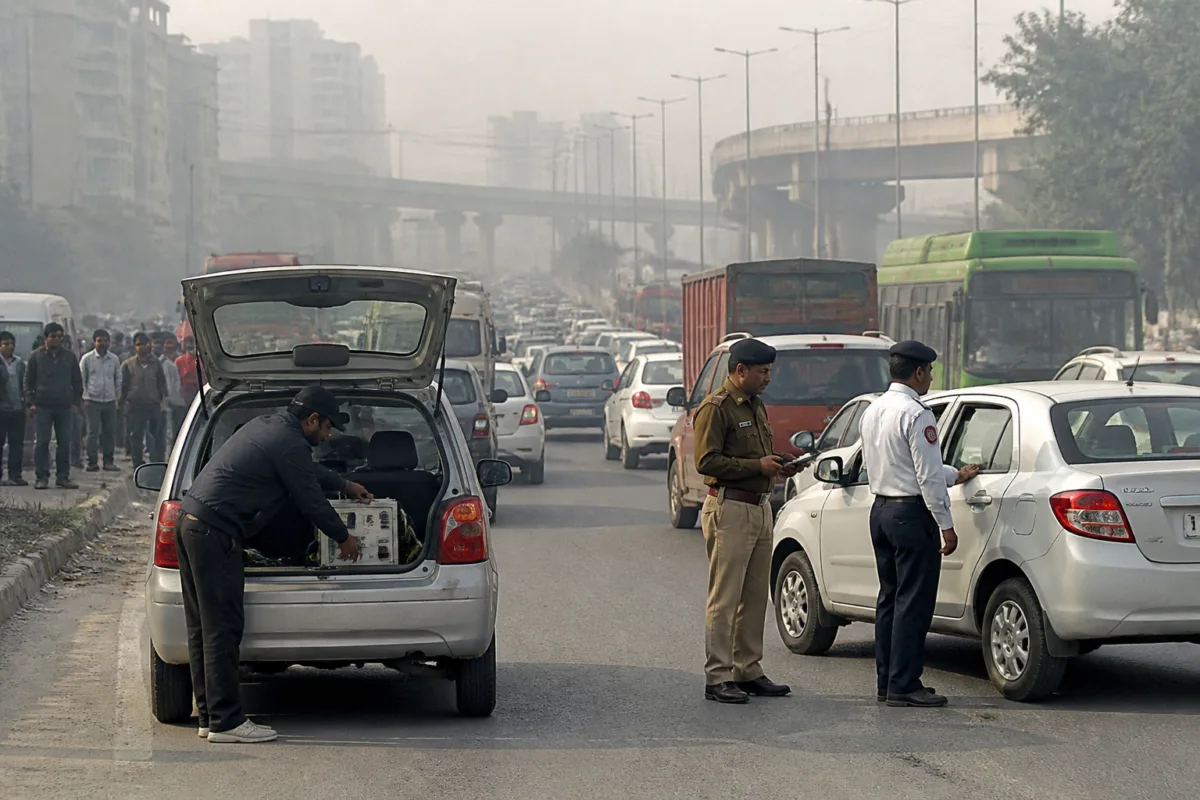
The Supreme Court has directed Delhi, Uttar Pradesh, Rajasthan and Haryana, along with the Municipal Corporation of Delhi and Delhi Police, to submit detailed reports within two weeks on steps to control vehicle pollution across the National Capital Region.
The direction came as a bench headed by Chief Justice of India Surya Kant expressed serious concern over the reported rise in air pollution caused by vehicles and called for immediate action. The bench also included Justices Joymalya Bagchi and V. Mohan.
The states and Delhi agencies have been asked to explain the measures taken, or proposed, to prevent the entry and movement of old vehicles in the NCR. Their reports will also have to cover pollution-under-control certificate checks, challan enforcement, coordination between authorities and timelines for future action.
The court’s direction places responsibility on the four states that make up the wider NCR as well as agencies responsible for enforcement within Delhi. The reports are expected to detail how authorities plan to reduce the contribution of vehicles to the region’s worsening pollution levels.
The responses must distinguish between immediate and longer-term measures. Authorities have been asked to outline short-term steps to reduce vehicular emissions and explain the longer-term actions planned to address the problem. The direction therefore covers both enforcement measures, such as checks and penalties, and wider administrative planning.
Old vehicles moving across state borders are a particular focus of the court’s order. The agencies will have to provide information on the steps being taken to stop such vehicles from entering or operating in the NCR. The requirement also raises the issue of coordination between neighbouring states, where enforcement in one jurisdiction can be affected by vehicle movement from another.
The Pollution Under Control certification system and challan action are also included in the requested reports. The authorities will need to inform the court about the status of these measures and how they are being used to limit emissions from vehicles. The order does not, in the material available, specify a common enforcement mechanism or a single regional deadline beyond the requirement to file reports within two weeks.
The case places the implementation record of multiple agencies before the court rather than assigning responsibility to a single government department. Delhi, Uttar Pradesh, Rajasthan and Haryana, the MCD and Delhi Police must now provide a coordinated account of existing action, proposed interventions and timelines. The next stage will depend on the contents of those reports and the court’s consideration of them after filing.

