


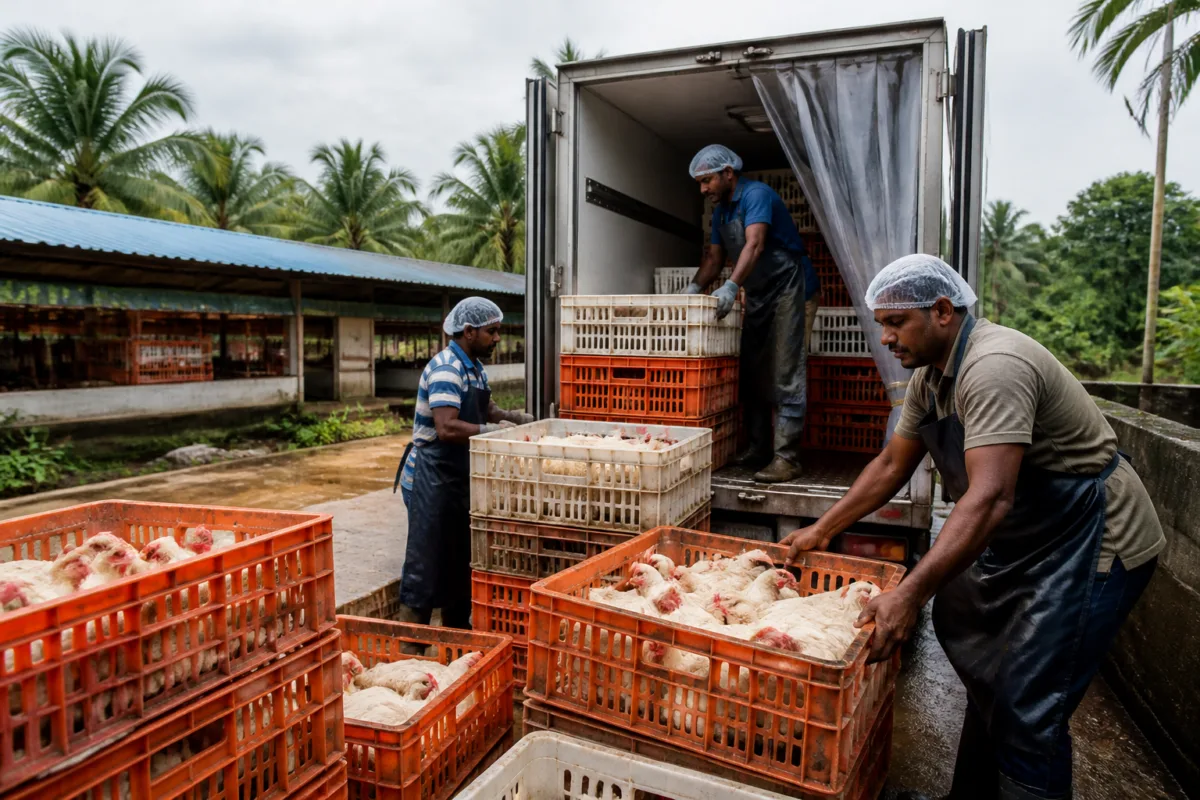
Goa’s poultry industry has sought government assistance to revive local farms, reduce dependence on supplies from outside the state and strengthen oversight of poultry trade and waste disposal. The All Goa Poultry Farmers Association and the All Goa Poultry Traders Association said local production could rise by 20% within six months if subsidies and other support measures are introduced.
The associations issued the clarification after a recent raid on a frozen chicken consignment brought the transportation and handling of poultry products under scrutiny. Defending the movement of live poultry into Goa from other states, they said chickens are transported in temperature-controlled environments and are safe for consumption.
Their immediate demand is for the revival of poultry farms and subsidies to cover production costs. According to the associations, stronger local output would allow Goan farmers and traders to compete more effectively with suppliers from outside the state. They said that if prices in Goa remain affordable, outside players would find it harder to compete in the local market.
The associations also raised concerns about the structure of the poultry trade. They claimed that nearly 30% of poultry traders in Goa are non-locals and alleged that some are backed by their respective MLAs. The groups called for these traders to be subjected to proper scrutiny, with particular attention to the hygienic disposal of chicken waste.
Waste handling is a significant operational issue for the poultry trade because poorly managed disposal can affect public hygiene and the functioning of surrounding neighbourhoods. However, the associations’ statement did not provide details of specific disposal sites, enforcement actions or the number of violations recorded in the state.
The groups welcomed a recent government notification tightening regulations governing the transportation of live poultry into Goa under the Goa Poultry Development Corporation. The notification was not reproduced in the report, and details of the new compliance requirements, inspection process and penalties were not specified.
The dispute places two linked issues before the state government: how to maintain safe and regulated poultry movement while supporting local production, and how to ensure that trade expansion is matched by proper handling of poultry waste. The associations said improved local capacity would reduce dependence on outside supplies, but the proposed subsidies and farm revival measures have not yet been detailed.
The associations’ six-month production target and requests for financial support will now depend on the government’s response, including the implementation of the tightened transport regulations and any decision on assistance for poultry farmers.

