


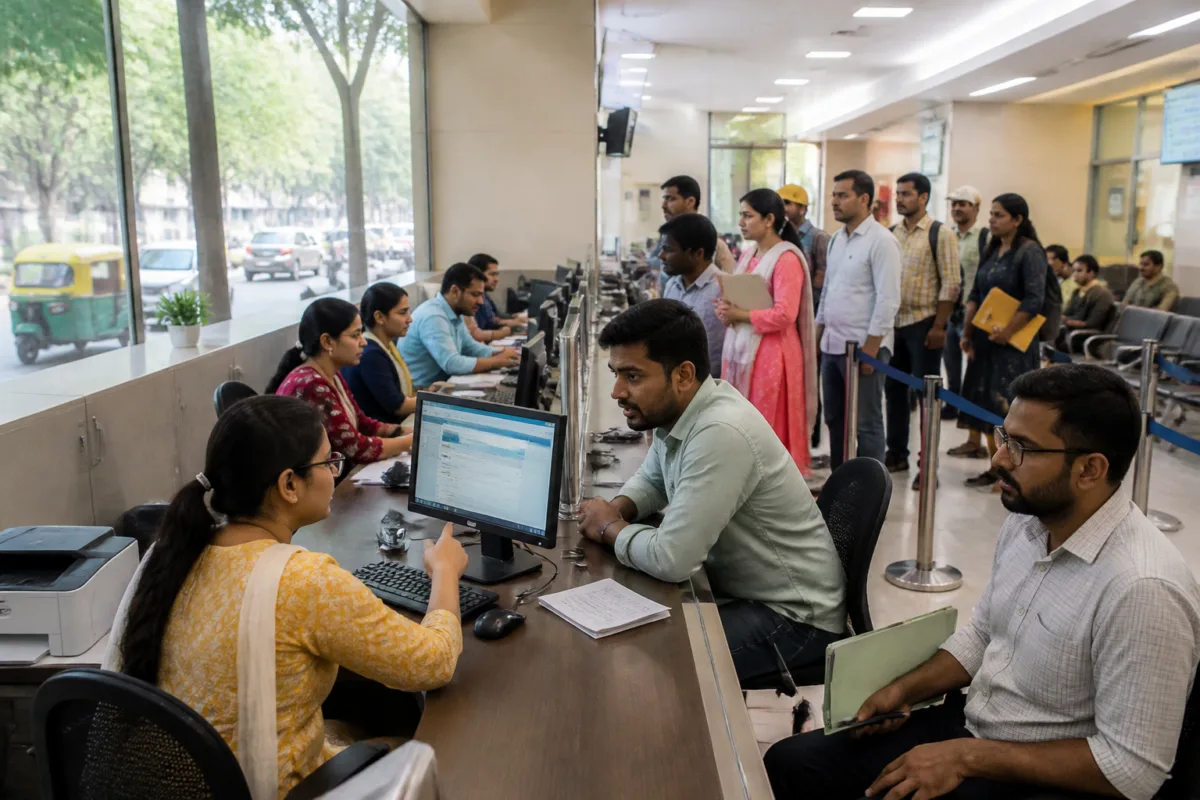
Delhi has notified a new service delivery law that gives citizens a statutory right to receive specified government services within fixed time limits and allows fines of up to Rs 5,000 to be imposed on officials for unjustified delays or wrongful rejection of applications.
The Delhi (Right of Citizens to Time Bound and Ease of Delivery of Services) Act, 2026 replaces the city’s 2011 time-bound service delivery law. The new framework is intended to make government services more transparent, accountable and accessible, according to the report by Live Hindustan – NCR.
Under the law, the Delhi government will notify the services covered by the legislation and prescribe a maximum period for delivering each service. A designated officer will be identified for every service, making it possible to assign responsibility when an application remains pending beyond the prescribed deadline. Departments, local bodies and notified institutions will be brought within the framework.
Applicants will be able to submit applications online and track their progress through a unique application number. Departments will be required to maintain digital records of applications and regularly update their status. Citizens will also be able to see which officer is responsible for their application and the time limit applicable to it.
If an application is rejected within the time limit, the responsible officer will have to provide the reason in writing. The law also provides for automatic escalation when a designated officer fails to deliver a service within the prescribed period. In such cases, the original application will automatically be treated as an appeal before the department’s citizen grievance redressal authority. The applicant will not need to file a separate appeal solely because of the delay.
Each department will appoint an officer to function as its citizen grievance redressal authority. That authority will be responsible for directing delivery of the service and determining responsibility for the delay. Appeals will generally have to be disposed of within 30 days.
If the grievance redressal authority does not decide the appeal within the prescribed period, the case will automatically move to the Delhi Right to Service Commission. The commission will hear second appeals and monitor implementation of the law. It will also have powers to inspect government offices, recommend departmental action, suggest process improvements and take up cases for inquiry where necessary.
The penalty provisions create a direct financial consequence for avoidable delays. An officer may be fined Rs 250 for every day of delay when a service is not delivered without proper justification, subject to a maximum penalty of Rs 5,000. An unjustified or improper rejection of an application may attract a one-time penalty ranging from Rs 250 to Rs 5,000. The officer must be given an opportunity to present their case before the penalty is imposed.
The law’s practical impact will depend on the services brought within its scope, the deadlines notified for each service and the effectiveness of the digital tracking and escalation systems. The government’s next implementation step is to notify the services and time limits covered under the new framework.

