


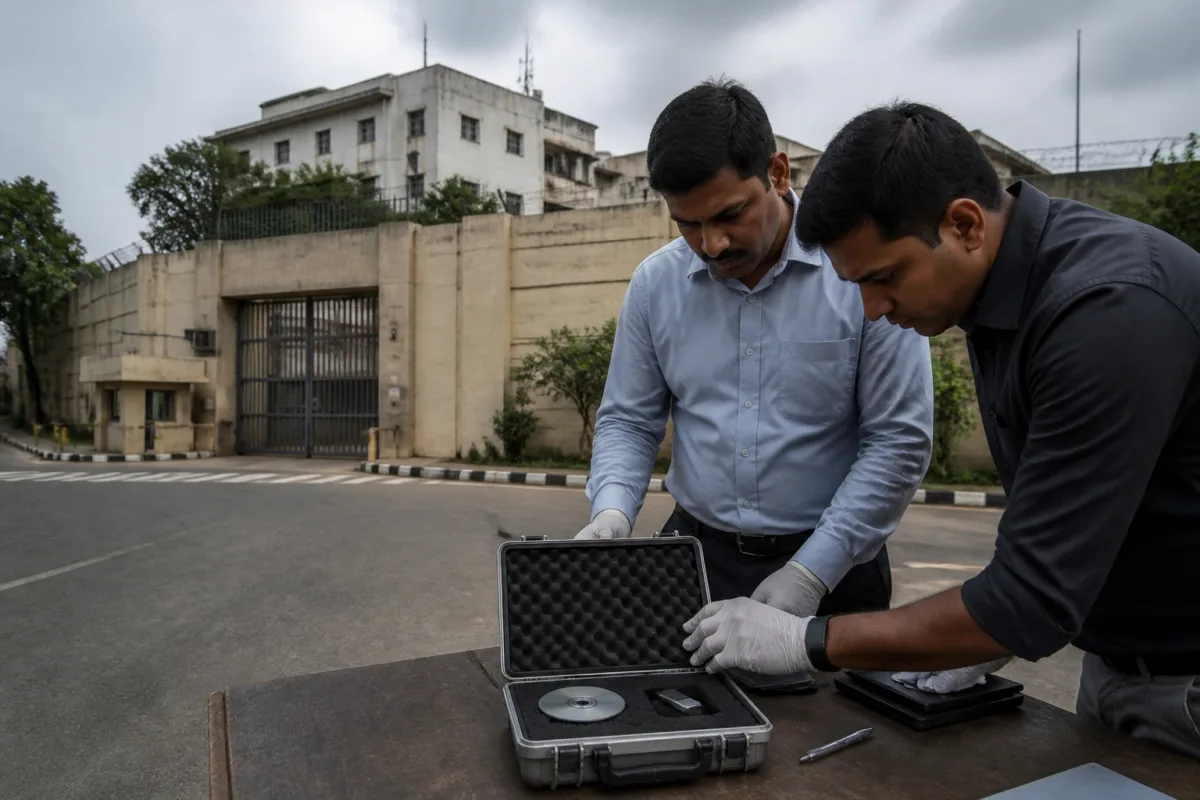
The Ahmedabad Sessions Court has ordered authorities to produce original digital records linked to the 2013 Sabarmati Central Jail tunnel case after a photography CD submitted during the investigation was found to be unusable, reopening questions about evidence preservation and the completeness of the original probe.
The court accepted an application filed by public prosecutor Amit Patel seeking production of the photography CD, a pen drive and a certificate under Section 65(B)(4) of the Indian Evidence Act. The digital material relates to photography conducted inside Sabarmati Central Jail during the investigation and is being treated by the prosecution as important evidence in the case.
The court has also ordered that the officer in charge of Ranip police station be summoned to produce the relevant records and digital devices. The certificate under Section 65(B)(4) is required for digital evidence to be formally placed on the court record, according to the report.
The tunnel case came to light on February 10, 2013, when prison authorities discovered that inmates in Barrack No. 4 were allegedly digging an underground passage from inside the jail. The barrack housed accused persons arrested in connection with the serial bomb blasts in Ahmedabad in 2008.
Initial observations reportedly placed the tunnel’s length at between 18 and 26 feet. Subsequent investigations by the crime branch and other agencies found that it extended approximately 213 to 214 feet and had reached beyond the jail’s outer wall. The investigation also found that inmates had used tools and other materials available inside the prison to excavate the passage.
According to the report, inmates staying in Barrack No. 4 had used their gardening activity as a cover for removing soil and constructing the tunnel. The discovery had raised questions at the time about prison surveillance, movement of materials and the functioning of jail officials responsible for security and oversight.
The case involved chargesheeting 24 accused persons described in the report as terrorists. The latest court proceedings have brought the handling of investigative records back into focus because the CD submitted as part of the evidence cannot currently be opened. The prosecution has therefore sought access to the original digital material rather than relying only on the defective copy already before the court.
A second issue concerns a proposed witness whose name was not included in the chargesheet by the investigating officer. The prosecution sought permission to call the person as a witness, and the court allowed the request. This will enable the prosecution to place the witness’s identity and relevant details before the court during the proceedings.
The immediate next steps are the production of the CD, pen drive and statutory certificate before the court, along with further proceedings on the examination of the additional witness. The court’s orders will determine how the digital records and the newly proposed testimony are treated in the ongoing case.

