


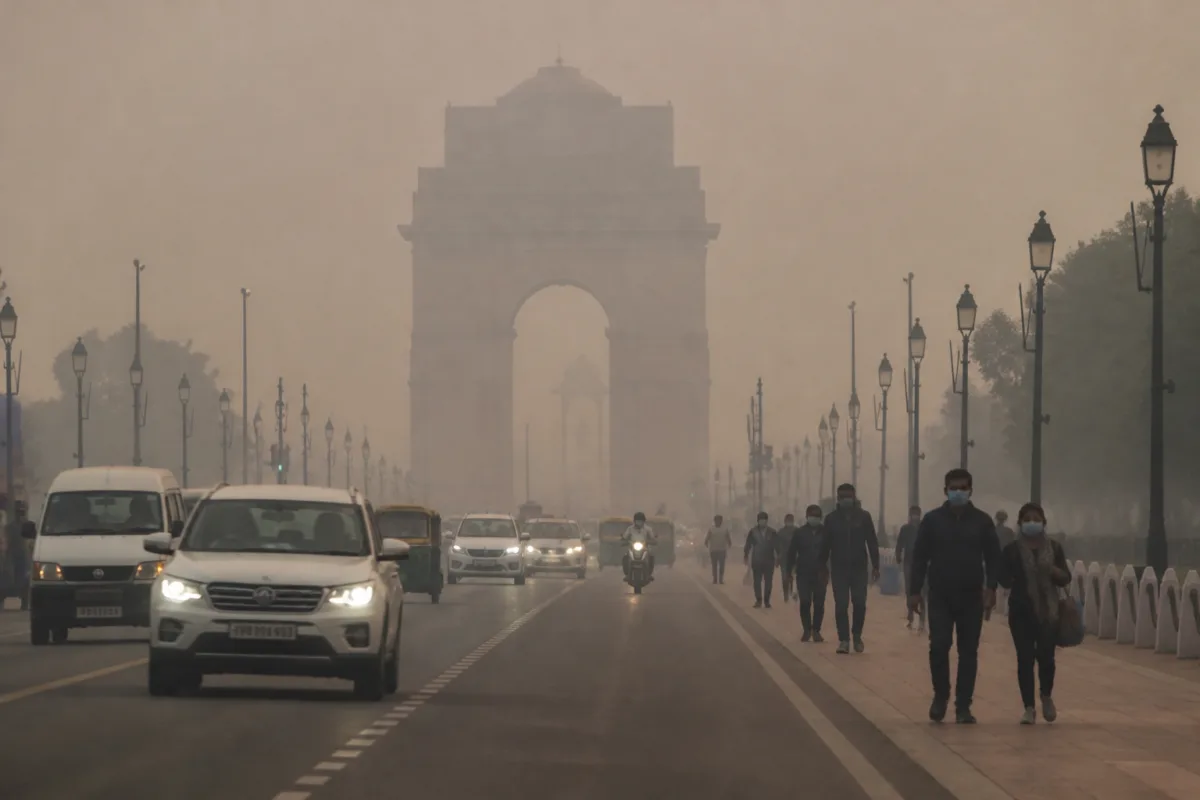
Delhi air pollution reached the severe category on Diwali, with the Central Pollution Control Board recording an Air Quality Index of 421 near AIIMS at around 7 am on Sunday. The reading came as the capital began the festival under heavy smog, with officials and air-quality forecasters warning that conditions could deteriorate further.
The AQI near India Gate stood at 398, just below the severe threshold, while the area around Akshardham recorded an AQI of 344. Under CPCB standards, an AQI between 301 and 400 is classified as very poor, while readings from 401 to 500 fall in the severe category.
Delhi’s average AQI had been recorded at 369 on Saturday, placing the city in the very poor category. Although that was an improvement from Friday’s average of 382, pollution remained close to the severe threshold. The city had spent Diwali eve under a dense layer of smog and reduced visibility.
The worst reading among the capital’s monitoring locations on Saturday was recorded near the Indian Institute of Technology, Delhi, where the AQI reached 452. Of Delhi’s 59 monitoring stations, 16 reported air quality in the severe category and 29 recorded very poor air, according to the report.
The deterioration followed a combination of festival-related emissions, vehicle pollution, seasonal crop-residue burning in neighbouring states and unfavourable weather conditions. The city’s air-quality emergency is therefore being shaped by both local emissions and the wider regional airshed over which the Delhi administration has limited direct control.
The Air Quality Early Warning System forecast that Delhi’s air would remain in the severe category on November 8 and 9. It also projected that air quality could fluctuate between the severe and very poor categories for the following six days.
Weather and air-quality experts cited in the report said stagnant atmospheric conditions were preventing pollutants from dispersing. A ventilation index below 6,000 square metres per second and average wind speeds below 10 kilometres per hour were limiting the movement of polluted air away from the city.
The readings highlight how quickly Delhi’s air quality can shift from very poor to severe when festival emissions coincide with weak winds, low ventilation and the peak period for crop-residue burning. They also show the challenge of managing pollution through city-level measures alone when emissions and atmospheric conditions extend beyond municipal boundaries.
The immediate forecast remains the key operational indicator. According to the Air Quality Early Warning System, Delhi is expected to experience severe or very poor air quality with modest fluctuations over the next six days.

