


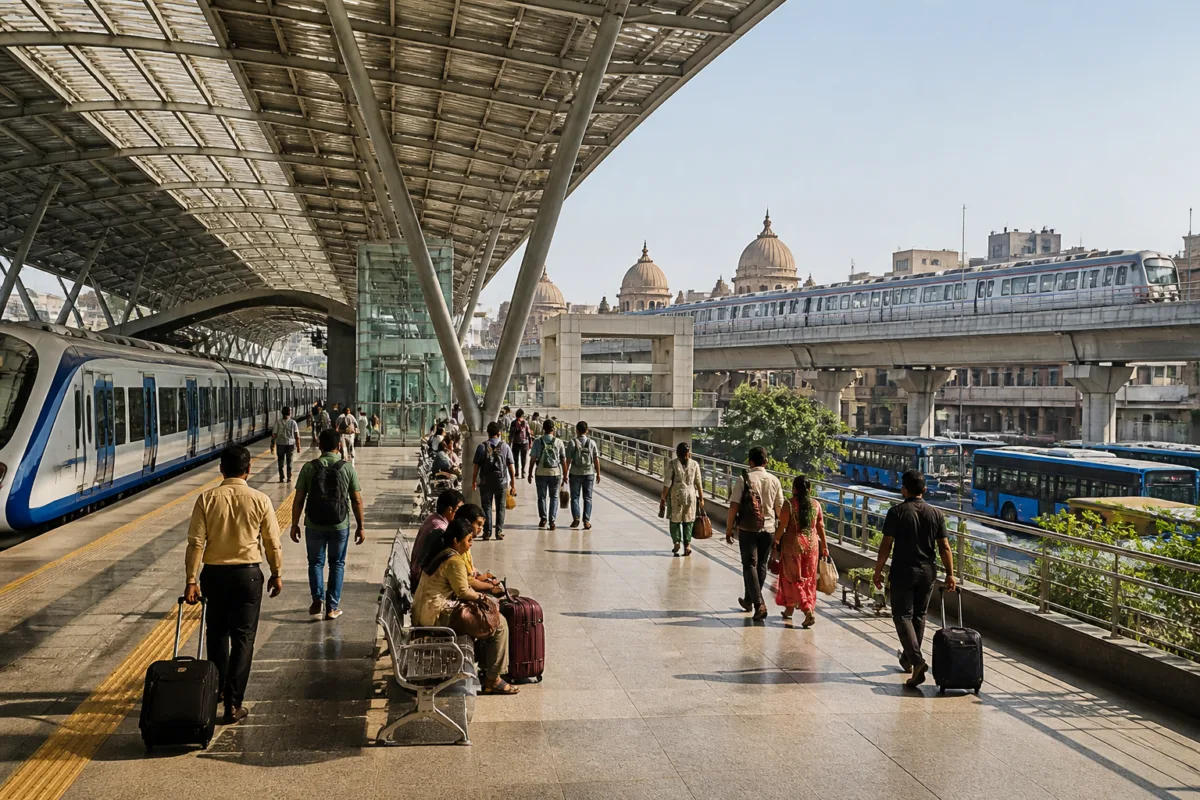
Ahmedabad’s Kalupur railway station redevelopment is nearing completion, with the rebuilt station expected to offer upgraded passenger facilities and connections to the city’s metro, BRTS and local bus services, according to a report by Sandesh published on November 8.
The redevelopment is intended to transform Kalupur from a conventional railway station into a larger transport hub serving passengers arriving by rail and transferring to other modes of public transport. The report describes the project as one of the major redevelopment initiatives undertaken by Indian Railways at the station.
Kalupur is identified in the report as one of Gujarat’s busiest and most important railway stations. Its redevelopment is expected to benefit Ahmedabad residents as well as domestic and international visitors using the city’s rail network. The report says work is at the final stage and that passengers may begin using the modernised facilities in the coming days.
A key feature of the rebuilt station is a large roof concourse above the platforms. Sandesh reports that the concourse has been planned along airport-style lines and will include passenger seating, waiting areas, restaurants and shopping spaces. The arrangement is intended to place major passenger facilities above the platforms while supporting movement through the station.
The project’s transport integration is another central element of the redevelopment. According to the report, the station will be directly connected with Ahmedabad Metro, the city’s bus rapid transit system and local bus services. Such connections are expected to make transfers between rail and city transport easier, although the report does not provide operational details on pedestrian routes, interchange timings, accessibility arrangements or the exact points of connection.
The architectural treatment is also described as combining Ahmedabad’s heritage identity with contemporary technology. The report says the station design incorporates elements reflecting the city’s status as a heritage destination while introducing modern infrastructure and passenger amenities. It does not specify the individual heritage references, technology systems or design agencies involved in the work.
For passengers, the practical impact of the redevelopment will depend on how the new concourse, platforms and external transport links work together once the facilities open. A station can function as a transport hub only when transfers are legible, walking distances are manageable and information, queuing and access systems operate reliably. The available report confirms the planned connectivity and facilities but does not provide details of the operating arrangements.
The redevelopment also marks a shift in how major railway stations are being presented within urban transport systems. Instead of serving only as points for boarding and alighting trains, upgraded stations are increasingly being planned as interchange spaces linking regional rail services with city-level mobility networks. At Kalupur, the reported integration with Metro, BRTS and local buses places that approach at the centre of the station’s redevelopment.
Sandesh said the modernised station is expected to begin providing the reported facilities to passengers in the near future. The next public milestone will be the opening of the redeveloped areas and confirmation of when the new passenger amenities and transport connections become operational.

