


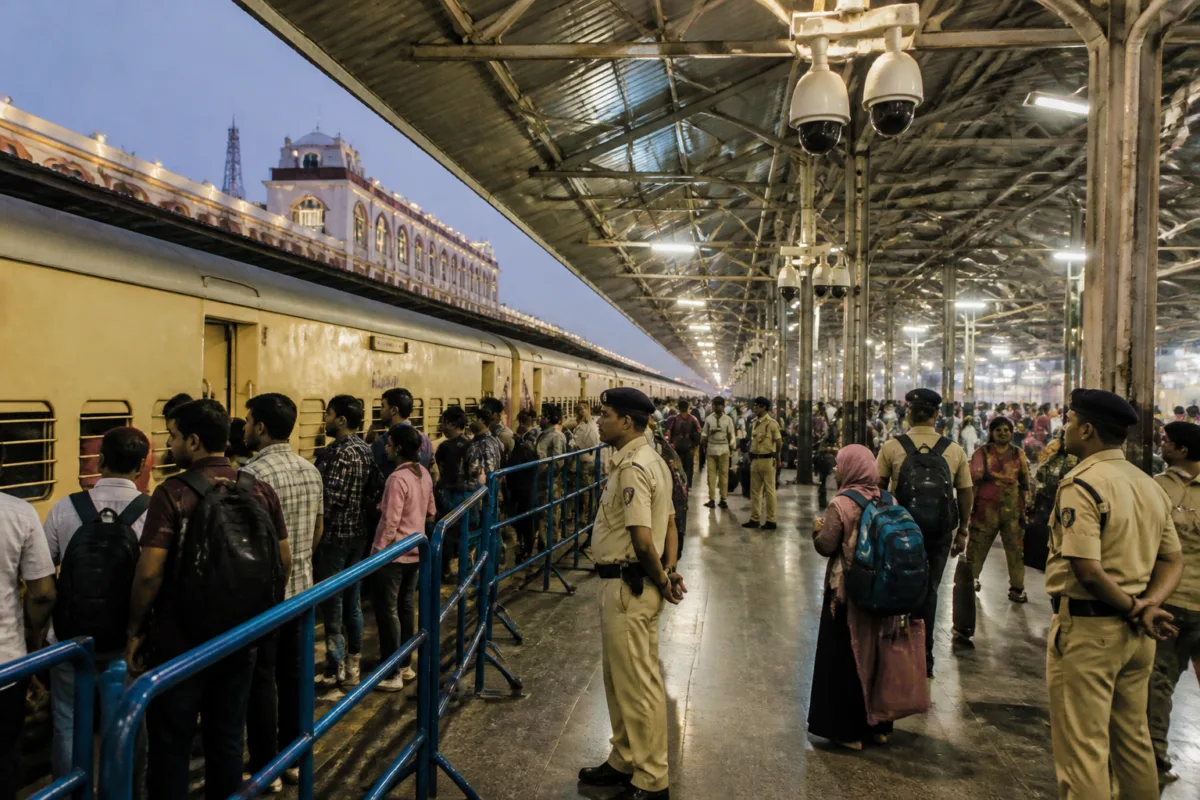
Secunderabad Railway Station has introduced the Railway Protection Force’s AI-powered Suraksha system to monitor passenger crowds and regulate movement ahead of the Diwali and Chhath Puja travel rush, alongside new holding areas, special queues and expanded security deployment.
The system alerts RPF and railway commercial staff when crowd levels rise on platforms, allowing personnel to respond to congestion and manage passenger movement. The deployment is part of a festival preparedness plan at one of Hyderabad’s busiest railway stations.
Four holding areas have been created with a combined capacity of between 1,750 and 2,000 passengers. These spaces are intended to manage waiting passengers and reduce pressure on platforms during periods of heavy demand. Additional CCTV cameras are also being monitored around the clock as part of the security arrangements.
Special queues have been introduced for crowded services, including the Danapur Express and Falaknuma Express. The measures are aimed at organising passenger access to trains and limiting disorder around platforms and entry points during the festival period.
The RPF has deployed additional personnel from the Railway Protection Force, Railway Protection Special Force, Government Railway Police and Home Guards at critical locations. Quick Response Teams will remain on standby to handle emergencies, while the RPF is coordinating with the GRP and local police for crowd management and security operations.
Passenger assistance facilities have also been expanded. Help desks have been established on Platforms 1 and 10 to provide information and support. Entry to the station premises has been restricted to passengers holding valid tickets, according to the arrangements reported by Telangana Today.
The use of Suraksha adds an automated layer to the station’s crowd-management system. Instead of relying only on personnel observing platform conditions, the system is designed to identify overcrowding and send alerts to staff responsible for taking action. The supplied report does not specify the number of cameras connected to the system, the alert thresholds or whether the technology will remain in use after the festival rush.
The arrangements reflect the operational challenge created when festival travel produces short-duration surges in passenger demand. At a large interchange, congestion can build across entrances, queues, platforms and waiting areas at the same time, requiring coordination between railway security agencies, commercial staff and local police.
The RPF’s festival plan will remain focused on monitoring passenger concentrations, regulating queues, assisting travellers through the help desks and responding to emergencies through the Quick Response Teams. The report does not provide a separate timetable for withdrawing the temporary measures.

