


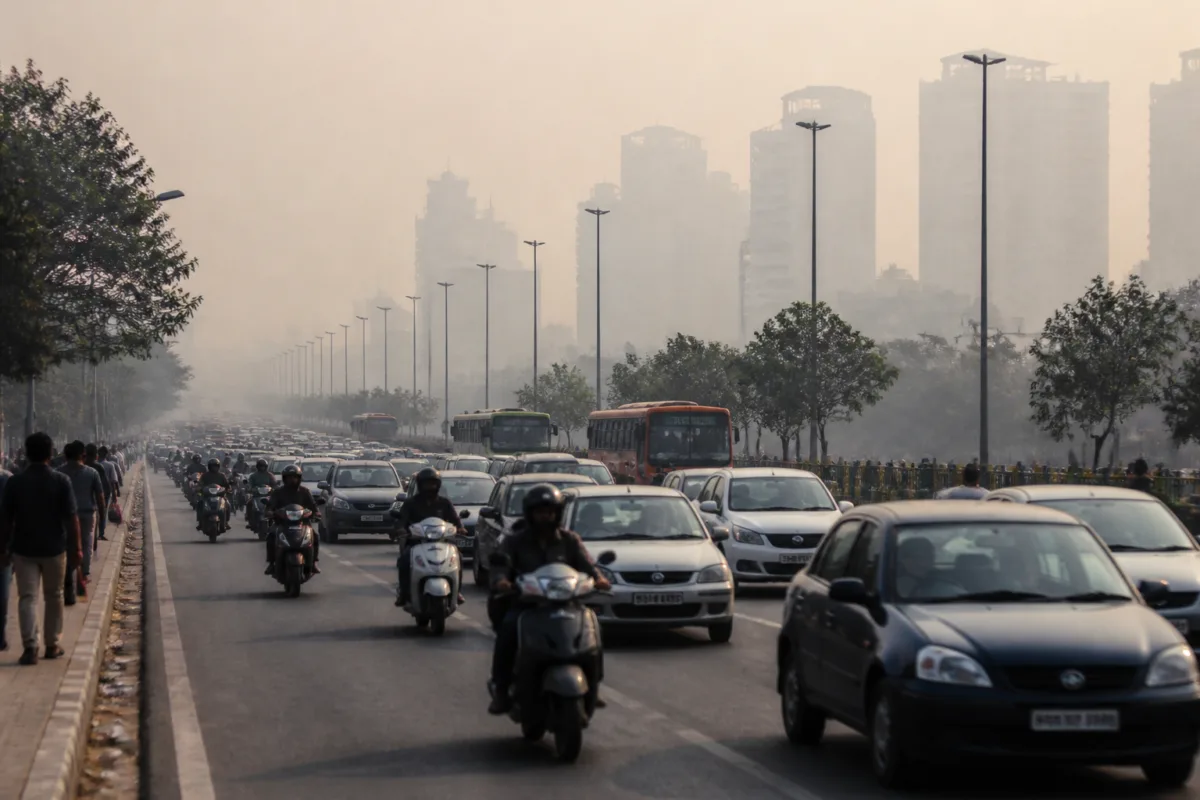
The Supreme Court has said that restrictions alone will not resolve Delhi-NCR’s pollution crisis, calling instead for greater public awareness and behavioural change during festivals and periods of heavy traffic. The court’s observations came during a hearing on pollution around Diwali, when air quality in the region typically deteriorates.
According to the report carried by Live Hindustan – NCR, the court said repeated orders and restrictions could increase violations if public behaviour did not change. The observations were reported from a hearing held on Friday, with the bench discussing the causes of rising pollution during the festive period.
The court also linked festival-related travel to worsening emissions. Citing an India Today report, Live Hindustan – NCR said the Centre’s counsel told the court that festivals and increased movement on roads had contributed to higher pollution levels. The discussion included travel by people exchanging gifts during Diwali.
Chief Justice of India Surya Kant reportedly said that the tradition of exchanging gifts had become a social and status symbol among affluent sections. He questioned why people could not return to older traditions that involved less commercialisation and potentially less travel. Justice Joymalya Bagchi also linked the issue to the commercialisation of festivals.
The comments place urban mobility within the wider debate on seasonal pollution. Gift distribution, family visits and shopping can increase the number of private vehicle trips on already congested roads. The source report, however, does not quantify the contribution of these trips to Delhi-NCR’s overall pollution levels or compare it with other major sources.
The court’s position, as reported, was that enforcement measures by themselves could not address the problem. It said that issuing more orders would not necessarily ensure compliance and emphasised the need to build awareness about the environmental consequences of daily and festive activities. The remarks point to a challenge faced by urban administrations: restrictions can be announced quickly, but their effectiveness depends on monitoring, public cooperation and the availability of practical alternatives.
The bench also cautioned against blaming economically weaker sections for the pollution crisis. Chief Justice Surya Kant reportedly said that poor people should not be held responsible for the problem because many depend on seasonal work and festival-linked livelihoods. He said those with the financial ability to contribute to pollution should bear greater responsibility, while poorer residents are often among those affected by polluted air.
Delhi-NCR’s winter pollution regularly places pressure on public health, transport systems and municipal enforcement agencies. The festival period adds temporary movement and activity to an already stressed urban system, but the source report does not establish a fresh pollution-control order or announce a new enforcement framework.
The court’s immediate message was therefore focused on awareness and conduct rather than a new restriction. Further action will depend on the directions issued during the proceedings and on how authorities address pollution sources, road movement and compliance during the remainder of the winter season.

