


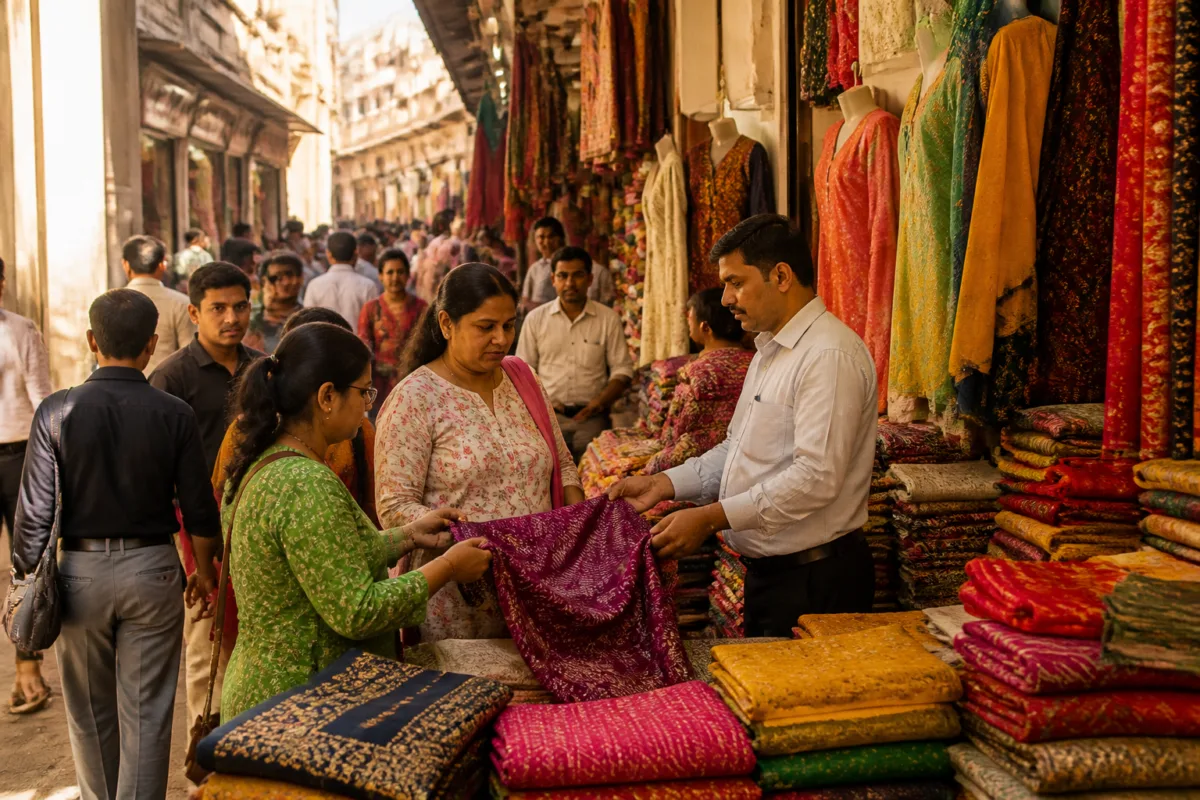
Ahmedabad’s textile market is seeing a reported revival ahead of Diwali, with higher customer footfall in traditional trading areas, stronger demand for festive clothing and an estimated seasonal turnover of Rs 3,500 crore, according to a report by Nav Gujarat Samay. The improvement follows a prolonged period of sluggish trade and has brought renewed activity to markets including Ratanpol and New Cloth Market.
The report said the increase in buying began around Navratri and has continued into the Diwali shopping period. Ahmedabad has more than 70,000 textile retail shops, and the festival season is expected to provide support to retailers, larger trading firms and mill owners across the city’s textile economy.
Demand is being reported across traditional fabrics, ready-made garments, cotton, polyester, synthetic fabric, jeans and denim. Retailers are also seeing interest in coordinated outfits for families and groups, with consumers choosing clothing in matching colours and designs for Navratri and Diwali celebrations.
Gaurang Bhagat, president of the Maskati Cloth Mahajan, said Ahmedabad traders were increasingly supplying fabric directly to large overseas garment companies and branded companies. The trend is expanding the role of the city’s textile businesses beyond domestic markets, according to the report.
The recovery is also being reflected in the ready-made garment segment. Arpan Shah, senior vice-president of the Garment Manufacturers Association, said the sector had experienced a period of weak business but was now seeing improvement as salaries and festival bonuses reached consumers. Demand is being reported for traditional and western clothing, children’s wear, casual clothing, sportswear, T-shirts, shorts and trousers.
However, the reported increase in sales has not removed the financial pressure on traders. A large part of the textile trade operates on credit periods of about 90 days, and delayed payments remain a concern for businesses. The festive season can raise sales as well as the volume of outstanding credit and collections, leaving traders dependent on timely recovery of dues.
The structure of Ahmedabad’s garment trade is also changing as online sales expand. The report cited trader Parth Shah as saying that online business had grown substantially, with estimates that more than 60% of total textile and garment trade had shifted towards online markets. The report did not provide an independent measurement method for that estimate.
Online sellers can avoid some costs associated with physical shops, including rent, electricity and staff expenses. Customers can order garments from home, with products starting at around Rs 500 and return facilities available for up to seven days in some cases. Traditional retailers, meanwhile, continue to carry the costs of maintaining stores and staff while competing with online sellers.
Ratanpol remains an important traditional shopping centre, with traders reporting stronger demand for saris, dress materials and other festive clothing. Manoj Rajpurohit, a trader, said customer movement had increased in the market and that its influence on clothing designs and fashion choices remained significant.
The report estimated that textile trade across India during the Diwali period exceeds Rs 25,000 crore. It also described Ahmedabad as a major textile centre whose cotton, polyester, synthetic fabric, denim and ready-made garment businesses serve markets within India and abroad. The next test for local traders will be whether the festival-season increase in sales converts into timely payments and sustained business after Diwali.

