


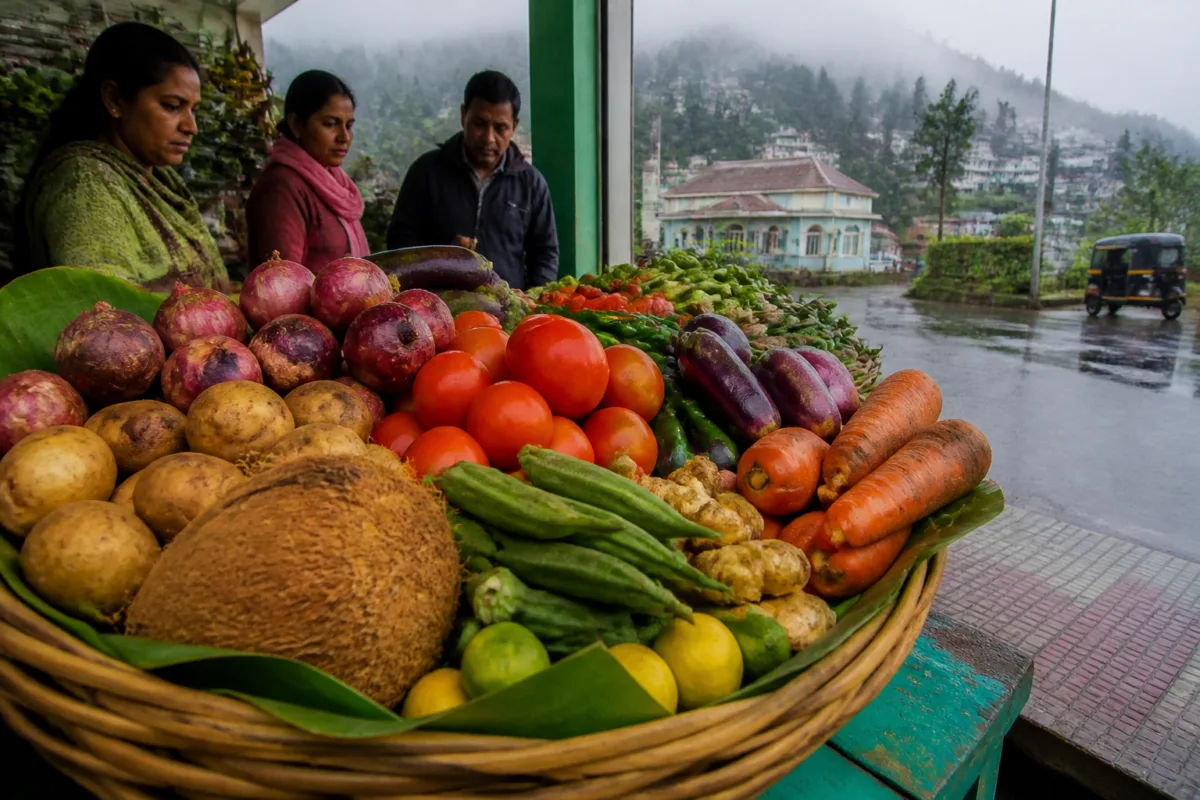
A Rs 100 vegetable hamper reported to have been launched in the Nilgiris is offering hill residents a cheaper source of essential produce during the Deepavali period, when continuing rain and the region’s dependence on supplies from the plains have added pressure to household budgets.
The scheme, called the Vetri special vegetables hamper, is being sold through outlets operated by the cooperative department in the Nilgiris, according to a report published by Deccan Chronicle – South. The report said the initiative was intended to provide fresh vegetables at prices below prevailing open-market rates, with middle- and low-income families identified as its main beneficiaries.
Each hamper contains 500 grams of onion, 500 grams of tomato, 250 grams of brinjal, 250 grams of potato, 200 grams of carrot, 200 grams of beans, 100 grams of green chilli, 100 grams of lemon, 50 grams of ginger and approximately 400 to 450 grams of coconut. The reported selling price is Rs 100.
The arrangement places the cooperative retail network at the centre of a short-term effort to moderate the cost of daily-use vegetables in the hill district. The report said vegetable prices tend to rise across the Nilgiris because many of the products consumed locally are transported from the plains. Rain can further complicate movement and increase the vulnerability of households that rely on regular market supplies.
For residents, the significance of the hamper lies not only in the price but also in the bundling of several commonly used ingredients into one purchase. A fixed-price package can reduce the need to buy each item separately, although the supplied report does not provide a comparison with the exact open-market price, the number of hampers available, the duration of the scheme or the number of cooperative outlets participating.
The report attributed the launch to Tamil Nadu Chief Minister Joseph Vijay. That attribution, as well as the formal name, administrative order, launch date and operating terms of the scheme, could not be independently established from the material supplied for this report. No government notification, cooperative department circular or official statement was included.
The episode nevertheless highlights the distribution challenge faced by hill settlements. The Nilgiris’ reliance on inflows from the plains means that access to essential food items is shaped by transport conditions as much as by local demand. Cooperative outlets can provide an organised channel for such interventions, but their impact depends on stock availability, outlet coverage, transparent pricing and continuity beyond the festival period.
The next details to establish are the official agency responsible for the hamper, the scheme’s availability period, the quantity supplied at each outlet and whether the programme will continue after Deepavali. These details will determine whether the initiative is a temporary festival measure or part of a wider effort to improve essential-commodity access in the Nilgiris.

