


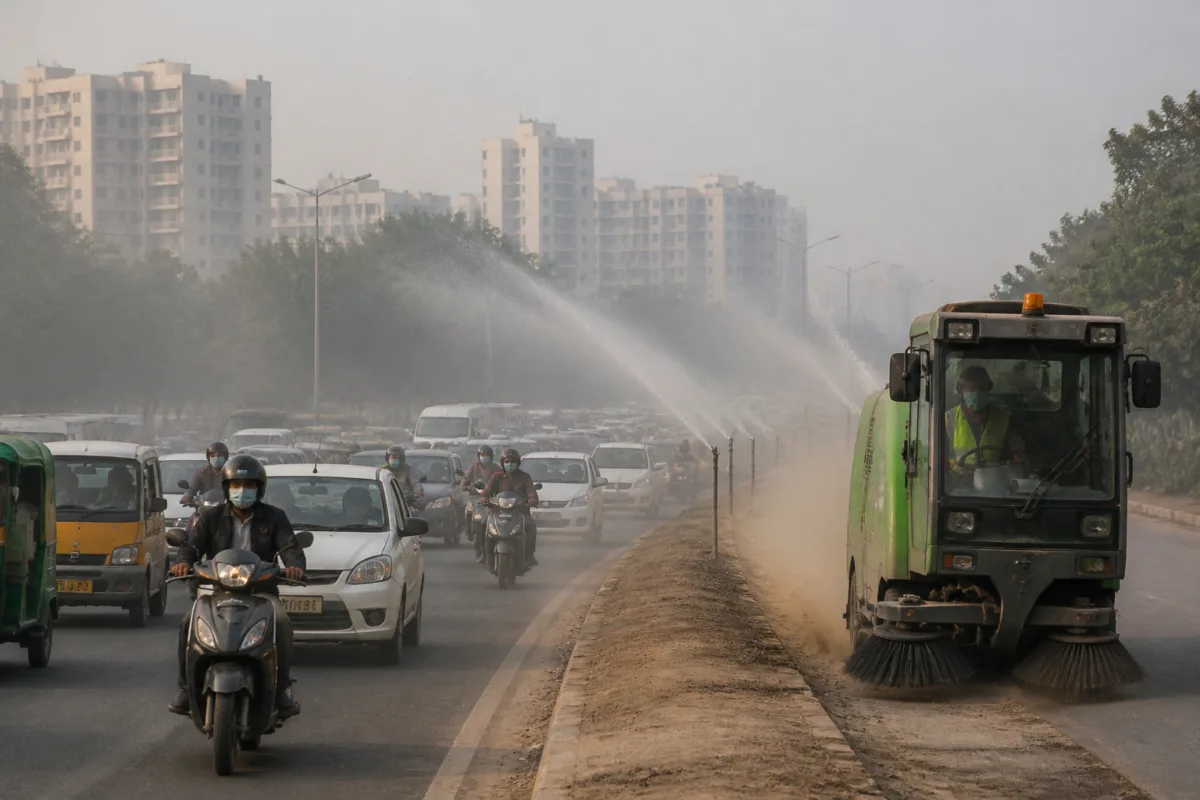
Delhi’s air quality reached an AQI of 369 on Friday, placing the capital in the very poor category and raising the likelihood of stricter restrictions under Stage 3 of the Graded Response Action Plan (GRAP) across Delhi-NCR. GRAP-3 could bring a halt to non-essential construction work and impose additional restrictions on certain diesel vehicles, although its implementation was described as a possibility in the available report, not a confirmed order.
The Central Pollution Control Board recorded Delhi’s AQI at 369, with PM2.5 and PM10 identified as the main pollutants. Other cities in the region also reported poor air quality: Faridabad recorded 303, Gurugram 331, Ghaziabad 263, Noida 283 and Greater Noida 238.
Pollution was forecast to remain at severe levels from Friday through Sunday. Delhi had already been under GRAP-2 since November 2 after air quality moved into the very poor category. Some restrictions associated with higher stages had also been introduced earlier, and authorities could increase curbs on vehicle movement if Stage 3 is activated.
Under the rules explained in the report, non-essential construction activity is prohibited during GRAP-3. BS-IV and older diesel light four-wheelers would also face restrictions. Separately, vehicles registered outside Delhi and below BS-VI emission standards may be barred from entering the capital under the applicable restrictions. The rules do not impose a general ban under GRAP-2 on BS-IV vehicles registered in Delhi.
The report said inter-state government and private buses entering Delhi must meet specified emission requirements, including Bharat Stage VI diesel, compressed natural gas or battery-electric standards. Non-BS-VI diesel inter-state buses are barred from entering Delhi once the relevant restriction applies from GRAP Stage 1, according to the rules cited by the report. The provision covers state transport buses as well as private buses operating with All India Tourist Permits.
A Delhi-registered 2017 BS-IV petrol car can generally continue to operate during GRAP Stages 1, 2 and 3 if it has a valid pollution-under-control certificate and remains within the 15-year vehicle age limit, according to the explanation provided in the report. The restrictions described for GRAP-3 apply to BS-IV diesel and BS-III petrol light four-wheelers, rather than all vehicles based solely on their model year.
The deteriorating air quality comes as temperatures begin to fall. Safdarjung recorded a maximum temperature of 29.8 degrees Celsius and a minimum of 16.4 degrees Celsius on Thursday. The maximum was 0.7 degrees below normal, while the minimum was 1.1 degrees above normal. The weather department forecast minimum temperatures of around 14 to 17 degrees Celsius and maximum temperatures of 27 to 29 degrees Celsius between November 7 and 9, with light fog possible in some areas.
SAFAR advised residents to take precautions indoors and outdoors, including wearing an N-95 mask when going outside is necessary. An Environment Department official advised residents to monitor local AQI levels and adjust their routines accordingly. The guidance cited in the report recommends avoiding outdoor walks and exercise in the morning and evening when AQI rises above 350, and undertaking light walking only after sunlight appears.
The Delhi Development Authority said it had deployed dust-control and greening measures in areas under its jurisdiction. Two mechanical road-sweeping machines and seven water sprinklers were deployed in Narela, while around 166 kilometres of roads in Rohini were being cleaned by machines on alternate days. Dwarka has an 11.8-kilometre misting network, according to the DDA. The next immediate decision is whether authorities will formally activate GRAP-3 as pollution is forecast to remain severe through the weekend.

