


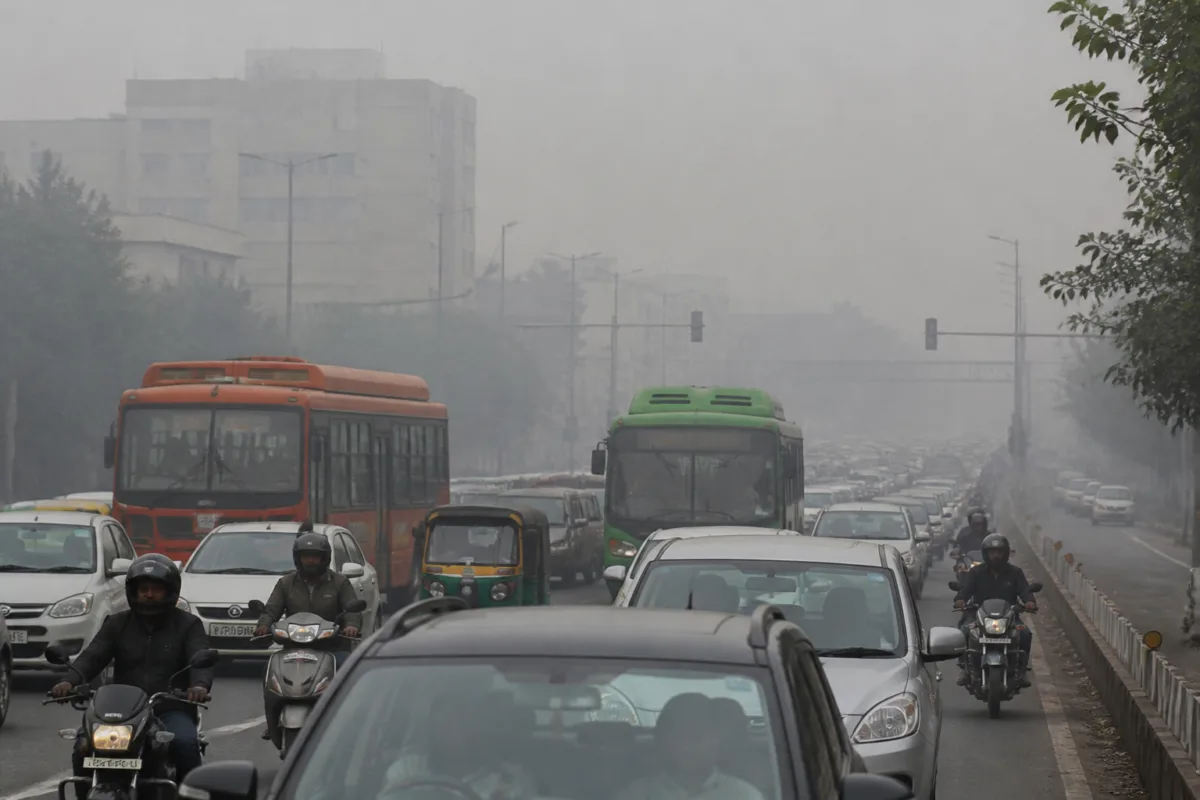
Delhi’s air quality remained in the very poor category on Thursday, with the Central Pollution Control Board recording an average 24-hour air quality index of 369 and around 20 locations reporting AQI levels above 400. Jahangirpuri recorded the highest reading at 454, as pollution levels remained severe in several parts of the capital.
The average AQI was marginally lower than Wednesday’s reading of 377, a decline of eight points. However, the improvement was not enough to move Delhi out of the very poor category. Haze during the day and sunshine by the afternoon contributed to the conditions, while pollution levels were expected to remain very poor and severe in several locations on Friday.
According to the report, vehicles accounted for 17.913 per cent of Delhi’s pollution contribution on Thursday. Crop-residue burning contributed 15.60 per cent, while the remaining share came from waste burning, pollution transported from other parts of the National Capital Region and other factors.
Weather conditions are also expected to continue influencing air quality. The India Meteorological Department forecast that haze and fog would persist during the mornings over the next few days, with no major change expected in maximum and minimum temperatures. Delhi recorded a maximum temperature of 26.6 degrees Celsius on Thursday, 0.9 degrees below normal, and a minimum temperature of 16.4 degrees Celsius, 1.1 degrees below normal. Relative humidity ranged from 64 per cent to 100 per cent.
The maximum temperature on Friday was expected to remain between 28 and 30 degrees Celsius, while the minimum was forecast at 15 to 17 degrees Celsius. The combination of morning haze, fog and limited dispersion can keep pollution concentrated near the ground, although the report did not provide a revised official forecast beyond the expected persistence of very poor and severe conditions.
Hospitals have also reported a rise in patients with respiratory complaints. Dr Deepak, head of the Department of Pulmonary Medicine at Ram Manohar Lohia Hospital, said the number of asthma patients visiting the outpatient department had increased. Children were also reporting complaints including cough, cold and allergies. The hospital runs a pollution clinic on Mondays, although patients were not directly visiting the clinic at the time of the report.
The report advised residents to avoid outdoor walking, running and exercise in the morning and evening when possible. It recommended a well-fitting N95 mask for essential outdoor travel and asked children, older people and those with asthma to spend more time indoors. Residents were also advised to keep windows and doors closed during periods of high pollution, clean surfaces with a wet cloth instead of dry sweeping, and avoid incense, mosquito coils and other indoor sources of smoke.
Delhi Environment Minister Manjinder Singh Sirsa criticised the Punjab government over the continued occurrence of crop-residue burning and questioned its response to the problem. He called for accountability among officials, according to the report. The immediate outlook for Delhi remains tied to the persistence of haze and fog and the pollution contribution from vehicles, crop burning, waste burning and regional sources.

