


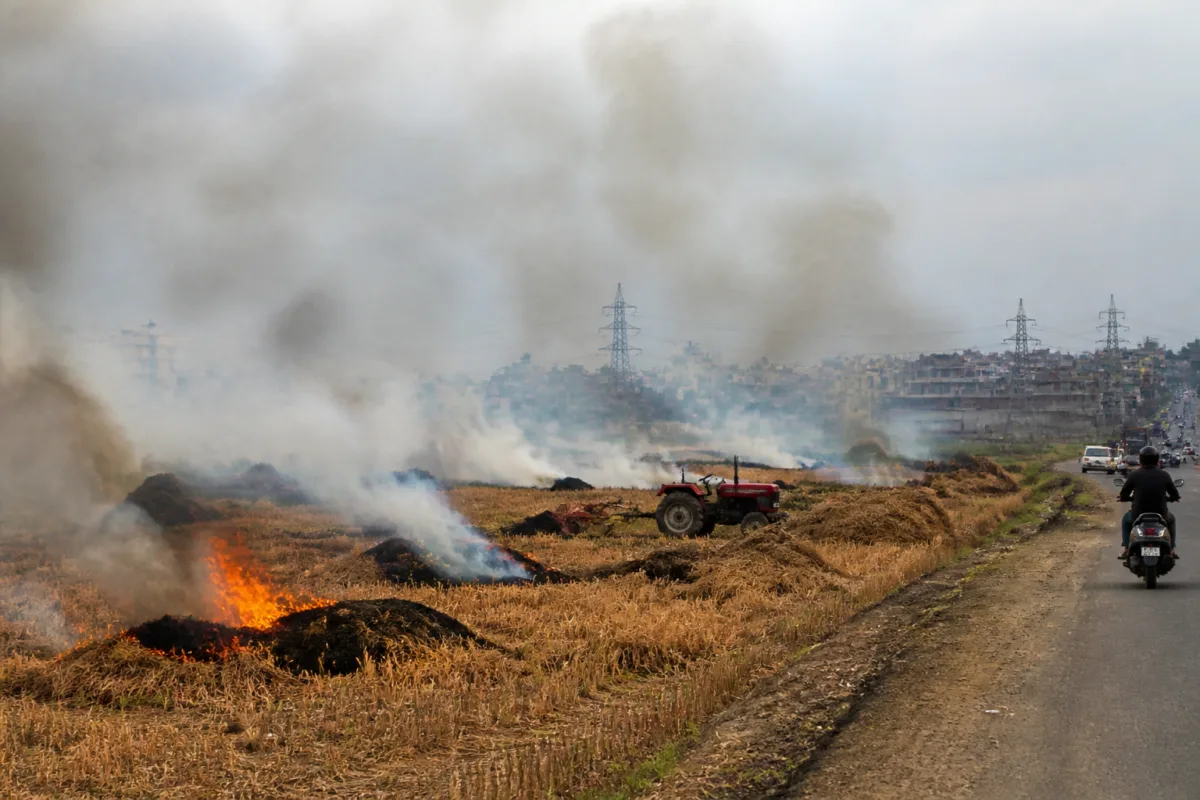
Madhya Pradesh recorded 94 crop-burning events on November 3, taking the state’s stubble-burning total to 708 since September 15, according to satellite data compiled by the Indian Agricultural Research Institute (ICAR), as fires near Bhopal renewed concerns over weak enforcement of the state’s crop-residue burning ban.
The incidents were detected across the state during the paddy harvesting season, including on the outskirts of Bhopal near 11 Mile Road. Farmers in the area were reported to have burned piles of paddy residue left behind after threshing, despite a state law that prohibits crop-residue burning and provides for financial penalties, oversight and withdrawal of government benefits.
The ICAR figures are based on live satellite feeds that track farm fires through heat sensors. Madhya Pradesh’s 94 incidents on November 3 were the third-highest among seven states monitored in the latest report, behind Punjab with 584 and Rajasthan with 100. Between September 15 and November 3, Madhya Pradesh ranked third with 708 incidents, after Punjab’s 2,196 and Rajasthan’s 838.
Although the latest count was marginally lower than the previous tally, the continuing fires have brought the enforcement mechanism into focus. Smoke from burning crop residue can travel beyond farmland and affect nearby settlements, roads and urban areas, adding to seasonal air-pollution risks. The fires come as Delhi and other northern cities intensify efforts to reduce the contribution of agricultural burning to hazardous air.
Pracheer Dixit of the Emergency Response Centre at the Madhya Pradesh Pollution Control Board said the agency’s primary role was to collate satellite data and transmit it to district collectors. “Our job primarily involves collating data from NASA and ISRO satellites that tracks and detects stubble fires through heat sensors. We mine data from live satellite feed and send them to district collectors. The onus is on collectors to take due cognisance of the data and take necessary steps,” Dixit told the Times of India.
Dixit also said work was continuing on the ground to curb crop fires and mitigate their effect on pollution. His comments indicate that the state’s monitoring system can identify incidents, but action against individual violations depends largely on district-level follow-up after the satellite alerts are shared.
The state ban is intended to raise the cost of burning residue through penalties and administrative action. However, the continued recurrence of fires during the harvest season has raised questions about whether detection is consistently followed by inspection, identification of landholders and enforcement. The report said Madhya Pradesh’s agriculture minister Aidal Singh Kansana did not respond to calls and messages seeking comment.
The latest satellite count provides a real-time measure of the scale of the problem, but the information supplied does not establish how many detected incidents resulted in penalties or other action. Further district-level responses and enforcement measures will determine whether the state’s monitoring network translates into a reduction in crop-residue burning.

